
Years
2006 in History
2006 rearranged the map in several directions at once. North Korea conducted its first nuclear test in October, drawing worldwide condemnation. Astronomers meeting in Prague voted Pluto out of the planets. Twitter launched to the public in July and WikiLeaks in October, two small websites with outsized futures. And the year closed with a double executioner's ledger: Gerald Ford, the president who pardoned Nixon, died on 26 December, and Saddam Hussein was hanged in Baghdad four days later.
At a Glance
- Defining event
- North Korea conducts its first nuclear test on 9 October, an underground detonation estimated at under a kiloton
- The demotion
- Astronomers in Prague vote on 24 August to reclassify Pluto as a dwarf planet
- Launched
- Twitter opens to the public on 15 July; WikiLeaks follows on 4 October
- The deal
- Disney announces on 24 January it will buy Pixar for $7.4 billion, making Steve Jobs Disney's largest shareholder
- A state restored
- Montenegro declares independence from its union with Serbia on 3 June, restoring sovereignty after 88 years
- Closed the year
- Gerald Ford dies on 26 December; Saddam Hussein is executed in Baghdad on 30 December
The defining story: the year the map was redrawn
On 9 October 2006 North Korea conducted its first nuclear test, an underground detonation estimated at under a kiloton, drawing worldwide condemnation. The yield was small — a fraction of the first wartime bombs — but the political fact was enormous: a ninth state had joined the nuclear club, in defiance of years of negotiation, and northeast Asia's security order changed permanently in a morning. The test crowned a year in which the post-Cold War settlement kept dissolving. On 3 June Montenegro formally declared independence from its state union with Serbia, restoring its sovereignty after 88 years and completing the peaceful dissolution of Yugoslavia's last remnant. In March Slobodan Milošević, the Serbian leader whose wars had begun that dissolution, died in detention at The Hague while on trial for war crimes — a defendant the tribunal never got to judge.
The Iraq war supplied the year's other bookends. On 7 June Abu Musab al-Zarqawi, leader of al-Qaeda in Iraq, was killed in a US airstrike near Baqubah. And on 30 December Saddam Hussein — president of Iraq from 1979 to 2003, deposed by invasion — was executed in Baghdad after conviction for crimes against humanity. Four days earlier, on 26 December, Gerald Ford had died at 93: the 38th president, who had pardoned Richard Nixon after Watergate and closed America's Vietnam-era presidency, leaving the stage in the same week as the dictator whose fall had opened a new and bloodier chapter of American involvement abroad. In Santiago, on 10 December — Human Rights Day — Augusto Pinochet died at 91 while under indictment for human-rights abuses, another strongman who outlived his regime but not its reckoning.
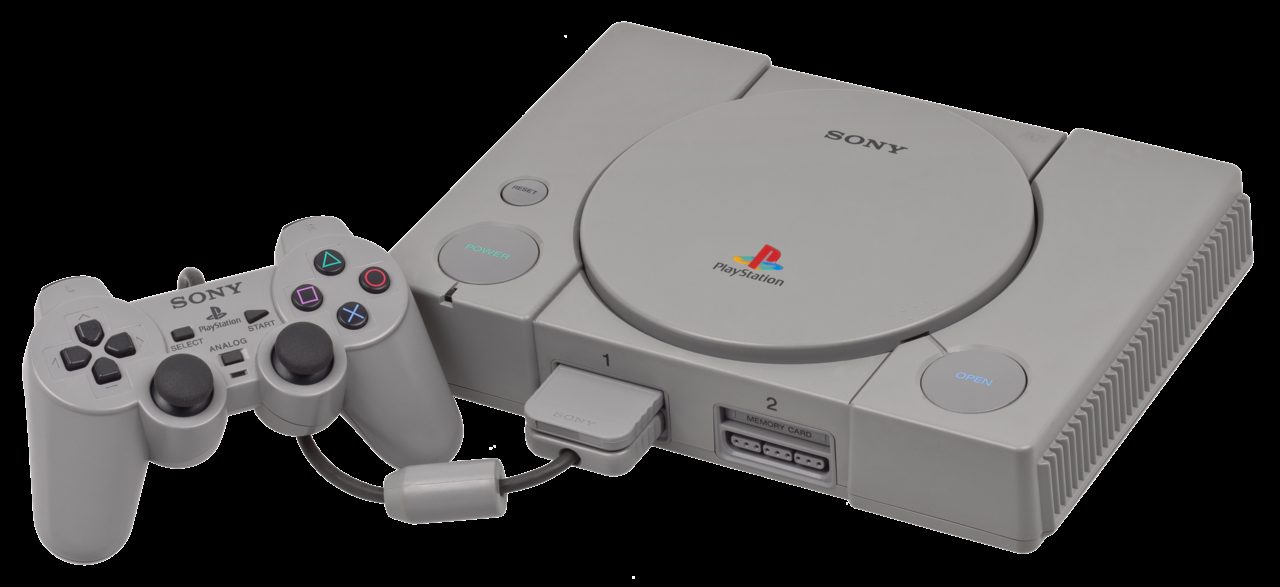
Science redrew a smaller map. On 24 August astronomers meeting in Prague voted to reclassify Pluto as a dwarf planet, ending its time as the ninth planet and giving the solar system the shape schoolchildren now learn. In March NASA's Mars Reconnaissance Orbiter arrived at Mars, beginning a mission that has since returned more data than all other Mars missions combined. And in a quieter ending, production of the original PlayStation — the grey console pictured on this page, launched in Japan in 1994 — finally ceased in 2006, more than eleven years after its launch; the line it founded was by then on its third generation.
The year's new media arrived almost unnoticed. Disney announced in January that it would buy the animation studio Pixar for $7.4 billion, making Steve Jobs Disney's largest shareholder. On 15 July Twitter launched to the public, its co-founder Jack Dorsey's test message already four months old. On 4 October WikiLeaks launched, the website that would become famous for publishing leaked documents. None of the three announcements dominated a news cycle; together they describe 2006 better than its battles — the year the audience, the archive and the animator all changed hands.
Timeline of 2006
- 24 January
Disney announces it will buy the animation studio Pixar for $7.4 billion, making Steve Jobs Disney's largest shareholder.
- 30 January
Coretta Scott King, American civil-rights leader and widow of Martin Luther King Jr., dies at 78.
- 22 February
Raiders steal some £53 million from the Securitas cash depot in Kent, the largest cash robbery in British history.
- 10 March
NASA's Mars Reconnaissance Orbiter arrives at Mars, beginning a mission that has since returned more data than all other Mars missions combined.
- 11 March
Slobodan Milošević dies in detention at The Hague while on trial for war crimes.
- 27 May
An earthquake near Yogyakarta on the Indonesian island of Java kills more than 5,000 people.
- 3 June
Montenegro formally declares independence from its state union with Serbia, restoring its sovereignty after 88 years.
- 15 July
Twitter is launched to the public, with co-founder Jack Dorsey's test message already four months old.
- 24 August
Astronomers meeting in Prague vote to reclassify Pluto as a dwarf planet.
- 4 September
Steve Irwin, Australian wildlife presenter, 'the Crocodile Hunter', is killed by a stingray while filming.
- 9 October
North Korea conducts its first nuclear test, an underground detonation estimated at under a kiloton, drawing worldwide condemnation.
- 30 December
Saddam Hussein, president of Iraq from 1979 to 2003, is executed in Baghdad after conviction for crimes against humanity.
Why 2006 still matters
North Korea's test is the year's heaviest legacy: the programme it announced has grown through further tests and missile development into the central security problem of its region, and the diplomatic framework built to stop it never recovered. Pluto's demotion, by contrast, settled into culture — a rare case of a scientific classification voted on in public and mourned like a death — and it taught a generation that even the solar system's membership list is a human decision, revisable when the evidence improves.
Twitter and WikiLeaks, launched within eleven weeks of each other, became the twin instruments of the following decade's politics: one made every bystander a broadcaster, the other made leaked archives a weapon of publication. The Disney–Pixar deal completed the same transfer in entertainment, putting the founder of Apple at the head of Disney's share register and Pixar's methods at the centre of Hollywood animation. 2006 is when the platforms of the next era quietly opened their doors, while the world's attention was on battlefields and strongmen.
The strongmen, in the end, all exited within the year — Milošević in a cell, Pinochet under indictment, Saddam on a scaffold, and Ford, the era's most accidental president, in honoured retirement. Montenegro's peaceful referendum showed the other way states could end and begin. That contrast — dissolution by ballot in Europe, by rope and cell elsewhere — is the year's real signature.
2006 on The History Trail
Pluto, Pyongyang and the first tweets: 2006 on The History Trail.
- August 24 in History — Astronomers in Prague vote to reclassify Pluto as a dwarf planet.
- October 9 in History — North Korea conducts its first nuclear test.
- July 15 in History — Twitter is launched to the public.
- October 4 in History — WikiLeaks is launched.
- December 30 in History — Saddam Hussein is executed in Baghdad.
- PlayStation — The original console whose production finally ceased in 2006, eleven years after launch.
Sources
- Encyclopaedia Britannica — On This Day: August 24
- Encyclopaedia Britannica — On This Day: October 9
- Encyclopaedia Britannica — On This Day: July 15
- Encyclopaedia Britannica — On This Day: October 4
- Encyclopaedia Britannica — On This Day: December 30
- Encyclopaedia Britannica — On This Day: June 3
The facts on this page were checked against these sources on 19 November 2026. The History Trail's permanent pages are researched and written for this site; the live profiles elsewhere on The History Trail are assembled automatically from Wikipedia and Wikidata.
About the Author
Researched and written by the The History Trail Editorial Team — the accountable editorial function behind this site's permanent story pages. The team works from the published sources cited on each page; it does not invent historians, reviewers or credentials, and it corrects errors openly.
Fact Check
Every load-bearing fact on this page traces to one of the sources listed above, and significant claims link to their source in the text. Our checking method is described on the methodology page; errors can be reported via the corrections page.
Sources & Citations
Cite this page as: The History Trail Editorial Team, The History Trail — this article's title, publication and update dates are shown beneath its headline. The full source list appears under Sources above; the site's source standards are on the sources page.