
Things
PlayStation
The PlayStation is a home video game console released by Sony Computer Entertainment in Japan on 3 December 1994. Born from a collapsed CD-ROM partnership with Nintendo and designed by engineer Ken Kutaragi, the CD-based machine became the first console ever to ship 100 million units - and founded the PlayStation line that still runs today.
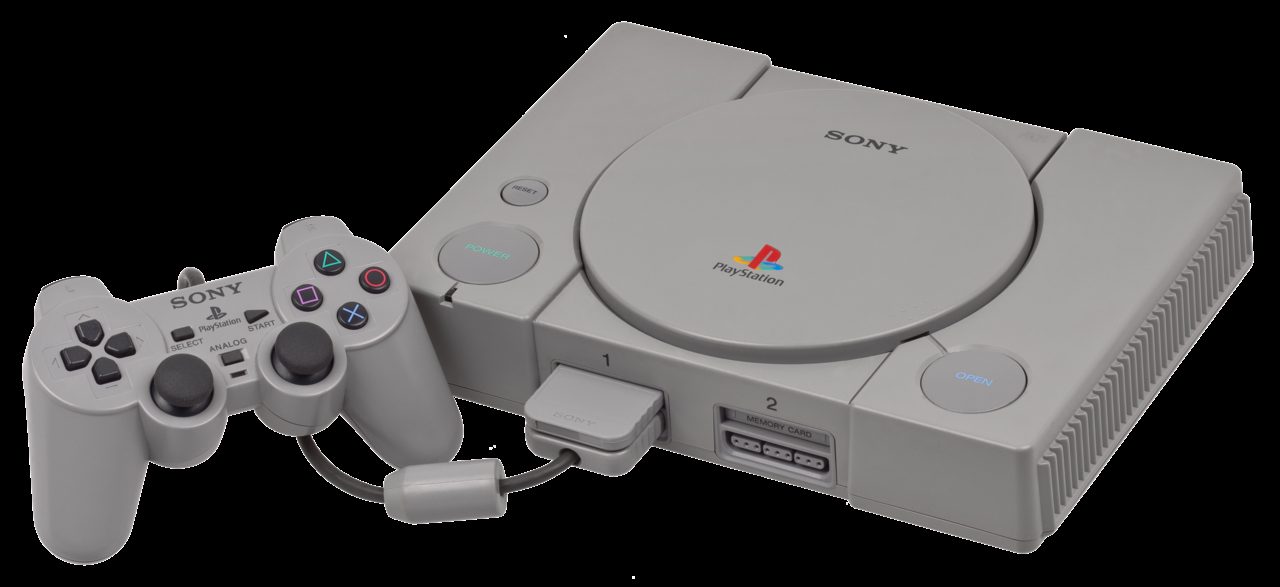
At a Glance
- What it is
- Sony's first home video game console, a 32-bit CD-based machine, and the founding product of the PlayStation brand
- Released
- Japan on 3 December 1994 at 39,800 yen; North America on 9 September 1995 at US$299; Europe on 29 September 1995
- Designer
- Ken Kutaragi, the Sony engineer behind the Super Nintendo's sound chip, later called the father of the PlayStation
- Maker
- Sony Computer Entertainment, founded in 1993 after Sony's CD-ROM venture with Nintendo collapsed
- Sales
- 102.49 million units on Sony's reported figures - the first console ever to ship 100 million units
- Best-selling game
- Gran Turismo, at 10.85 million copies on the figures commonly cited from Sony's reporting
- The line
- Followed by the PlayStation 2 (2000), PlayStation 3 (2006), PlayStation 4 (2013) and PlayStation 5 (2020)
Introduction
In 1994 the video game industry belonged to Nintendo and Sega, and Sony - a giant in televisions, music and film - had never sold a games console of its own. The PlayStation changed that in a single generation. Britannica describes it as one of a new generation of 32-bit consoles that signalled Sony's rise to power in the video game world. It was the first console of any kind to ship more than 100 million units, and it founded a line that has continued through five home consoles.
Its origins are the famous irony of the story: the PlayStation began as a Nintendo project. Sony had supplied the sound chip for Nintendo's Super Nintendo, and the two companies agreed to build a CD-ROM add-on together. The partnership collapsed, and Sony - rather than walk away from the work it had done - built the machine itself.
A Partnership That Failed
The PlayStation's designer was Ken Kutaragi, a Sony engineer who, as Britannica and Sony's own histories record, had become interested in games after watching his daughter play Nintendo's Famicom. Kutaragi designed the SPC700 sound chip that Nintendo adopted for the Super Nintendo Entertainment System, and the relationship deepened into a joint project, dating to a 1988 agreement, for a CD-ROM peripheral for that console - a machine to be called the Play Station.
The venture failed in the early 1990s. Britannica's account is terse: after the failed venture to release the PlayStation as the Super Nintendo Entertainment System-CD, Sony decided to market its own console. Behind that sentence sits a public rupture - Nintendo announced a different optical-disc partner, and Sony, embarrassed and already deep in development, refused to abandon the project. Sony Computer Entertainment was founded in 1993 to carry it, with Kutaragi - later dubbed the father of the PlayStation - as its driving engineer.
CDs Against Cartridges
The machine Sony built made one decisive technical choice: games on compact discs, not cartridges. CDs were far cheaper to manufacture, held many times more data, and could be pressed quickly in large numbers - advantages that mattered to the outside developers Sony was courting. Nintendo, by contrast, stayed with cartridges for its next console, the Nintendo 64. Britannica notes that the PlayStation's use of CDs heralded the video game industry's move away from cartridges altogether.
The PlayStation launched in Japan on 3 December 1994 at 39,800 yen, selling, on the figures commonly cited from Sony's early reporting, 100,000 units on its first day and two million within six months. It reached North America on 9 September 1995 at US$299 - a price announced to undercut its rival the Sega Saturn - and Europe on 29 September 1995. Britannica records that both releases drew critical acclaim and impressive sales. Titles such as Ridge Racer, Final Fantasy VII, Crash Bandicoot and Tekken built a catalogue aimed deliberately beyond children, at teenagers and adults, and more than 4,000 games were eventually released for the machine.
Timeline
- 1988
Sony and Nintendo agree to work on a CD-ROM project for Nintendo's consoles; Sony engineer Ken Kutaragi had already designed the Super Nintendo's sound chip.
- Early 1990s
The joint SNES-CD venture collapses; Sony decides to market a console of its own rather than abandon the development.
- 1993
Sony Computer Entertainment is founded to run the console business, with Kutaragi as the project's driving force.
- 3 December 1994
The PlayStation launches in Japan at 39,800 yen; reported first-day sales reach 100,000 units.
- 9 September 1995
North American launch at US$299, undercutting the Sega Saturn; the European launch follows on 29 September.
- 1997
Final Fantasy VII, a CD-based role-playing game of a scale cartridges could not hold, becomes one of the console's defining titles.
- 7 July 2000
The smaller, rounded PS one redesign goes on sale in Japan; the PlayStation 2 launches the same year.
- 2004
The original PlayStation passes 100 million units shipped - the first console ever to reach that mark, nine years after launch.
- 23 March 2006
Sony ceases production of the PlayStation, over eleven years after its release and in the year the PlayStation 3 debuts.
- 12 November 2020
The PlayStation 5 launches, the fifth home console in the line the 1994 machine founded.
The Line It Founded
The original PlayStation's lifetime sales, on Sony's reported figures, came to 102.49 million units - a total no console had approached before. Its successors extended the pattern in different directions. The PlayStation 2 (2000) added DVD playback and, Britannica notes, an extensive games line that carried it past 100 million units faster than any predecessor; it remains, on Sony's figures, the best-selling console of all time. The PlayStation 3 (2006-07) had a harder start against Microsoft's Xbox 360 and Nintendo's Wii. The PlayStation 4 (2013) restored the line's dominance with strong graphics and online play, and Sony entered virtual reality with PlayStation VR in 2016. The PlayStation 5 followed in 2020.
Set against the longer line of hardware, the PlayStation marks the moment console gaming's centre of gravity shifted: from the cartridge companies of the 1980s to an electronics giant selling a CD-based entertainment machine to adults as much as children. Our comparison of the iPhone and the Game Boy tells the parallel handheld story - the pocket market Sony also entered, with the PlayStation Portable, a decade later.
Significance
The PlayStation's significance rests on three changes that outlived the machine. First, media: it settled the industry's move from cartridges to optical discs, with the cost and capacity advantages that let games grow in length, sound and cinematic ambition. Second, audience: Sony marketed games as a young-adult culture - club music, late-night advertising, titles designed for older players - rather than a children's hobby, widening the market for every console that followed. Third, structure: an electronics manufacturer with global distribution and its own pressing plants showed that a console business could be run at a scale the older games companies could not match.
Myths and disputes
Two confusions follow the PlayStation's name, and this page separates them. The 1994 console's codename was PSX, and the abbreviation stuck in magazines and on the internet - but PSX was never its retail name, and Sony later reused the letters for an unrelated 2003 Japanese video-recording device, which is a different machine. Likewise the PS one: that name belongs properly to the smaller redesigned model of 2000, though Britannica and others also use it loosely for the original console as a whole.
The record also disagrees on when production ended. Britannica states that the original PlayStation continued production until March 2005; Sony's later histories and most reference accounts give 23 March 2006 as the date production ceased, more than eleven years after launch. This page uses the 2006 date in its timeline, since it matches the eleven-year span the other accounts describe, but the discrepancy in the sources is real and is flagged here rather than silently resolved.
Legacy
The PlayStation's legacy is the modern console business itself: optical and then downloaded media, third-party developers courted as partners, marketing aimed at adults, and a brand carried across five generations of hardware. Sony entered games as a component supplier to Nintendo; within a decade it was the industry's largest power, and the partnership's collapse stands as the great might-have-been of gaming history - the CD add-on that never shipped became the machine that displaced its would-be host. The grey box of December 1994 is long retired, but every console since has been built in the market it made.
Sources
- Encyclopaedia Britannica - PlayStation
- Wikipedia - PlayStation (console)
- Wikipedia - PlayStation
- KEKE STUDIO - The History of PlayStation: Sony's Choices From the Nintendo Split to the PS5
The facts on this page were checked against these sources on 19 November 2026. The History Trail's permanent pages are researched and written for this site; the live profiles elsewhere on The History Trail are assembled automatically from Wikipedia and Wikidata.
About the Author
Researched and written by the The History Trail Editorial Team — the accountable editorial function behind this site's permanent story pages. The team works from the published sources cited on each page; it does not invent historians, reviewers or credentials, and it corrects errors openly.
Fact Check
Every load-bearing fact on this page traces to one of the sources listed above, and significant claims link to their source in the text. Our checking method is described on the methodology page; errors can be reported via the corrections page.
Sources & Citations
Cite this page as: The History Trail Editorial Team, The History Trail — this article's title, publication and update dates are shown beneath its headline. The full source list appears under Sources above; the site's source standards are on the sources page.