
Things
Nintendo Switch
The Nintendo Switch is a hybrid video game console released by Nintendo on 3 March 2017: a tablet-like machine that can be played in the hand, stood on a table, or docked to a television. Built after the commercial failure of the Wii U, it reunited Nintendo's home and handheld lines in a single device - and went on to become the best-selling console the company has ever made.
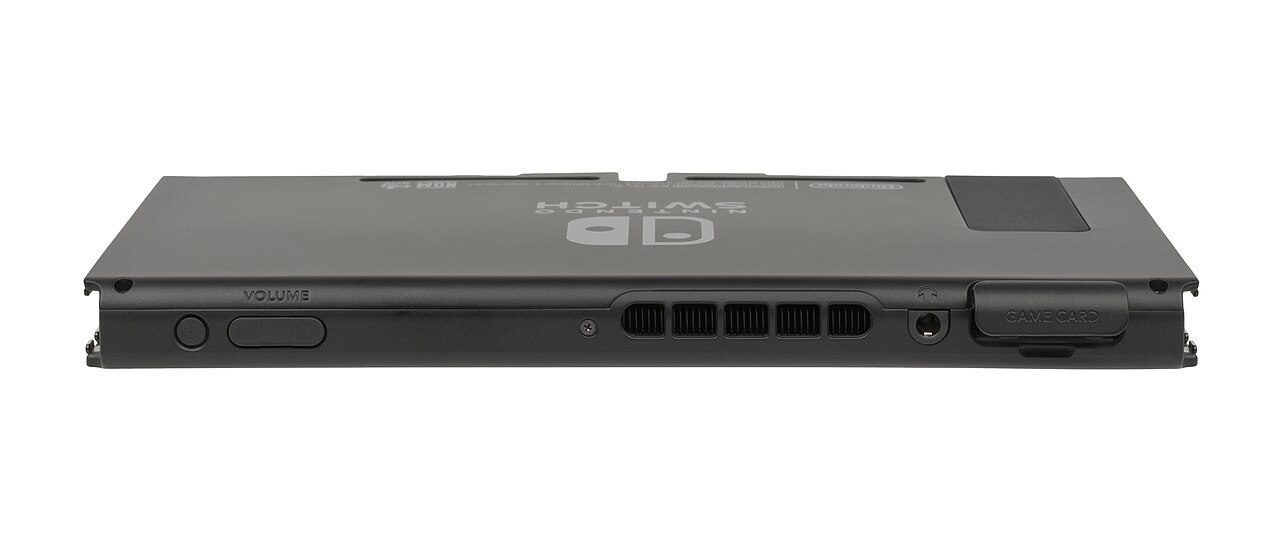
At a Glance
- What it is
- A hybrid console: a tablet with detachable Joy-Con controllers that plays as a handheld, on a tabletop, or docked to a TV
- Released
- 3 March 2017, in Japan, North America, Europe and most other regions, at US$299.99 in the United States
- Codename
- Developed as the NX; unveiled under its final name on 20 October 2016
- Predecessors
- The Wii U home console (2012) and the Nintendo 3DS handheld (2011), whose separate roles the Switch combined
- Later models
- Switch Lite, a handheld-only version, on 20 September 2019; the OLED model on 8 October 2021
- Sales
- Nintendo reported 155.37 million units sold worldwide as of 31 December 2025, passing the Nintendo DS (154.02 million) to become Nintendo's best-selling console
- Successor
- Nintendo Switch 2, released on 5 June 2025, backward compatible with most Switch games
Introduction
For four decades, video game hardware came in two kinds: the home console, plugged into a television, and the handheld, carried in a pocket. Nintendo had sold both since 1989, when the Game Boy joined its home machines, and it ran two separate hardware lines, two sets of games and two development efforts. The Switch abolished that division. One machine, built around a 6.2-inch screen, was both at once - lifted out of its dock it became a handheld, slid back in it drove the television again.
The idea was not a luxury. It was a rescue. Nintendo's previous home console, the Wii U of 2012, had sold about 13.56 million units in its whole life - a fraction of its predecessor the Wii - and Britannica records that the Wii U's touchscreen GamePad concept, a controller that acted as a second screen, was later refined in the Switch. The Switch took that half-realised idea, cut the tether, and made the screen itself the console.
After the Wii U: Why Nintendo Had to Change
The Wii U's failure shaped every Switch decision. Its name confused buyers, who often mistook it for an accessory for the Wii; its tablet controller could not leave the console's wireless range; and third-party publishers largely stayed away, leaving its games library thin. At the same time, phones and tablets were taking over casual portable play, squeezing Nintendo's handheld business from below. Nintendo's then president Satoru Iwata pushed the company towards both mobile gaming and novel hardware before his death in 2015, and development of the machine codenamed NX began in that shadow.
The answer Nintendo reached was consolidation. Instead of splitting its studios between a home console and a handheld, it would build one platform and aim every game at it. It chose standard, widely understood components - a chipset based on Nvidia's Tegra line - to make development easier for outside programmers, and it courted third-party and independent developers in advance, the support the Wii U had lacked. The comparison with the Game Boy generation is instructive: where Nintendo once won portability with a separate, simpler machine, it now proposed that the portable machine and the home machine be the same object.
One Machine, Three Ways to Play
Nintendo unveiled the Switch on 20 October 2016 with a trailer built around a single gesture: a player at home lifts the console from its dock and walks out, the game continuing uninterrupted on the handheld screen. The hardware matched the gesture. Two small controllers, the Joy-Con, slide onto the tablet's sides for handheld play, detach for tabletop play on the built-in kickstand, or clip into a grip for television play. Games came on small cartridges as well as by download, and - a break with recent Nintendo practice - the console carried no region locking in most markets.
It launched worldwide in most regions on 3 March 2017 at US$299.99, led by The Legend of Zelda: Breath of the Wild, a game also released for the Wii U. Nintendo shipped 2.74 million units in the first month, above its own initial projection of two million, and by the end of its first year the Switch had passed the Wii U's entire lifetime total. Two hardware revisions followed: the handheld-only Switch Lite in September 2019, which traded the dock and detachable controllers for a lower price, and the OLED model in October 2021, with a larger, brighter screen.
Timeline
- 18 November 2012
The Wii U launches; its touchscreen GamePad experiments with second-screen play, but the console sells only about 13.56 million units in its lifetime.
- March 2015
Nintendo president Satoru Iwata announces a new hardware project, codenamed NX, alongside plans to enter mobile gaming.
- 20 October 2016
Nintendo unveils the machine as the Nintendo Switch, demonstrating its hybrid handheld and docked design.
- 13 January 2017
At a Tokyo presentation Nintendo confirms the launch date and price: 3 March 2017, at US$299.99.
- 3 March 2017
The Switch launches in most regions, alongside The Legend of Zelda: Breath of the Wild; 2.74 million units ship in the first month.
- December 2017
Worldwide sales pass 10 million within the console's first year, overtaking the Wii U's lifetime total.
- 20 September 2019
The Switch Lite, a smaller handheld-only model with fixed controls, goes on sale.
- 8 October 2021
The OLED model launches, with a 7-inch OLED screen and a revised dock.
- 5 June 2025
The Nintendo Switch 2, backward compatible with most Switch games, is released as the family's successor.
- 31 December 2025
Nintendo reports cumulative Switch sales of 155.37 million units, passing the Nintendo DS as the company's best-selling console.
Significance
The Switch's significance is architectural. It ended the industry's assumption that home and portable play required separate machines, and it showed that convenience - the ability to move a game from television to train without stopping - could outweigh raw processing power, in which the Switch trailed its rivals, Sony's PlayStation 4 and Microsoft's Xbox One. Nintendo's reported figures trace the result: 155.37 million units sold as of 31 December 2025, according to the company's financial reporting, with Mario Kart 8 Deluxe its best-selling game at 70.59 million copies on the same date. Only Sony's PlayStation 2 stands ahead of it among all consoles, on the figures usually cited.
It also changed Nintendo's own structure permanently. One platform meant one games library and one development pipeline, and the model was carried forward directly into the Switch 2 of 2025. In the longer line of hardware - from the Game Boy's pocketable compromise to the Wii U's tethered tablet - the Switch is the point where the two traditions merged. Our comparison of the iPhone and the Game Boy traces the earlier contest between dedicated handhelds and the phone; the Switch was Nintendo's eventual answer to it.
Myths and disputes
Two points in the Switch's record are genuinely contested, and this page flags both. The first is its generation. Because it arrived midway through the life of the PlayStation 4 and Xbox One yet outlasted them into the PlayStation 5 era, references classify it variously as an eighth-generation or ninth-generation console; there is no agreed label, and Nintendo itself does not settle the question.
The second is Joy-Con drift, the fault in which the controllers' analogue sticks register movement nobody made. Owners reported it from early in the console's life; lawsuits and consumer-group complaints followed in several countries. Nintendo apologised for the trouble caused and, from 2019 in North America and later in Europe, repaired affected controllers free, in Europe eventually even outside warranty - but for years it stopped short of calling the fault a design defect, and regulators in France later fined Nintendo Europe over how poorly customers had been informed. Whether drift was an inherent flaw or unusual wear remains the disputed point between the company and its critics.
Legacy
The Switch leaves the industry a template: a single hybrid platform, modest hardware used flexibly, and a back catalogue treated as an asset rather than an embarrassment - the Switch 2 plays most Switch games, carrying a decade's library forward. Rival manufacturers have since pursued portable forms of their own, and the handheld PC category grew up in the space the Switch proved existed. For Nintendo, the machine that was designed as a rescue became, on the company's own reported numbers, the most successful console it has ever sold - the point where the home console and the handheld, separate since 1989, became one thing.
Sources
- Encyclopaedia Britannica - Nintendo
- NintendoReporters - Nintendo's latest Switch sales update: 155.37 million units, a new hardware record
- Thurrott - Nintendo Has Sold 155 Million Switch, 17 Million Switch 2 Consoles
- iFixit News - Nintendo's Positive Drift on Joy-Con Issues
The facts on this page were checked against these sources on 19 November 2026. The History Trail's permanent pages are researched and written for this site; the live profiles elsewhere on The History Trail are assembled automatically from Wikipedia and Wikidata.
About the Author
Researched and written by the The History Trail Editorial Team — the accountable editorial function behind this site's permanent story pages. The team works from the published sources cited on each page; it does not invent historians, reviewers or credentials, and it corrects errors openly.
Fact Check
Every load-bearing fact on this page traces to one of the sources listed above, and significant claims link to their source in the text. Our checking method is described on the methodology page; errors can be reported via the corrections page.
Sources & Citations
Cite this page as: The History Trail Editorial Team, The History Trail — this article's title, publication and update dates are shown beneath its headline. The full source list appears under Sources above; the site's source standards are on the sources page.