
On This Day
October 9 in History
On 9 October 1967 Ernesto 'Che' Guevara, captured wounded the day before in Bolivia, was executed by the Bolivian army in the schoolhouse at La Higuera, aged thirty-nine — and passed instantly from failed guerrilla to global icon. October 9 is also the day Yale was chartered in 1701, Uganda became independent in 1962 and North Korea tested its first nuclear device in 2006.
Choose another date: open the On This Day calendar to browse events, births and deaths for any day of the year.
At a Glance
- Captured
- 8 October 1967, wounded in the Yuro ravine, by U.S.-trained Bolivian rangers
- Executed
- Afternoon of 9 October 1967, in the schoolhouse at La Higuera, Bolivia; he was 39
- Why Bolivia
- He had led a guerrilla campaign there for eleven months, hoping to spark a continental revolution
- After death
- His body was displayed at Vallegrande; his hands were cut off for identification and he was secretly buried
- The image
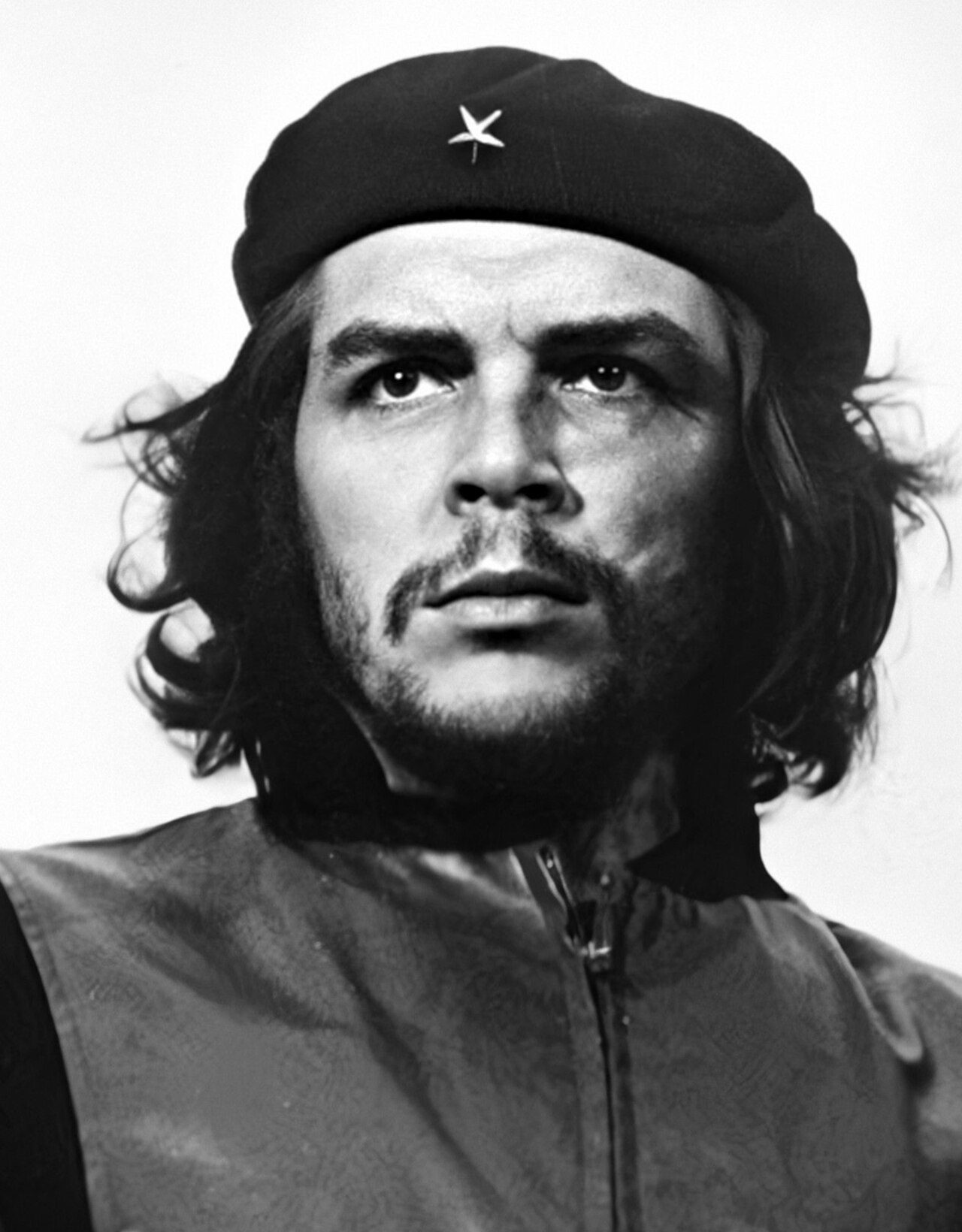
- Alberto Korda's 1960 portrait became, after his death, one of the most reproduced photographs in the world
- The grave
- Found in 1997 beneath the Vallegrande airstrip; his remains were reburied at Santa Clara, Cuba
Events on this day
- 768Charlemagne is crowned king of the Franks, sharing the throne with his brother Carloman.
- 1000Leif Erikson is traditionally said to have landed in Vinland, in North America, centuries before Columbus.
- 1635Roger Williams, founder of Rhode Island, is banished from Massachusetts Bay Colony for his religious views.
- 1701The Collegiate School is chartered in Connecticut; it later moves to New Haven and takes the name Yale.
- 1779A Franco-American assault on British-held Savannah is bloodily repulsed, among the costliest American defeats of the Revolutionary War.
- 1824Slavery is abolished in Costa Rica, among the earliest such acts in the Americas.
- 1874The Universal Postal Union is founded by the Treaty of Bern, making international mail a single system.
- 1888The Washington Monument opens to the public in Washington, D.C., then the tallest structure in the world.
- 1962Uganda becomes independent of Britain, with Milton Obote as its first prime minister.
- 1967Che Guevara, captured the day before in Bolivia, is executed in the schoolhouse at La Higuera — the featured story above.
- 1975Soviet physicist and dissident Andrei Sakharov is awarded the Nobel Peace Prize, which the Soviet authorities will not let him collect.
- 2004Afghanistan holds its first presidential election, nine days of counting later confirming Hamid Karzai as president.
- 2006North Korea conducts its first nuclear test, an underground detonation estimated at under a kiloton, drawing worldwide condemnation.
Born on this day
- 1757Charles X — king of France, the last Bourbon of the senior line, driven out by the July Revolution of 1830.
- 1835Camille Saint-Saëns — French composer of Carnival of the Animals and the Organ Symphony.
- 1859Alfred Dreyfus — French officer whose wrongful conviction for treason divided France in the Dreyfus Affair.
- 1908Jacques Tati — French comic filmmaker of Monsieur Hulot's Holiday and Playtime.
- 1940John Lennon — English musician, co-founder of the Beatles and peace campaigner.
- 1966David Cameron — British prime minister who called the Brexit referendum and resigned after losing it.
Died on this day
- 1806Benjamin Banneker — self-taught American astronomer and almanac maker, surveyor of Washington, D.C.
- 1967Che Guevara — Argentine-Cuban revolutionary, executed in Bolivia at 39 after his guerrilla campaign failed.
- 1974Oskar Schindler — German industrialist who saved some 1,200 Jews during the Holocaust, dead in reduced circumstances.
- 2024Ratan Tata — Indian industrialist who built the Tata group into a global conglomerate, dead at 86.
The featured story: Che Guevara is executed in Bolivia, 9 October 1967
Ernesto 'Che' Guevara was captured on 8 October 1967, wounded in the leg, in the Yuro ravine in southeastern Bolivia, by Bolivian army rangers who had been trained and advised by the United States. He had been in Bolivia for eleven months, leading a small guerrilla column that was supposed to ignite a continental revolution on the model of Cuba, where the Argentine-born doctor had been Fidel Castro's most famous commander. The campaign had failed on every level: the Bolivian Communist Party refused to support him, the local peasants informed on the guerrillas rather than joining them, and his force — never more than a few dozen — had been whittled down by hunger, asthma, desertion and army patrols. By the end, Guevara was commanding seventeen exhausted men, cut off and surrounded.
He was taken to the village of La Higuera and held overnight in its schoolhouse. The Bolivian high command, in consultation with Washington, decided he should not live to stand trial — a public trial, on the model of a courtroom stage, was exactly what they feared. On the afternoon of 9 October, at about ten past one, a Bolivian sergeant entered the schoolhouse and shot him. Guevara was thirty-nine. His body was flown by helicopter to the town of Vallegrande, where it was laid out on a laundry sink in the hospital and displayed to the press as proof of death. His hands were cut off and preserved for identification, and the body was then buried in secret, in an unmarked grave near the Vallegrande airstrip, so that no shrine could be made of it.
The strategy of erasure backfired completely. The photograph of the dead Che — gaunt, eyes half open, compared within days to images of Christ — circled the world, and the living revolutionary was replaced by something more powerful: a martyr. Alberto Korda's 1960 portrait of Guevara in his beret, little noticed at the time, was reproduced after his death until it became perhaps the most famous photographic image of the twentieth century, printed on posters, banners and T-shirts far beyond any politics Guevara himself would have recognised. The Bolivian campaign, a total failure, was retrospectively transformed by his death into a heroic last stand.
The grave kept its secret for thirty years. In 1997, after a retired Bolivian general confirmed the burial site, investigators excavated near the Vallegrande airstrip and found remains identified as Guevara's, the hands long since separated from the body. Cuba received them with full honours, and Castro presided over their reburial in a mausoleum at Santa Clara, the city whose capture had been Che's greatest victory in the Cuban revolution. The schoolhouse at La Higuera is now a museum, and the route of his last campaign a pilgrim trail — precisely the cult of memory that the men who ordered his secret burial had hoped to prevent.
Why this date matters
October 9 is a date of foundations and reckonings: Charlemagne's coronation, Yale's charter, the world postal system, Uganda's independence. But it is remembered above all for an execution in a one-room schoolhouse in 1967. Guevara's death is the purest case in modern history of defeat converted into myth: everything he attempted in Bolivia failed, and the failure, sealed by a firing squad and a photograph, made him immortal. The date is a standing lesson in the difference between winning and being remembered — and a warning to governments that a secret grave is no match for a famous face.
Sources
- Encyclopaedia Britannica — On This Day: October 9
- HISTORY — Che Guevara Is Executed
- National Security Archive — Che Guevara and the CIA in the Mountains of Bolivia
- HISTORY — Oskar Schindler Dies
- South African History Online — Uganda Gains Independence
The facts on this page were checked against these sources on 19 November 2026. The History Trail's permanent pages are researched and written for this site; the live profiles elsewhere on The History Trail are assembled automatically from Wikipedia and Wikidata.
About the Author
Researched and written by the The History Trail Editorial Team — the accountable editorial function behind this site's permanent story pages. The team works from the published sources cited on each page; it does not invent historians, reviewers or credentials, and it corrects errors openly.
Fact Check
Every load-bearing fact on this page traces to one of the sources listed above, and significant claims link to their source in the text. Our checking method is described on the methodology page; errors can be reported via the corrections page.
Sources & Citations
Cite this page as: The History Trail Editorial Team, The History Trail — this article's title, publication and update dates are shown beneath its headline. The full source list appears under Sources above; the site's source standards are on the sources page.