
Years
2005 in History
2005 is remembered above all for 29 August, when Hurricane Katrina made landfall on the Gulf Coast and the failure of New Orleans's levees flooded 80 percent of the city, in one of the deadliest and costliest disasters in American history. The same year brought suicide bombings to London's transport network, a papal succession in Rome, and the most distant landing ever made, on Saturn's moon Titan.
At a Glance
- Defining event
- Hurricane Katrina and the flooding of New Orleans, 29 August 2005
- The flooding
- Levee failures inundate about 80 percent of New Orleans
- Terror in London
- 7 July bombings kill 52 people on the Underground and a bus
- The distant landing
- Huygens lands on Titan, 14 January — the first landing in the outer solar system
- Papal change
- John Paul II dies on 2 April; Benedict XVI is elected on 19 April
- Closed the year
- Angela Merkel sworn in as Germany's first woman chancellor on 22 November
The defining story: Katrina and the drowning of New Orleans
Katrina had already killed people in Florida as a modest hurricane before it crossed into the Gulf of Mexico, drank the warm water, and came back far stronger. It reached Category 5 over the Gulf, and although it weakened before landfall, it pushed a wall of water ahead of it. Early on 29 August 2005 the eye crossed the coast near Buras-Triumph, Louisiana, as a strong Category 3; on the Mississippi coast the surge rose as high as eight metres, erasing beach towns. In New Orleans the storm itself passed to the east — close enough. New Orleans had ordered a mandatory evacuation the day before, but some 100,000 residents, disproportionately poor, elderly and Black, had not or could not leave.
What drowned the city was not the wind but the waterworks. Through the morning, levees and floodwalls built and maintained by the Army Corps of Engineers failed at multiple points — the 17th Street and London Avenue canals breached, and the Industrial Canal gave way on both sides. By the next day roughly 80 percent of the city stood under water. Tens of thousands gathered at the Superdome, whose roof peeled in the wind, and at the convention centre, where no supplies had been planned. Later investigations, including the federal government's own review, concluded that the flooding was a man-made engineering failure riding on a natural disaster. The official modern death count is an estimated 1,392, with damage put at about 125 billion dollars.
Katrina was the year's second great urban trauma. On 7 July, during the London rush hour, four suicide bombers attacked the transport network: three bombs exploded within a minute of each other at about 8:50 a.m. on Underground trains, and a fourth, just under an hour later, on a number 30 bus in Tavistock Square. The attacks killed 52 people besides the bombers and injured more than 700 — the worst single terrorist atrocity on British soil, arriving the day after London had won the right to host the 2012 Olympic Games, while G8 leaders gathered in Scotland. In October a magnitude 7.6 earthquake in Kashmir killed, by some estimates, as many as 88,000 people in Pakistan and India. Disaster, natural and deliberate, defined the year's memory.
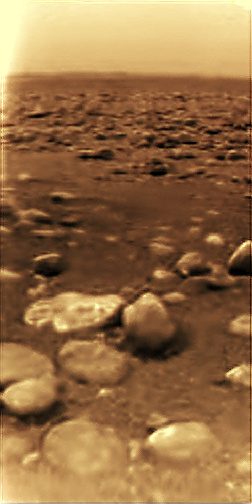
Yet 2005 opened with one of exploration's purest triumphs. On 14 January the European Space Agency's Huygens probe, carried to Saturn by NASA's Cassini orbiter and released on Christmas Day 2004, descended for about two and a half hours through Titan's thick nitrogen atmosphere and touched down — the first landing in the outer solar system, some 1.2 billion kilometres from Earth. Its camera showed rounded pebbles of water ice strewn on a dark plain, and channels cut by flowing liquid methane. In April the world changed popes: John Paul II died on 2 April after a 26-year pontificate, and Cardinal Joseph Ratzinger was elected as Benedict XVI on 19 April. A year that drowned a city also landed on a moon no one had ever seen.
Timeline of 2005
- 14 January
ESA's Huygens probe lands on Titan, the most distant landing ever made.
- 14 February
Steve Chen, Chad Hurley and Jawed Karim register YouTube, the video-sharing site Google will buy the following year.
- 16 February
The Kyoto Protocol, the international treaty to cut greenhouse-gas emissions, enters into force.
- 2 April
John Paul II, the first non-Italian pope in more than four centuries, dies at the Vatican at 84.
- 19 April
Cardinal Joseph Ratzinger is elected pope as Benedict XVI.
- 27 April
The Airbus A380, the world's largest passenger airliner, makes its maiden flight from Toulouse.
- 31 May
Former FBI official W. Mark Felt is revealed as 'Deep Throat', the Watergate source, ending thirty years of speculation.
- 7 July
Four suicide bombers attack London's transport network, killing 52 people and injuring more than 700.
- 28 July
The Provisional IRA formally ends its thirty-year armed campaign in Northern Ireland.
- 29 August
Hurricane Katrina makes landfall and New Orleans's levees fail, flooding about 80 percent of the city.
- 8 October
A magnitude 7.6 earthquake strikes Kashmir, killing, by some estimates, as many as 88,000 people.
- 22 November
Angela Merkel is sworn in as chancellor of Germany, the first woman to hold the office.
- 27 November
Surgeons in Amiens, France, perform the first partial face transplant, on Isabelle Dinoire.
Why 2005 still matters
Katrina permanently changed its city and its country. New Orleans lost roughly half its population in a year, and whole neighbourhoods, above all the Lower Ninth Ward, rebuilt slowly or not at all; the rebuilt defences — higher levees, stronger floodwalls and the great surge barrier — cost some 15 billion dollars by Britannica's figure, and held against Hurricane Ida in 2021. The disaster ended careers, forced the resignation of the federal emergency director, and prompted a decade of inquiries into why a forecast catastrophe had been allowed to happen on camera. The storm had been predicted, in detail, for years; the failure was not imagination but follow-through, and American disaster policy has been argued in Katrina's shadow ever since.
The London bombings changed British security just as durably: armed policing, surveillance powers and counter-radicalisation programmes all expanded, and the Hyde Park memorial of 52 steel pillars, one for each victim, was unveiled on the fourth anniversary. The year's beginnings proved equally durable. YouTube, registered on 14 February, remade how the world watches; the Kyoto Protocol's entry into force on 16 February set the frame for climate diplomacy until Paris replaced it a decade later; and Huygens still sits in Titan's methane cold, the most distant outpost humanity has ever landed, awaiting NASA's Dragonfly rotorcraft in the 2030s. Even the papal transition mattered beyond Rome: Benedict XVI's election closed the longest and most consequential pontificate of the modern age.
2005 on The History Trail
Katrina, the London bombings and the Titan landing are all told in full on The History Trail.
- August 29 in History — Hurricane Katrina makes landfall and New Orleans floods as its levees fail.
- Hurricane Katrina — The storm, the levee failures and the rebuilt city.
- July 7 in History — The 7 July London bombings — four attacks in the morning rush hour.
- January 14 in History — Huygens lands on Titan, the most distant landing ever made.
- April 2 in History — John Paul II dies at the Vatican after a 26-year pontificate.
- Cyber Monday — The online shopping day that took its name in 2005.
Sources
- Encyclopaedia Britannica — On This Day: January 14
- NASA — Cassini-Huygens Mission
- Encyclopaedia Britannica — On This Day: July 7
- UK Parliament, Hansard — The Official Account of the Bombings in London on 7th July 2005
- Encyclopaedia Britannica — On This Day: August 29
- The White House (George W. Bush Archives) — Hurricane Katrina: Lessons Learned, Chapter Four
- Encyclopaedia Britannica — On This Day: April 2
- Encyclopaedia Britannica — On This Day: October 8
The facts on this page were checked against these sources on 19 November 2026. The History Trail's permanent pages are researched and written for this site; the live profiles elsewhere on The History Trail are assembled automatically from Wikipedia and Wikidata.
About the Author
Researched and written by the The History Trail Editorial Team — the accountable editorial function behind this site's permanent story pages. The team works from the published sources cited on each page; it does not invent historians, reviewers or credentials, and it corrects errors openly.
Fact Check
Every load-bearing fact on this page traces to one of the sources listed above, and significant claims link to their source in the text. Our checking method is described on the methodology page; errors can be reported via the corrections page.
Sources & Citations
Cite this page as: The History Trail Editorial Team, The History Trail — this article's title, publication and update dates are shown beneath its headline. The full source list appears under Sources above; the site's source standards are on the sources page.