
Years
1994 in History
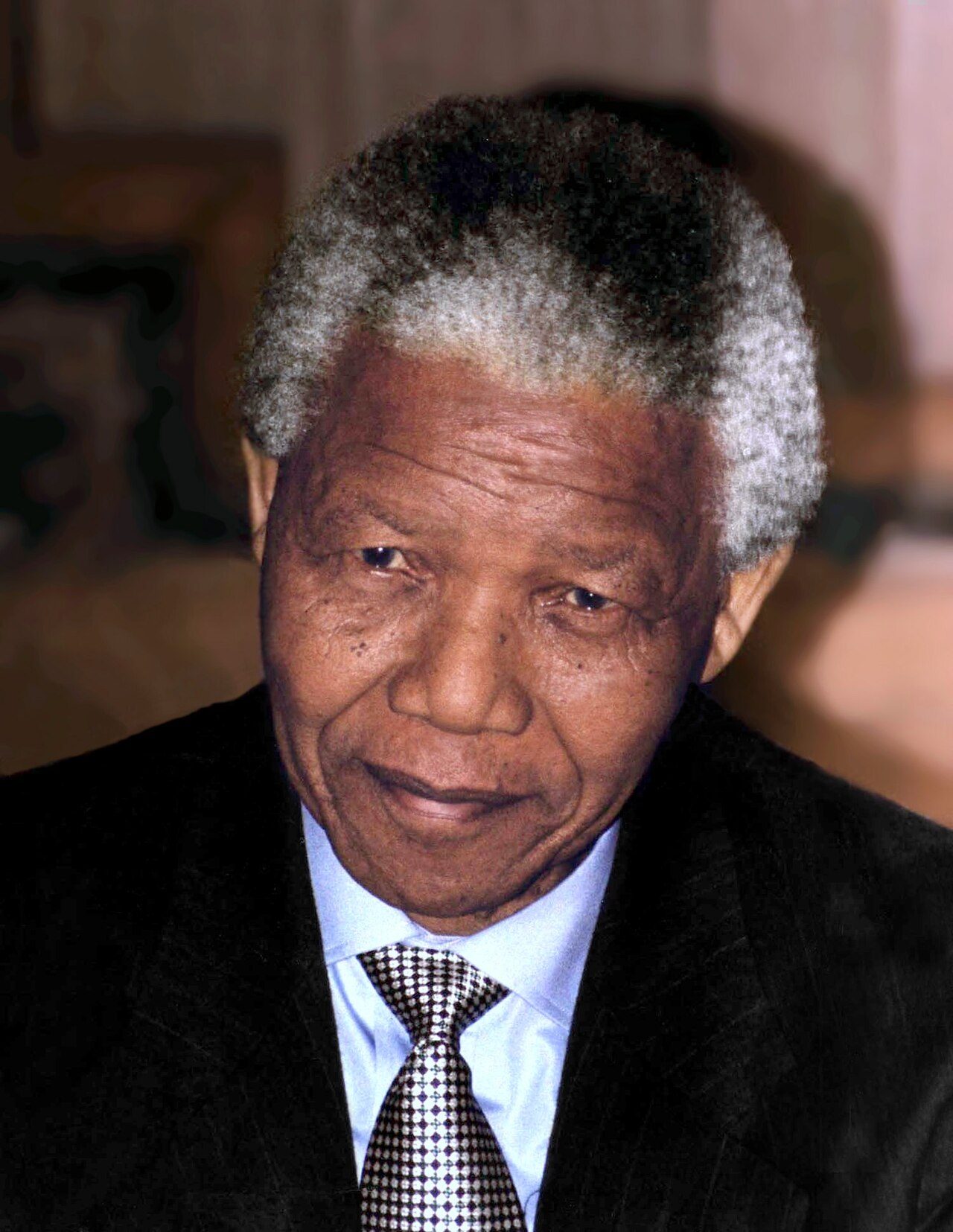
1994 is remembered above all for 27 April, when South Africans of all races voted together for the first time and Nelson Mandela cast his first-ever ballot, on the way to the presidency. The same spring brought horror in Rwanda, where the shooting down of the presidents' plane triggered genocide, and quieter revolutions from the Channel Tunnel to the founding of Amazon.
At a Glance
- Defining event
- South Africa's first democratic election, 27 April — Mandela casts his first ballot; the ANC wins 62.65 percent
- Inauguration
- Nelson Mandela is inaugurated as president in Pretoria on 10 May
- Genocide begins
- The plane carrying the presidents of Rwanda and Burundi is shot down on 6 April, triggering the Rwandan genocide
- Link opened
- Queen Elizabeth II and President Mitterrand open the Channel Tunnel on 6 May
- Founded
- Jeff Bezos incorporates the company that becomes Amazon on 5 July
- Sport lost
- A baseball strike cancels the World Series for the first time since 1904
The defining story: the queue that ended apartheid
For most of the twentieth century South Africa's elections were a whites-only ritual in a country whose majority was Black. The apartheid system, formalised after 1948, stripped Black South Africans of citizenship itself, assigning them to impoverished 'homelands'. The African National Congress, banned in 1960, answered with armed struggle; its leader Nelson Mandela spent 27 years in prison. When President F. W. de Klerk unbanned the ANC in February 1990 and released Mandela, the two sides began four years of negotiation — through massacres, walkouts and brinkmanship — toward a single date.
The election ran from 26 to 29 April 1994, organised by an Independent Electoral Commission with no reliable voters' roll and millions of first-time voters to teach the mechanics of a ballot. What the world remembers is the queues: lines kilometres long snaking over hillsides and through townships in the autumn sun, the elderly carried to polling stations, voters who waited all day and sang while they waited. Observers pronounced the voting substantially free and fair even as the counting descended into chaos that had to be rescued by political negotiation.
On 27 April Mandela himself voted — 75 years old and voting for the first time in his life — at Ohlange School in Inanda, Durban. He chose the place deliberately: nearby lay the grave of John Dube, founding president of the organisation that became the ANC, so that he could report to Dube, as he put it, that his work was done and South Africa was at last free. The ANC won 62.65 percent of the vote. On 9 May South Africa's new parliament elected Mandela president, and on 10 May he was inaugurated in Pretoria before a watching world.
The triumph shared its season with catastrophe. Three weeks before the election, on 6 April, the plane carrying the presidents of Rwanda and Burundi was shot down over Kigali; the assassinations triggered the Rwandan genocide, and the next day Rwanda's prime minister Agathe Uwilingiyimana was murdered by soldiers as the killing began, along with ten Belgian peacekeepers guarding her. April 1994 thus holds the year's whole argument in one month: a country voting its way out of racial tyranny, and another collapsing into murder — proof that the ballot was an achievement, not an inevitability.
Timeline of 1994
- 17 January
The Northridge earthquake strikes Los Angeles before dawn, killing more than 50 people and causing some $20 billion in damage.
- 3 February
President Bill Clinton lifts the nineteen-year-old United States trade embargo on Vietnam.
- 12 February
Thieves break into the National Gallery in Oslo and steal Edvard Munch's The Scream.
- 28 February
American jets shoot down four Serb warplanes over Bosnia, the first combat action in NATO's history.
- 5 April
Kurt Cobain, lead singer of Nirvana, dies by suicide in Seattle at 27.
- 6 April
The plane carrying the presidents of Rwanda and Burundi is shot down over Kigali; the assassinations trigger the Rwandan genocide.
- 27 April
South Africans of all races vote together for the first time; Mandela casts his first-ever ballot.
- 1 May
Ayrton Senna, three-time Formula One world champion, is killed in a crash at Imola at 34.
- 6 May
Queen Elizabeth II and President Mitterrand open the Channel Tunnel, linking Britain and France by rail beneath the sea.
- 10 May
Nelson Mandela is inaugurated as president of South Africa in Pretoria.
- 17 June
After a televised slow-speed freeway chase, O. J. Simpson is arrested for the murders of Nicole Brown Simpson and Ronald Goldman.
- 5 July
Jeff Bezos incorporates the company that becomes Amazon, founded as an online bookshop in Seattle.
- 31 August
Russian troops complete their withdrawal from Estonia, ending a half-century military presence in the Baltics.
- 11 December
Russian forces enter Chechnya, beginning the First Chechen War.
Why 1994 still matters
South Africa's election is the late twentieth century's clearest proof that a system built on exclusion can be ended by counting everyone. The queues of April 1994 — first-time voters waiting all day in the sun — became the founding image of the new republic, and Mandela's single term set the pattern of a transition conducted by ballot and negotiation rather than revenge. The ANC's 62.65 percent was a landslide with a built-in limit: a majority large enough to govern, in a constitution designed to be shared.
Rwanda is the counterweight that keeps 1994 honest. The same international order that celebrated South Africa's vote failed, in the same weeks, to stop a genocide that began with a plane shot down and a prime minister murdered. The year therefore teaches both halves of its lesson at once: what organised politics can achieve, and what its absence costs.
The quieter changes compounded. The Channel Tunnel linked Britain and France by rail beneath the sea in May; in July Jeff Bezos incorporated the company that became Amazon, founded as an online bookshop in Seattle; and in December Russian forces entered Chechnya, beginning the First Chechen War, while Russian troops had completed their withdrawal from Estonia in August, ending a half-century presence in the Baltics. Even sport marked the unsettled times: a baseball strike cancelled the World Series for the first time since 1904.
1994 on The History Trail
South Africa's first democratic election leads this year on The History Trail.
- April 27 in History — South Africa's first democratic election — the featured story of 1994.
- May 10 in History — Nelson Mandela is inaugurated as president in Pretoria.
- April 6 in History — The presidents' plane is shot down over Kigali and the Rwandan genocide begins.
- May 6 in History — The Channel Tunnel is opened by Queen Elizabeth II and President Mitterrand.
- July 5 in History — Jeff Bezos incorporates the company that becomes Amazon.
- PlayStation — The History Trail's story of Sony's PlayStation console.
- The Shawshank Redemption — The History Trail's story of the prison film.
- Formula One — The sport that lost Ayrton Senna at Imola in 1994.
Sources
- Encyclopaedia Britannica — On This Day: April 27
- Encyclopaedia Britannica — On This Day: May 10
- Encyclopaedia Britannica — On This Day: April 6
- Encyclopaedia Britannica — On This Day: May 6
- Encyclopaedia Britannica — On This Day: December 11
The facts on this page were checked against these sources on 19 November 2026. The History Trail's permanent pages are researched and written for this site; the live profiles elsewhere on The History Trail are assembled automatically from Wikipedia and Wikidata.
About the Author
Researched and written by the The History Trail Editorial Team — the accountable editorial function behind this site's permanent story pages. The team works from the published sources cited on each page; it does not invent historians, reviewers or credentials, and it corrects errors openly.
Fact Check
Every load-bearing fact on this page traces to one of the sources listed above, and significant claims link to their source in the text. Our checking method is described on the methodology page; errors can be reported via the corrections page.
Sources & Citations
Cite this page as: The History Trail Editorial Team, The History Trail — this article's title, publication and update dates are shown beneath its headline. The full source list appears under Sources above; the site's source standards are on the sources page.