
On This Day
May 10 in History
On the morning of 10 May 1940 Germany invaded the Netherlands, Belgium, Luxembourg and France. By that evening, Neville Chamberlain had resigned and Winston Churchill — for a decade a political outsider warning against the very danger now breaking over Europe — was prime minister, forming the coalition that would see Britain through the war. May 10 is also the day the first transcontinental railroad was completed at Promontory Summit in 1869, and Louis XVI and Marie Antoinette ascended the French throne in 1774.
Choose another date: open the On This Day calendar to browse events, births and deaths for any day of the year.
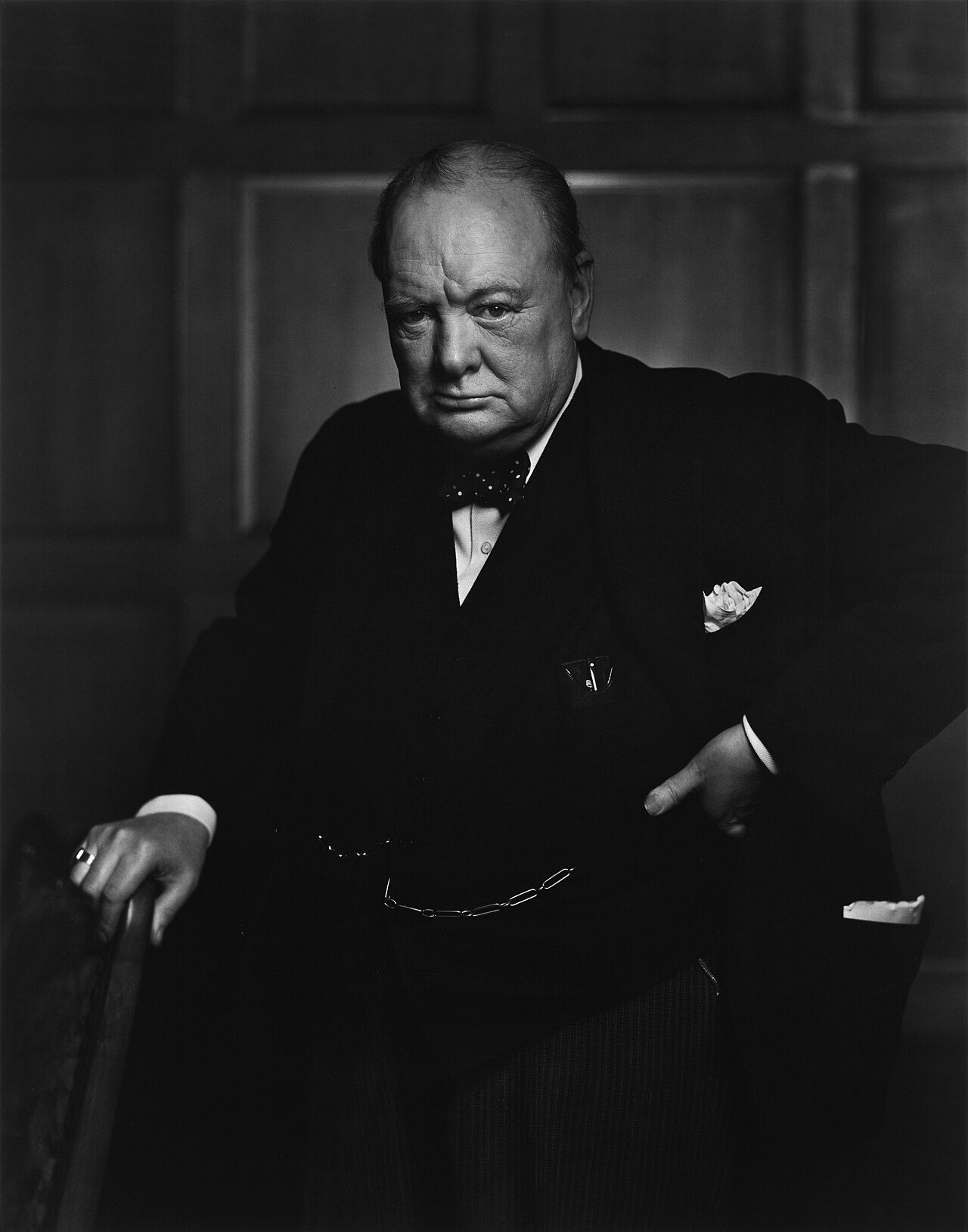
At a Glance
- The crisis
- The Norway debate of 7–8 May destroyed Chamberlain's authority even though his government won the vote
- The rival
- Lord Halifax, the foreign secretary, was the establishment favourite but declined to lead from the House of Lords
- The day
- Germany invaded the Low Countries and France at dawn on 10 May; Chamberlain resigned that evening
- The appointment
- Churchill kissed hands with George VI late on 10 May and formed a coalition including Labour within days
- The first speech
- On 13 May he told the Commons he had nothing to offer but blood, toil, tears and sweat
- The tenure
- He led Britain to victory in 1945, lost the election that July, and served a second term from 1951 to 1955
Events on this day
- 1774Louis XVI ascends the French throne on the death of his grandfather Louis XV, with Marie Antoinette as queen.
- 1857Sepoy regiments mutiny at Meerut, beginning the Indian Rebellion of 1857 against the East India Company.
- 1869The golden spike completes the first transcontinental railroad at Promontory Summit, Utah, joining America's coasts by rail.
- 1871The Treaty of Frankfurt ends the Franco-Prussian War; France cedes Alsace-Lorraine to the new German Empire.
- 1908The first Mother's Day observance is held in Grafton, West Virginia, organised by Anna Jarvis.
- 1924J. Edgar Hoover is appointed head of the Bureau of Investigation, beginning his 48-year tenure at the FBI.
- 1933Nazi students burn some 25,000 books in Berlin's Opernplatz and in university towns across Germany.
- 1940Winston Churchill becomes prime minister — the featured story above; Germany invades France and the Low Countries the same morning.
- 1941Rudolf Hess flies alone to Scotland on his unauthorised peace mission and is captured.
- 1979Micronesia adopts its constitution and self-government in free association with the United States.
- 1994Nelson Mandela is inaugurated as president of South Africa in Pretoria, before a watching world.
- 2018The first summit meeting between a U.S. president and a North Korean leader is announced for Singapore.
Born on this day
- 1838John Wilkes Booth — American actor who assassinated Abraham Lincoln, born in Maryland.
- 1899Fred Astaire — American dancer and film star, partner to Ginger Rogers, born in Omaha.
- 1930Pat Summerall — American football player turned broadcaster, the voice of a generation of NFL coverage.
- 1946Donovan — Scottish singer-songwriter of Mellow Yellow and Sunshine Superman.
- 1957Sid Vicious — English bassist of the Sex Pistols, born John Simon Ritchie in London.
- 1960Bono — Irish singer of U2 and campaigner, born Paul David Hewson in Dublin.
- 1977Nick Heidfeld — German Formula One driver, holder of the record for most podiums without a win.
Died on this day
- 1774Louis XV — king of France for 59 years, dead of smallpox at Versailles at 64; his grandson succeeds him the same day.
- 1863Thomas 'Stonewall' Jackson — Confederate general, dead of pneumonia eight days after being wounded by his own men at Chancellorsville, at 39.
- 1897Andres Bonifacio — Filipino revolutionary leader, executed by rival revolutionaries at 33.
- 1977Joan Crawford — American actress, star of Mildred Pierce, dead in New York at about 72.
- 2010Frank Frazetta — American fantasy artist whose paintings defined the look of Conan, dead at 82.
- 2015Chris Burden — American performance and installation artist, dead at 69.
The featured story: Churchill becomes prime minister, 10 May 1940
Churchill came to power at the worst hour in modern British history, through a door opened by failure. The Norway campaign of April 1940 — an Allied attempt to cut Germany's iron-ore route that ended in evacuation — provoked a two-day debate in the Commons on 7 and 8 May in which Conservative after Conservative turned on Neville Chamberlain's government. The government won the vote, but with its majority cut from over two hundred to eighty-one, and with Labour refusing to serve under Chamberlain in the coalition the war now plainly required. Chamberlain tried to hold on; the arithmetic, and then the German army, decided otherwise.
At dawn on 10 May, German forces invaded the Netherlands, Belgium, Luxembourg and France, ending the eight-month Phoney War in a morning. In London the succession was settled in hours. The alternative candidate, Lord Halifax, the foreign secretary, had the support of the King, of Chamberlain and of most of the Conservative establishment — but he sat in the House of Lords, doubted his own fitness for the post, and at a meeting on 9 May had let the claim pass to Churchill. On the evening of 10 May, Chamberlain drove to Buckingham Palace and resigned; Churchill was summoned, kissed hands, and — as he later wrote — felt, walking to his car, a profound sense of relief: at last he had the authority to give directions over the whole scene.
He used the weekend ruthlessly. A five-man War Cabinet brought Labour in at the top — Clement Attlee and Arthur Greenwood beside Chamberlain and Halifax — and Labour's Ernest Bevin took the Ministry of Labour, giving the coalition the unions' strength. On Monday 13 May, Churchill addressed the Commons for the first time as prime minister, in the speech that set the terms of his leadership: he had nothing to offer but blood, toil, tears and sweat, and the policy, in one word, was victory — victory at all costs, victory in spite of all terror, however long and hard the road might be. The House voted its confidence unanimously.
What followed is the most studied premiership in British history: the fall of France, the Dunkirk evacuation, the Battle of Britain, the Blitz, the long road back through North Africa, Normandy and the Rhine. Churchill's gift was not administration — it was language used as a weapon, and a refusal, in the summer of 1940 when Britain stood effectively alone, to entertain the negotiated peace that some around him contemplated. The electorate dismissed him in July 1945, weeks after victory in Europe, and recalled him from 1951 to 1955. But his historical self was made in the three days from 10 May 1940: the outsider of a decade became, in the crisis he had predicted, the only possible man.
Why this date matters
May 10 is a date of successions under pressure. A young king inherits France in 1774 and loses his head to its revolution; a railroad is joined in Utah in 1869 and a continent's geography is abolished; books burn in Berlin in 1933, in the decade's plainest warning; and in 1940, on the morning the storm broke, Britain changed pilots without changing course — the rarest of political feats. Even its 1994 entry is a succession: Mandela inaugurated in Pretoria, taking power from the men who had jailed him. The day rewards those who prepare for a moment they hope will never come.
Sources
- Encyclopaedia Britannica — On This Day: May 10
- HISTORY — What Happened on May 10
- UK Parliament — Winston Churchill
- Encyclopaedia Britannica — Winston Churchill
The facts on this page were checked against these sources on 19 November 2026. The History Trail's permanent pages are researched and written for this site; the live profiles elsewhere on The History Trail are assembled automatically from Wikipedia and Wikidata.
About the Author
Researched and written by the The History Trail Editorial Team — the accountable editorial function behind this site's permanent story pages. The team works from the published sources cited on each page; it does not invent historians, reviewers or credentials, and it corrects errors openly.
Fact Check
Every load-bearing fact on this page traces to one of the sources listed above, and significant claims link to their source in the text. Our checking method is described on the methodology page; errors can be reported via the corrections page.
Sources & Citations
Cite this page as: The History Trail Editorial Team, The History Trail — this article's title, publication and update dates are shown beneath its headline. The full source list appears under Sources above; the site's source standards are on the sources page.