
On This Day
May 9 in History
On 9 May 1950, in a gilded salon of the French foreign ministry, Foreign Minister Robert Schuman read a short declaration proposing that France and West Germany pool their coal and steel production under a common authority open to all Europe. It took five minutes to read and seventy years to unfold: it is the founding act of what became the European Union, and 9 May is kept as Europe Day. The date is also Victory Day in Russia and the former Soviet states, marking the 1945 surrender, and the day Nelson Mandela was elected president of South Africa in 1994.
Choose another date: open the On This Day calendar to browse events, births and deaths for any day of the year.
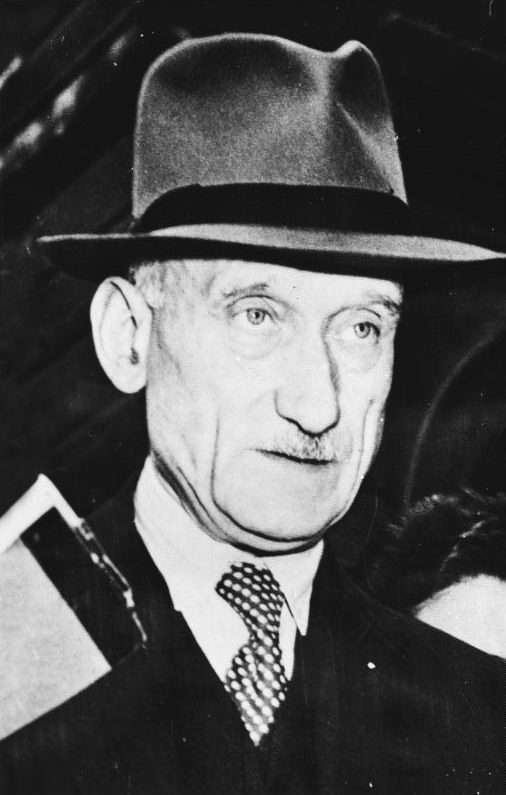
At a Glance
- The speaker
- Robert Schuman, French foreign minister, reading the declaration at the Quai d'Orsay on 9 May 1950
- The author behind it
- Jean Monnet, head of the French planning commissariat, who drafted the plan with a small team in secrecy
- The proposal
- Place Franco-German coal and steel production under a single High Authority, open to other European countries
- The purpose
- To make war between France and Germany, in the declaration's words, not merely unthinkable but materially impossible
- The sequel
- The Treaty of Paris of 1951 created the European Coal and Steel Community of six nations — the ancestor of the EU
- The commemoration
- 9 May is Europe Day across the European Union
Events on this day
- 1671Colonel Thomas Blood attempts to steal the Crown Jewels from the Tower of London — and is pardoned by Charles II, who was amused by his audacity.
- 1860The first Pony Express riders are mid-season in the American West, carrying mail between Missouri and California in ten days.
- 1864The Battle of Cloyd's Mountain is fought in Virginia during the American Civil War.
- 1877An earthquake and tsunami strike Iquique, Peru (now Chile), killing more than 2,500 people.
- 1901Australia opens its first federal parliament in Melbourne, months after federation.
- 1941HMS Bulldog's boarding party captures the German submarine U-110 and recovers an Enigma machine and codebooks, a turning point in the Battle of the Atlantic.
- 1945The Soviet Union celebrates Victory Day, the day after the surrender took effect in the West; the Channel Islands are liberated.
- 1950Robert Schuman reads his declaration in Paris — the featured story above.
- 1955West Germany joins NATO, nine years before the Warsaw Pact answers it; the Cold War's alliances are complete.
- 1960The United States approves the first birth-control pill for general use, a social turning point.
- 1994South Africa's new parliament elects Nelson Mandela president, days after the first all-race election.
- 2018Mahathir Mohamad's coalition wins Malaysia's election, the first change of government since independence.
Born on this day
- 1860J. M. Barrie — Scottish novelist and playwright, creator of Peter Pan.
- 1874Howard Carter — English archaeologist who found Tutankhamun's tomb in 1922.
- 1921Sophie Scholl — German student executed for distributing anti-Nazi leaflets with the White Rose.
- 1936Albert Finney — English actor of Saturday Night and Sunday Morning and Tom Jones.
- 1946Candice Bergen — American actress, star of Murphy Brown.
- 1949Billy Joel — American singer-songwriter, the Piano Man.
- 1962Dave Gahan — English singer, frontman of Depeche Mode.
Died on this day
- 1805Friedrich Schiller — German poet and playwright of The Robbers and the Ode to Joy, dead at 45.
- 1850Joseph Louis Gay-Lussac — French chemist of the gas laws that bear his name, dead at 71.
- 1931Albert Abraham Michelson — American physicist, the first American Nobel laureate in science, dead at 78.
- 1978Aldo Moro — former Italian prime minister, found murdered by the Red Brigades after 55 days as a hostage.
- 1986Tenzing Norgay — Sherpa mountaineer who summited Everest with Hillary in 1953, dead at 71.
- 2015Kenan Evren — Turkish general who led the 1980 coup and later served as president, dead at 97.
The featured story: the Schuman Declaration, 9 May 1950
Europe in the spring of 1950 was a continent of fresh graves and live fears. Five years after the war, France and the new West German state were already circling each other over the coal of the Ruhr and the steel of Lorraine — the same industrial belt over which they had fought three wars in seventy years. Jean Monnet, the French planner who had spent the war coordinating Allied supply, concluded that the old answer, controlling Germany, had failed three times; the new answer was to dissolve the prize itself. In April 1950 he and a handful of collaborators drafted, in near secrecy, a plan to place both countries' coal and steel under a joint authority neither could capture.
Schuman, the foreign minister — a Lorrainer born a German citizen, who had been arrested by the Gestapo and had escaped — saw the draft on 28 April and took it as his own. The cabinet approved it on the morning of 9 May, and that afternoon, in the Salon de l'Horloge at the Quai d'Orsay, Schuman read it to a room of journalists who had been summoned without knowing why. World peace, it began, cannot be safeguarded without creative efforts proportionate to the dangers which threaten it. Europe would not be made all at once, but through concrete achievements creating a de facto solidarity — beginning with coal and steel, the materials of war, pooled so that war between France and Germany would become not merely unthinkable, but materially impossible.
The offer was addressed first to Germany, and Chancellor Konrad Adenauer — who had been privately sounded out and had answered within the hour on the day itself — welcomed it the same evening. Italy and the Benelux countries joined the negotiation; Britain, invited, declined to bind itself. The Treaty of Paris, signed in April 1951, created the European Coal and Steel Community of the Six, with the first supranational institutions in European history: a High Authority that could take decisions binding on states, a council of ministers, a parliamentary assembly and a court. Monnet became the Authority's first president when it took office in Luxembourg in 1952.
From that seed grew, by deliberate accretion, everything the declaration's method promised: the European Economic Community of 1957, the single market, the euro, and a union of 27 states and 450 million people — including, eventually, most of the continent that in 1950 lay behind the Iron Curtain. The method mattered as much as the map: integration by small, concrete, irreversible steps, taken by former enemies who had decided to share the very industries of war. Europe Day is kept on 9 May not because a treaty was signed then, but because a sentence was read aloud in Paris that made the rest of it imaginable.
Why this date matters
May 9 is Europe's double day. In the East it is Victory Day, kept with parades for the surrender that Moscow recorded on this date in 1945; in the West it is Europe Day, kept with speeches for the declaration read in Paris exactly five years later, which proposed to make such victories unnecessary. The pairing is the continent's whole modern history in one square of the calendar: first the war ends, then the peace is engineered. That both commemorations fall on the same morning, and are rarely noticed together, says much about the Europe the declaration built — and the one it has not yet finished.
Sources
- Encyclopaedia Britannica — On This Day: May 9
- HISTORY — What Happened on May 9
- European Union — Schuman Declaration
- Wikipedia — May 9
The facts on this page were checked against these sources on 19 November 2026. The History Trail's permanent pages are researched and written for this site; the live profiles elsewhere on The History Trail are assembled automatically from Wikipedia and Wikidata.
About the Author
Researched and written by the The History Trail Editorial Team — the accountable editorial function behind this site's permanent story pages. The team works from the published sources cited on each page; it does not invent historians, reviewers or credentials, and it corrects errors openly.
Fact Check
Every load-bearing fact on this page traces to one of the sources listed above, and significant claims link to their source in the text. Our checking method is described on the methodology page; errors can be reported via the corrections page.
Sources & Citations
Cite this page as: The History Trail Editorial Team, The History Trail — this article's title, publication and update dates are shown beneath its headline. The full source list appears under Sources above; the site's source standards are on the sources page.