
Things
Formula One
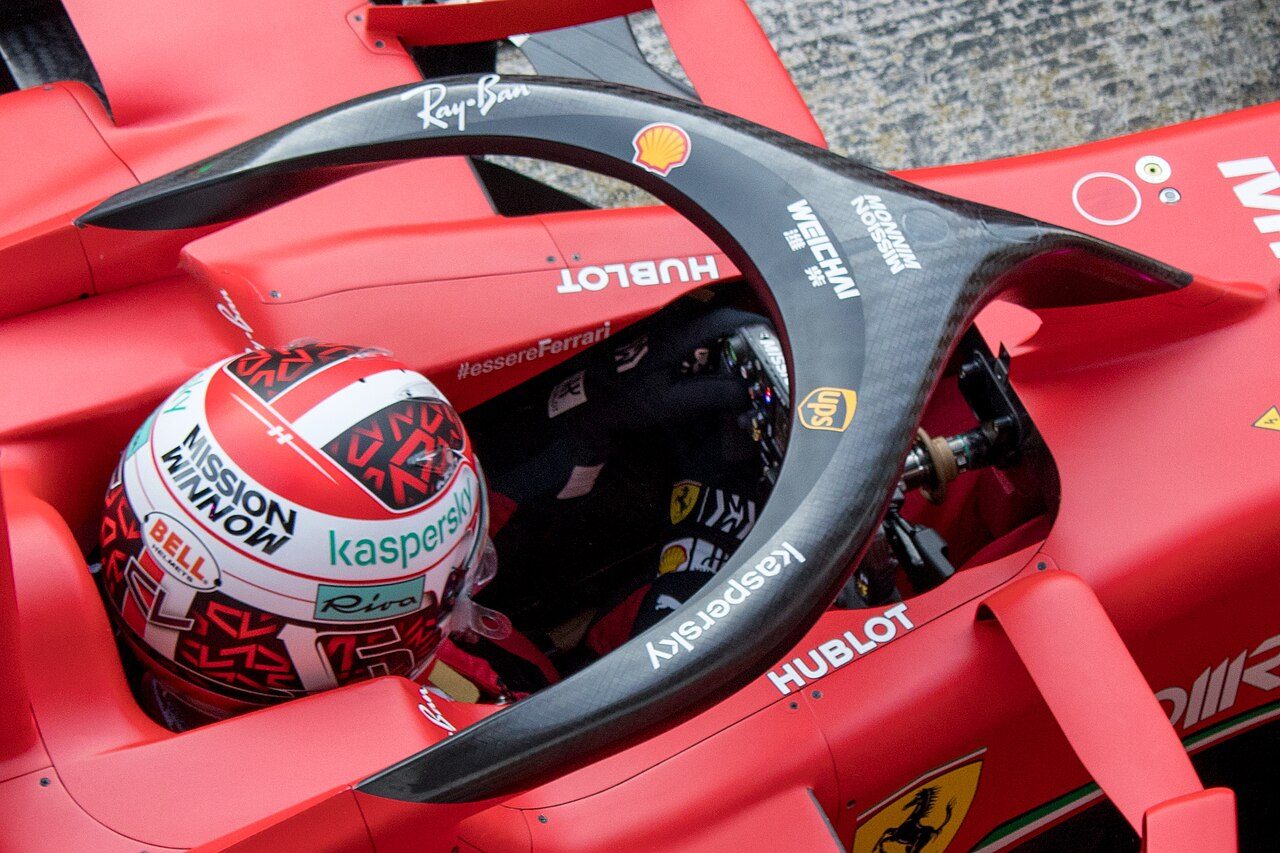
Formula One is the top class of single-seater motor racing, and its World Championship began at Silverstone on 13 May 1950, won by Giuseppe Farina. For its first decades it was also one of the most dangerous sports in the world; the deaths of Ayrton Senna and Roland Ratzenberger in 1994 forced a safety revolution that runs through crash-tested survival cells and the HANS device to the titanium halo, mandatory since 2018.
At a Glance
- What it is
- The highest class of single-seater, open-wheel motor racing, run by the FIA to a set technical formula
- First championship race
- The British Grand Prix at Silverstone, 13 May 1950, won by Giuseppe Farina, who became the first world champion
- Constructors' title
- A championship for the teams was added in 1958, won first by Vanwall
- Early safety
- Helmets compulsory only from 1952; seat belts from 1972; one tally counts 33 driver deaths at championship Grand Prix meetings, most in the early decades
- The turning point
- The deaths of Roland Ratzenberger and Ayrton Senna at Imola in 1994 triggered wholesale reform of cars, circuits and medical cover
- Modern protection
- Carbon-fibre survival cell (1981), HANS device mandatory (2003), titanium halo mandatory (2018)
- Most titles
- Michael Schumacher and Lewis Hamilton share the record with seven drivers' championships each
Introduction
Formula One is the highest class of single-seater motor racing: open-wheel cars built to a technical formula set by the governing body, the FIA, racing in a series of Grands Prix around the world. Its World Championship, for drivers, began in 1950; a championship for constructors followed in 1958. Teams build their own cars, and success depends on engineering as much as driving.
Formula One's history has two intertwined threads: speed and safety. The cars became vastly faster across seven decades, but the championship's early years were lethally dangerous, and almost every protection a modern driver takes for granted - the crash-tested survival cell, the HANS neck device, the halo - was introduced only after deaths forced the sport to change.
1950: A Championship Begins
Grand Prix racing was decades old before Formula One existed. The FIA standardised the Formula One rules in 1946, and on 13 May 1950 Silverstone hosted the first World Championship race, the British Grand Prix, won by Giuseppe Farina for Alfa Romeo. Farina went on to become the first world champion in a seven-race season; Ferrari, the championship's most famous team, debuted at Monaco that year. Argentina's Juan Manuel Fangio dominated the 1950s, and in 1958 Vanwall won the first constructors' championship - the same year Stirling Moss won a race in a rear-engined car, the layout every Formula One car has used since.
The Dangerous Decades
Safety, in the championship's first decades, barely featured. Circuits had no real safety features, cars were front-engined tubes with fuel tanks around the driver, and death was widely treated as an acceptable risk of the job. Crash helmets were not compulsory until 1952, and the helmets of that era offered little protection. Fatalities were common: one widely used tally of the championship's record counts 33 driver deaths at World Championship Grand Prix meetings, the great majority of them in the sport's first three decades.
Change came slowly, and usually from the drivers. In the 1970s Jackie Stewart, a three-time world champion, campaigned for medical facilities, barriers and safer circuits, against resistance from organisers and some fellow drivers. Straw bales were banned as barriers after Lorenzo Bandini's fatal accident at Monaco in 1967; seat belts became compulsory in 1972; McLaren's MP4/1 of 1981 introduced the carbon-fibre monocoque - the survival cell - and crash tests began in 1985. By the early 1990s a full-time safety car and a professional medical operation were in place. It was not enough.
Timeline
- 13 May 1950
The first World Championship Grand Prix is held at Silverstone; Giuseppe Farina wins for Alfa Romeo and becomes the first world champion.
- 1952
Crash helmets are made compulsory - two seasons into the championship.
- 1958
The constructors' championship is awarded for the first time, won by Vanwall; Stirling Moss wins in a rear-engined car.
- 1967
Straw bales are banned as safety barriers after Lorenzo Bandini's fatal accident at Monaco.
- 1972
Seat belts become compulsory for Formula One drivers.
- 1981
McLaren's MP4/1 introduces the carbon-fibre monocoque survival cell to Formula One.
- 1985
FIA crash tests for Formula One cars are introduced, initially for the front of the car.
- 30 April - 1 May 1994
Roland Ratzenberger and Ayrton Senna are killed at the San Marino Grand Prix at Imola, triggering the sport's biggest safety overhaul.
- 2003
The HANS head-and-neck support device becomes mandatory.
- 2014
Jules Bianchi suffers fatal injuries at the Japanese Grand Prix - the first championship fatality since 1994; virtual safety cars follow.
- 2018
The titanium halo cockpit protection device becomes mandatory on every Formula One car.
- 29 November 2020
Romain Grosjean escapes a fiery, car-splitting crash in Bahrain, and credits the halo with saving his life.
1994: The Imola Turning Point
The 1994 San Marino Grand Prix at Imola is the weekend modern Formula One is dated from. On the Saturday, the Austrian Roland Ratzenberger was killed in qualifying. On Sunday, Ayrton Senna - Brazil's three-time world champion, then driving for Williams - crashed during the race and died from his injuries. They landed on a sport that had come to believe its progress had made such weekends impossible.
The FIA's response reshaped the cars and the circuits: engine power was cut, cockpit sides were raised around the driver's head, crash tests were extended to side impact and roll structures, pit-lane speed limits were imposed, and high-risk corners were reprofiled or removed. The reforms worked in the starkest statistical sense: no driver died at a championship event for the next twenty years, until Jules Bianchi's crash at the wet Japanese Grand Prix of 2014, which in turn brought virtual safety cars and strengthened the case for the halo.
The Halo Era
The halo is a titanium structure anchored to the chassis at three points above the cockpit, built to deflect wheels, debris and other cars away from the driver's head. Tested from 2016, it was made mandatory by the FIA for 2018 despite open scepticism from drivers and fans who disliked its looks. Its value was demonstrated quickly, and most famously at Bahrain in 2020, when Romain Grosjean's Haas hit a barrier at speed, split in two and burst into flames; Grosjean escaped with burns to his hands. Speaking from hospital, the driver who had once opposed the device said: "I wasn't for the halo some years ago but I think it's the greatest thing we brought to Formula 1 and without it I wouldn't be able to speak to you today." Britannica likewise credits the halo with saving lives, including Lewis Hamilton's in a 2021 crash at Monza.
Significance
Formula One matters beyond motor racing because it is the clearest public record of a dangerous technology being made survivable by regulation. Its safety systems - energy-absorbing structures, crash testing, head-and-neck restraint, cockpit protection - migrated into road cars and other sports, and its model of investigating every serious accident and rewriting the rules is now standard across motorsport. It is also a global engineering contest watched on every continent, in which two championships, for the driver and for the constructor, reward both the person and the machine.
Questions readers ask
Who has won the most championships? Michael Schumacher and Lewis Hamilton share the record, with seven drivers' titles each. Who was the first champion? Giuseppe Farina, in 1950, for Alfa Romeo - he also won the first championship race, at Silverstone. Which team is ever-present in the record books? Ferrari, which entered in the championship's first season, in 1950.
Did drivers really race without helmets? Only briefly: the first two championship seasons were run in cloth caps and goggles before helmets became compulsory in 1952 - though those early helmets, made of cork and resembling dinner bowls, bore little resemblance to the carbon-fibre helmets introduced in 2001. And is the sport safe now? It is transformed, not safe: cars still crash at over 300 km/h, and the halo era's lesson from Bahrain is that survival depends on every system - cell, halo, harness, barriers, medical response - working together.
Legacy
Formula One's legacy is written in two record books. One lists champions from Farina and Fangio to Schumacher and Hamilton, and cars that traced the whole arc of postwar engineering. The other is a list of names the sport lost, mostly before 1980, and of the rules each era of loss produced. That the second list has barely grown in thirty years - while the cars grew faster than ever - is the championship's most consequential achievement.
Sources
- Encyclopaedia Britannica - Automobile racing
- PoleCircuit - History of Formula 1: Every Era From 1950
- Wikipedia - Safety in Formula One
- Agence France-Presse (via Vietnam Investment Review) - F1 safety systems praised as Grosjean survives fireball in "miracle"
- BetMGM UK - History of F1: Formula 1 Champions
The facts on this page were checked against these sources on 19 November 2026. The History Trail's permanent pages are researched and written for this site; the live profiles elsewhere on The History Trail are assembled automatically from Wikipedia and Wikidata.
About the Author
Researched and written by the The History Trail Editorial Team — the accountable editorial function behind this site's permanent story pages. The team works from the published sources cited on each page; it does not invent historians, reviewers or credentials, and it corrects errors openly.
Fact Check
Every load-bearing fact on this page traces to one of the sources listed above, and significant claims link to their source in the text. Our checking method is described on the methodology page; errors can be reported via the corrections page.
Sources & Citations
Cite this page as: The History Trail Editorial Team, The History Trail — this article's title, publication and update dates are shown beneath its headline. The full source list appears under Sources above; the site's source standards are on the sources page.