
On This Day
April 27 in History
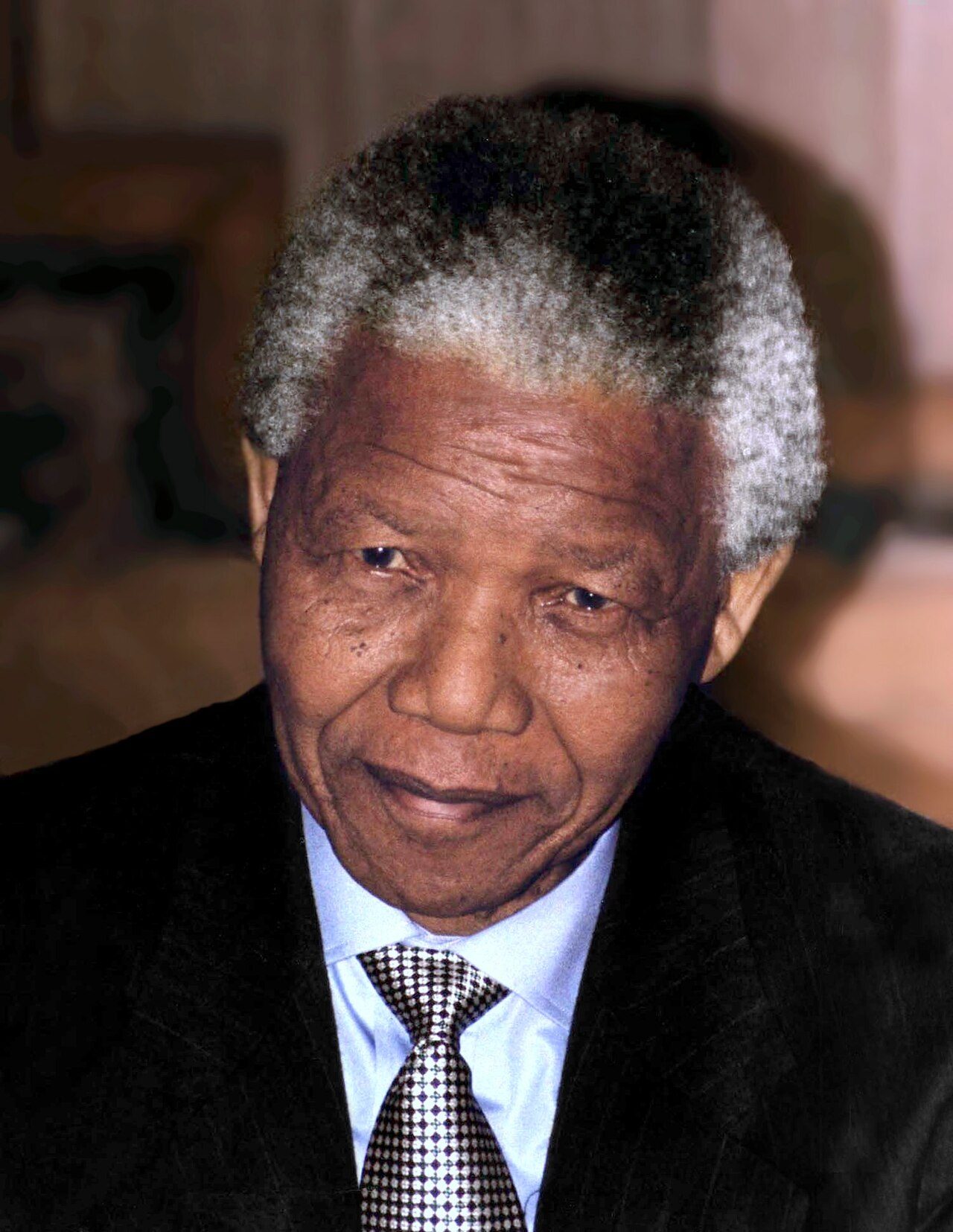
On 27 April 1994, in the middle of South Africa's first election open to citizens of every race, Nelson Mandela — 75 years old and voting for the first time in his life — cast his ballot at a school in Inanda, Durban. The four-day vote buried apartheid at the ballot box and made him president. April 27, now Freedom Day, is also the day Magellan was killed in the Philippines and Ulysses S. Grant was born.
Choose another date: open the On This Day calendar to browse events, births and deaths for any day of the year.
At a Glance
- The vote
- General elections held 26–29 April 1994; 27 April, the main day, is now Freedom Day, a public holiday
- The electorate
- Nearly 19.7 million votes counted — the first election in South African history under universal suffrage
- The result
- The ANC won 62.65% and 252 of 400 National Assembly seats; the National Party took 20.39%, the Inkatha Freedom Party 10.54%
- Mandela's ballot
- Cast at Ohlange School, Inanda, near the grave of John Dube, the ANC's founding president
- The road there
- Four years of negotiation after Mandela's release in February 1990, through boycotts, violence and the near-collapse of talks
- The sequel
- The new Assembly's first act was to elect Mandela president; he was inaugurated on 10 May 1994
Events on this day
- 1521Ferdinand Magellan is killed at the Battle of Mactan in the Philippines, intervening in a local war; his expedition sails on without him and completes the first circumnavigation.
- 1650Royalist forces under the Marquis of Montrose are defeated at Carbisdale in Scotland, ending his campaign for Charles II.
- 1667The blind, impoverished John Milton sells the copyright of Paradise Lost to the printer Samuel Simmons — for a first payment of £5.
- 1773Britain's Parliament passes the Tea Act, rescuing the East India Company; the tax it preserves helps provoke the Boston Tea Party.
- 1813American troops capture York (modern Toronto), capital of Upper Canada, and burn its parliament buildings during the War of 1812.
- 1830Simón Bolívar resigns the presidency of Gran Colombia, his dream of a united Spanish America dissolving around him.
- 1994South Africans of all races vote together for the first time; Mandela casts his first-ever ballot — the featured story above.
- 2005The Airbus A380, the world's largest passenger airliner, makes its maiden flight from Toulouse, France.
Born on this day
- 1737Edward Gibbon — English historian whose Decline and Fall of the Roman Empire remains a monument of historical writing.
- 1759Mary Wollstonecraft — English writer whose A Vindication of the Rights of Woman founded modern feminism.
- 1791Samuel Morse — American inventor of the single-wire telegraph and the code of dots and dashes that bears his name.
- 1822Ulysses S. Grant — Union general who won the American Civil War, and 18th president of the United States.
- 1932Casey Kasem — American broadcaster, the voice of the American Top 40 countdown for decades.
Died on this day
- 1521Ferdinand Magellan — Portuguese navigator in Spain's service, killed at Mactan at about 41 (see Events).
- 1882Ralph Waldo Emerson — American essayist and philosopher, the sage of Concord and voice of Transcendentalism, dead at 78.
- 1965Edward R. Murrow — pioneering American broadcast journalist, dead of lung cancer at 57, two days after his birthday.
- 1972Kwame Nkrumah — first leader of independent Ghana and prophet of African unity, dead in exile in Bucharest at 62.
The featured story: South Africa votes, 27 April 1994
For most of the twentieth century South Africa's elections were a whites-only ritual in a country whose majority was Black. The apartheid system, formalised after 1948, stripped Black South Africans of citizenship itself, assigning them to impoverished 'homelands'. The African National Congress, banned in 1960, answered with armed struggle; its leader Nelson Mandela spent 27 years in prison. When President F. W. de Klerk unbanned the ANC in February 1990 and released Mandela, the two sides began four years of negotiation — through the Boipatong and Bisho massacres, walkouts and brinkmanship — toward a single date on which everyone would vote as equals.
The election ran from 26 to 29 April 1994, organised by an Independent Electoral Commission with no reliable voters' roll and millions of first-time voters to teach the mechanics of a ballot. What the world remembers is the queues: lines kilometres long snaking over hillsides and through townships in the autumn sun, the elderly carried to polling stations, voters who waited all day and sang while they waited. Observers pronounced the voting substantially free and fair even as the counting descended into chaos that had to be rescued by political negotiation — a technical disaster, one IEC analyst later wrote, salvaged as a political triumph.
Mandela voted on 27 April at Ohlange School in Inanda, outside Durban — deliberately, in the heartland of his Inkatha rivals, and beside the grave of John Dube, the ANC's first president. 'I voted for the first time in my life,' he told reporters, at 75. Across the country about 19.7 million ballots were counted. The ANC won 62.65 per cent — a landslide, though just short of the two-thirds that would have let it rewrite the constitution alone — and formed a Government of National Unity with the National Party and Inkatha, its former jailers and rivals, as the interim constitution required.
The new National Assembly's first act was to elect Mandela president; he was inaugurated on 10 May before a crowd of world leaders, with jets of the South African Air Force — the apartheid state's own air force — trailing the new flag's colours overhead. The date at the heart of it, 27 April, became Freedom Day, South Africa's founding holiday. Elections since have been routine, contested and sometimes bitter, which is precisely the point: the extraordinary queue of April 1994 made the ordinary politics of a democracy possible.
Why this date matters
April 27 measures how far a single day can travel. In 1521 it ends the life of the man who organised the first voyage around the world; in 1822 it begins the life of the general who would hold a young republic together; and in 1994 it delivers the vote — the whole world's most portable idea — to a nation that had rationed it by race for three centuries. Bolívar resigning in despair in 1830 and Mandela queuing in hope in 1994 are the same story told in opposite directions: who gets to belong to the state, and who decides.
Sources
- Encyclopaedia Britannica — On This Day: April 27
- HISTORY — What Happened on April 27
- South African History Online — The South African general elections: 1994
- Encyclopaedia Britannica — Ferdinand Magellan
The facts on this page were checked against these sources on 19 November 2026. The History Trail's permanent pages are researched and written for this site; the live profiles elsewhere on The History Trail are assembled automatically from Wikipedia and Wikidata.
About the Author
Researched and written by the The History Trail Editorial Team — the accountable editorial function behind this site's permanent story pages. The team works from the published sources cited on each page; it does not invent historians, reviewers or credentials, and it corrects errors openly.
Fact Check
Every load-bearing fact on this page traces to one of the sources listed above, and significant claims link to their source in the text. Our checking method is described on the methodology page; errors can be reported via the corrections page.
Sources & Citations
Cite this page as: The History Trail Editorial Team, The History Trail — this article's title, publication and update dates are shown beneath its headline. The full source list appears under Sources above; the site's source standards are on the sources page.