
Years
1953 in History
1953 is a year of firsts and endings. Watson and Crick determined the double-helix structure of DNA, Hillary and Tenzing made the first confirmed ascent of Mount Everest, and Elizabeth II was crowned in the first televised coronation. Stalin died after three decades ruling the Soviet Union, the Korean War's fighting ended at Panmunjom, and a CIA- and MI6-backed coup in Iran showed the Cold War's covert face.
At a Glance
- Defining event
- Watson and Crick determine DNA's double-helix structure on 28 February, at the Cavendish Laboratory, Cambridge
- An era ends
- Joseph Stalin dies on 5 March after three decades ruling the Soviet Union
- The highest first
- Hillary and Tenzing reach Everest's summit on 29 May — the first confirmed ascent
- A televised first
- Elizabeth II is crowned on 2 June in the first televised coronation; an estimated 27 million watch in Britain
- A war paused
- The Korean War armistice is signed at Panmunjom on 27 July — an armistice, not a peace treaty
- The covert turn
- A CIA- and MI6-backed coup overthrows Iran's prime minister Mosaddegh on 19 August
The defining story: the double helix
The year began with the ultimate weapon: on 7 January President Truman announced that the United States had developed a hydrogen bomb. Seven weeks later, in Cambridge, came the discovery that would define the century's science instead. On 28 February, at the Cavendish Laboratory, James Watson and Francis Crick determined the structure of DNA: a double helix, two strands joined by paired bases — adenine with thymine, guanine with cytosine. The pairing was the point: it explained how DNA copies itself, the mechanism of heredity. Their evidence drew on Rosalind Franklin's X-ray diffraction work at King's College London, including the image known as Photo 51, and the race had been close — Linus Pauling, the greatest chemist alive, had just published a triple-helix model that was chemically impossible. Watson and Crick published in Nature on 25 April 1953; the Nobel Prize followed in 1962 for Watson, Crick and Maurice Wilkins.
While science rewrote life's instruction book, the old order was burying its giants. On 5 March Joseph Stalin died in Moscow, ruler of the Soviet Union for three decades; the composer Sergei Prokofiev died the same day, his death almost unreported. On 14 March Nikita Khrushchev was named a secretary of the Communist Party's Central Committee, beginning his rise, and on 12 September he was announced as first secretary, succeeding Stalin at the head of the USSR. Medicine offered its own turning point on 26 March, when Jonas Salk announced that his killed-virus polio vaccine had been successfully tested — the first hopeful news against the disease that terrified every summer.
The year's public spectacles belonged to Britain. On 29 May Edmund Hillary and Tenzing Norgay reached the summit of Mount Everest, the first confirmed ascent of the world's highest mountain, spending roughly fifteen minutes on top. Four days later, on 2 June, Elizabeth II was crowned at Westminster Abbey in the first coronation to be televised, watched by an estimated 27 million people in the United Kingdom alone.
The Cold War, meanwhile, both paused and deepened. On 19 June Julius and Ethel Rosenberg were executed at Sing Sing for conspiring to pass atomic secrets to the Soviet Union. On 27 July the Korean War armistice was signed at Panmunjom, ending three years of fighting — an armistice, not a peace treaty. And on 19 August a coup backed by the CIA and MI6 overthrew Iran's prime minister, Mohammad Mosaddegh, and restored the Shah's power. The year closed with President Eisenhower's 'Atoms for Peace' address to the United Nations on 8 December, proposing that the nuclear powers pool atomic material for peaceful uses.
Timeline of 1953
- 7 January
President Truman announces that the United States has developed a hydrogen bomb.
- 28 February
James Watson and Francis Crick determine the double-helix structure of DNA in Cambridge.
- 5 March
Joseph Stalin, ruler of the Soviet Union for three decades, dies in Moscow.
- 26 March
Jonas Salk announces that his polio vaccine has been successfully tested.
- 29 May
Edmund Hillary and Tenzing Norgay reach the summit of Mount Everest, the first confirmed ascent.
- 2 June
Elizabeth II is crowned at Westminster Abbey in the first coronation to be televised.
- 19 June
Julius and Ethel Rosenberg are executed at Sing Sing for conspiring to pass atomic secrets to the Soviet Union.
- 26 July
Fidel Castro leads an attack on the Moncada Barracks in Cuba, a failure that launches his revolution.
- 27 July
The Korean War armistice is signed at Panmunjom, ending the fighting.
- 19 August
A coup backed by the CIA and MI6 overthrows Iran's prime minister Mosaddegh and restores the Shah.
- 12 September
Nikita Khrushchev is announced as first secretary of the Soviet Communist Party, succeeding Stalin.
- 8 December
President Eisenhower delivers his 'Atoms for Peace' address to the United Nations.
- 23 December
Lavrentiy Beria, Stalin's secret-police chief, is executed in Moscow.
- 30 December
The first colour television sets go on sale in the United States, priced at over $1,000.
Why 1953 still matters
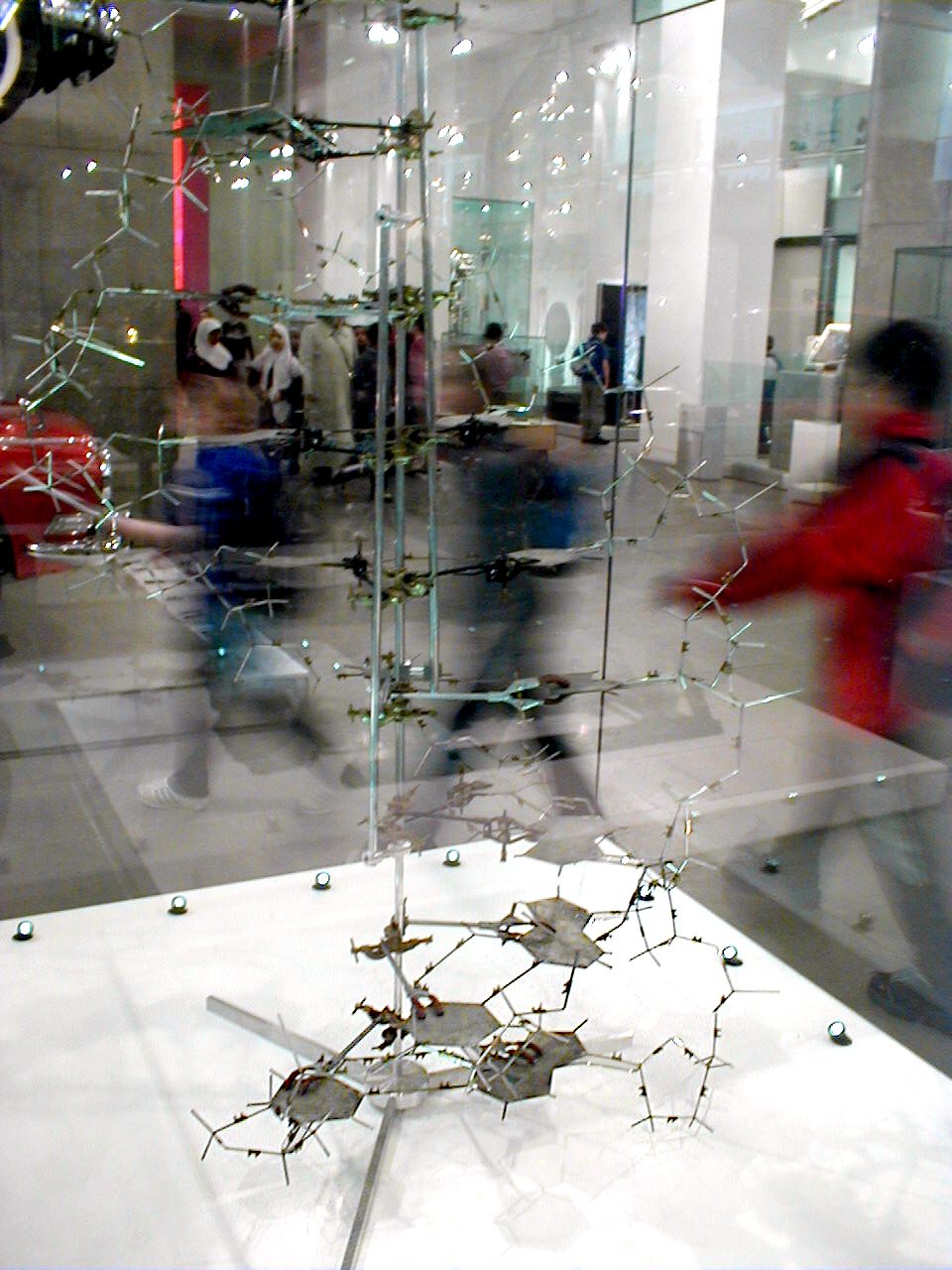
The double helix is the rare discovery whose consequences are still compounding. By explaining how DNA copies itself, Watson and Crick's structure founded molecular biology: the record notes the Nobel Prize that followed in 1962, and the model they built in 1953 still stands, photographed in the Science Museum in London, as the icon of the science it started. Every genetic test, every sequenced genome and every modern vaccine descends from that February morning in Cambridge.
The year's political settlements proved more fragile. The Korean armistice was, in the record's blunt summary, an armistice and not a peace treaty — South Korea refused to sign, and the peninsula remains technically at war. The Iran coup bought the Shah 26 more years of rule, in the record's account, but left a lasting legacy of distrust toward the Western powers that had organised it. Stalin's death, by contrast, genuinely closed an era: the succession that put Khrushchev in power began the slow thaw of the Soviet system he had terrorised.
And in Britain, the Everest news and the coronation, arriving in the same week, announced a new age twice over — the last great terrestrial first, achieved by a British-led expedition, and the first great television sacrament, watched by an estimated 27 million. By December the first colour sets were on sale in America at over $1,000 each. The medium that would carry the rest of the century had arrived.
1953 on The History Trail
The year's biggest stories have full pages of their own on The History Trail.
- February 28 in History — Watson and Crick determine the structure of DNA in Cambridge.
- May 29 in History — Hillary and Tenzing make the first confirmed ascent of Mount Everest.
- June 2 in History — Elizabeth II is crowned at Westminster Abbey, in the first televised coronation.
- July 27 in History — the Korean War armistice is signed at Panmunjom.
- August 19 in History — the CIA- and MI6-backed coup overthrows Iran's prime minister Mosaddegh.
- Mount Everest — the mountain first climbed, confirmed, on 29 May 1953.
- Korean War — the war whose fighting ended with the 1953 armistice.
Sources
- Encyclopaedia Britannica — On This Day: January 7
- HISTORY — Watson and Crick discover the chemical structure of DNA
- Encyclopaedia Britannica — On This Day: February 28
- Encyclopaedia Britannica — On This Day: March 26
- Encyclopaedia Britannica — On This Day: May 29
- Encyclopaedia Britannica — On This Day: June 2
The facts on this page were checked against these sources on 19 November 2026. The History Trail's permanent pages are researched and written for this site; the live profiles elsewhere on The History Trail are assembled automatically from Wikipedia and Wikidata.
About the Author
Researched and written by the The History Trail Editorial Team — the accountable editorial function behind this site's permanent story pages. The team works from the published sources cited on each page; it does not invent historians, reviewers or credentials, and it corrects errors openly.
Fact Check
Every load-bearing fact on this page traces to one of the sources listed above, and significant claims link to their source in the text. Our checking method is described on the methodology page; errors can be reported via the corrections page.
Sources & Citations
Cite this page as: The History Trail Editorial Team, The History Trail — this article's title, publication and update dates are shown beneath its headline. The full source list appears under Sources above; the site's source standards are on the sources page.