
On This Day
May 29 in History
May 29 is the day the highest place on Earth was finally reached. On this day in 1953 Edmund Hillary of New Zealand and Tenzing Norgay, a Sherpa mountaineer who had tried the mountain seven times before, climbed the last steep step of Mount Everest and stood on its summit at about half past eleven in the morning. The news reached London on the eve of a coronation. The same date in 1453 saw an older world end with the fall of Constantinople to the Ottomans.
Choose another date: open the On This Day calendar to browse events, births and deaths for any day of the year.
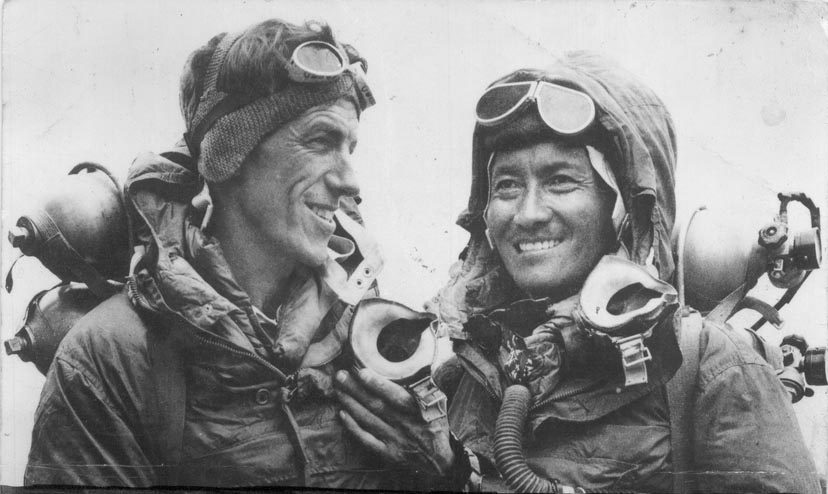
At a Glance
- Date
- 29 May 1953
- Climbers
- Edmund Hillary and Tenzing Norgay
- Expedition
- British expedition led by Colonel John Hunt
- Summit reached
- About 11:30 a.m.; roughly 15 minutes spent on top
- High camp
- 27,900 feet
- Summit height
- 29,032 feet (8,849 metres)
- Tenzing's previous attempts
- Seven
Events on this day
- 1453Ottoman forces under Sultan Mehmed II capture Constantinople after a siege of nearly two months, ending the Byzantine Empire.
- 1660Charles II enters London and is restored to the English throne, ending eleven years of republican rule.
- 1790Rhode Island becomes the last of the original thirteen states to ratify the US Constitution.
- 1848Wisconsin is admitted to the Union as the 30th state.
- 1851Sojourner Truth delivers her famous speech to the Ohio Women's Rights Convention in Akron; the published version never contained the phrase 'Ain't I a Woman?'
- 1913Stravinsky's ballet The Rite of Spring premieres in Paris, provoking uproar in the audience.
- 1914The liner Empress of Ireland sinks in the St. Lawrence River after a collision, killing 1,012 people.
- 1919Observations of a solar eclipse confirm Einstein's general theory of relativity, making him world famous.
- 1942Bing Crosby records Irving Berlin's 'White Christmas', which becomes the best-selling single of all time.
- 1953Edmund Hillary and Tenzing Norgay reach the summit of Mount Everest, the first confirmed ascent — the featured story above.
- 1985Crowd violence before the European Cup final at Heysel Stadium in Brussels kills 39 football supporters.
- 2004The National World War II Memorial is dedicated on the National Mall in Washington, D.C.
Born on this day
- 1630Charles II — king of England, Scotland and Ireland, restored to the throne in 1660 after the Commonwealth
- 1874G. K. Chesterton — English writer, creator of the Father Brown detective stories and a giant of popular theology
- 1914Tenzing Norgay — Sherpa mountaineer who, not knowing his true birth date, adopted 29 May, the date of his Everest triumph
- 1917John F. Kennedy — 35th president of the United States, whose administration set the goal of landing on the Moon
Died on this day
- 1453Constantine XI Palaiologos — last Byzantine emperor, killed defending Constantinople against the Ottomans
- 1829Humphry Davy — English chemist who isolated several elements and invented the miners' safety lamp
- 1942John Barrymore — American stage and screen actor, famed for his Hamlet and his matinee-idol profile
The featured story: The roof of the world, 29 May 1953
Mount Everest had defied every attempt since British expeditions first approached it in the 1920s, and climbers George Mallory and Andrew Irvine had vanished near its summit in 1924. In 1953 a large, carefully organised British expedition under Colonel John Hunt attacked the mountain from Nepal, building a staircase of camps up the Khumbu Icefall, the Western Cwm and the Lhotse Face to the South Col, stocked by teams of climbers and Sherpas. It was a siege in the best sense: dozens of men working so that two might stand on top.
The first summit pair, Charles Evans and Tom Bourdillon, climbed on 26 May and reached the South Summit, within 300 feet of the top, before a malfunctioning oxygen set forced them down. Hunt then sent forward his second pair: Edmund Hillary, a tall New Zealand beekeeper, and Tenzing Norgay, the expedition's sirdar and its most experienced high-altitude climber, who had attempted Everest seven times before. On 28 May the two pitched a tiny camp at 27,900 feet and endured a freezing, sleepless night in a tent pitched on a sloping ledge.
They set out in the morning of 29 May. By nine o'clock they had reached the South Summit. Above it rose one last obstacle, a steep step of rock and ice some 40 feet high. Hillary wedged himself into a crack at its side and inched upward, then threw down a rope for Tenzing. At about 11:30 a.m. the two men stepped onto the summit of the world, 29,032 feet above the sea. They shook hands, then embraced. They spent about fifteen minutes on top, long enough for Hillary to photograph Tenzing holding his ice axe strung with flags, and for Tenzing to leave a small offering of sweets in the snow.
The news was carried down the mountain by runner to Namche Bazaar and then sent by coded message to London, where it arrived on 1 June, the eve of the coronation of Queen Elizabeth II. British newspapers broke the story on coronation morning itself, and the conquest of Everest was celebrated as a coronation gift to the new queen. Hillary and Hunt were knighted. Hillary always insisted the achievement belonged to the whole expedition, and the mountain has since been climbed thousands of times, but the names of the first two men on its summit remain inseparable.
Why this date matters
May 29 is a date of summits and endings, of ceilings reached in every sense. Constantinople falls in 1453 and an empire of eleven centuries closes; exactly five hundred years later two men stand where no human being has stood, on the top of the world. Between those poles the date gathers other breakthroughs: Einstein's theory confirmed by an eclipse, a ballet that riots a theatre into modernism, a Christmas song recorded in May that out-sells every record ever made. It is also, fittingly, the birthday of John F. Kennedy, who would set the next generation its own summit to reach.
Sources
- Encyclopaedia Britannica — On This Day: May 29
- HISTORY — This Day in History: May 29
- HISTORY — Edmund Hillary and Tenzing Norgay Reach Everest Summit
- Encyclopaedia Britannica — Fall of Constantinople (1453)
- Wikimedia Commons — Edmund Hillary and Tenzing Norgay file page
The facts on this page were checked against these sources on 19 November 2026. The History Trail's permanent pages are researched and written for this site; the live profiles elsewhere on The History Trail are assembled automatically from Wikipedia and Wikidata.
About the Author
Researched and written by the The History Trail Editorial Team — the accountable editorial function behind this site's permanent story pages. The team works from the published sources cited on each page; it does not invent historians, reviewers or credentials, and it corrects errors openly.
Fact Check
Every load-bearing fact on this page traces to one of the sources listed above, and significant claims link to their source in the text. Our checking method is described on the methodology page; errors can be reported via the corrections page.
Sources & Citations
Cite this page as: The History Trail Editorial Team, The History Trail — this article's title, publication and update dates are shown beneath its headline. The full source list appears under Sources above; the site's source standards are on the sources page.