
Years
1849 in History
1849 redrew maps and opened professions. On 12 March the Sikh army surrendered at the end of the Second Anglo-Sikh War and Britain annexed the Punjab, bringing Lahore under British rule. In January Elizabeth Blackwell received her medical degree at Geneva, New York, the first woman in the United States to do so; in September Harriet Tubman escaped from slavery in Maryland. The year also took Edgar Allan Poe and Frédéric Chopin, and sentenced Dostoevsky to a death that was commuted at the scaffold.
At a Glance
- Defining event
- The Sikh army surrenders and Britain annexes the Punjab, 12 March 1849
- Lahore's turning point
- Lahore, capital of the Sikh empire since 1799, passes under British rule after the Anglo-Sikh wars
- A first degree
- Elizabeth Blackwell receives her medical degree, 23 January — the first woman in the United States to do so
- An escape
- Harriet Tubman escapes from slavery in Maryland, 17 September, and returns to guide scores of others to freedom
- A president photographed
- James K. Polk is photographed in the White House, 14 February — the first president photographed in office
- Two masters die
- Edgar Allan Poe dies in Baltimore on 7 October; Frédéric Chopin dies in Paris on 17 October
The defining story: the annexation of the Punjab
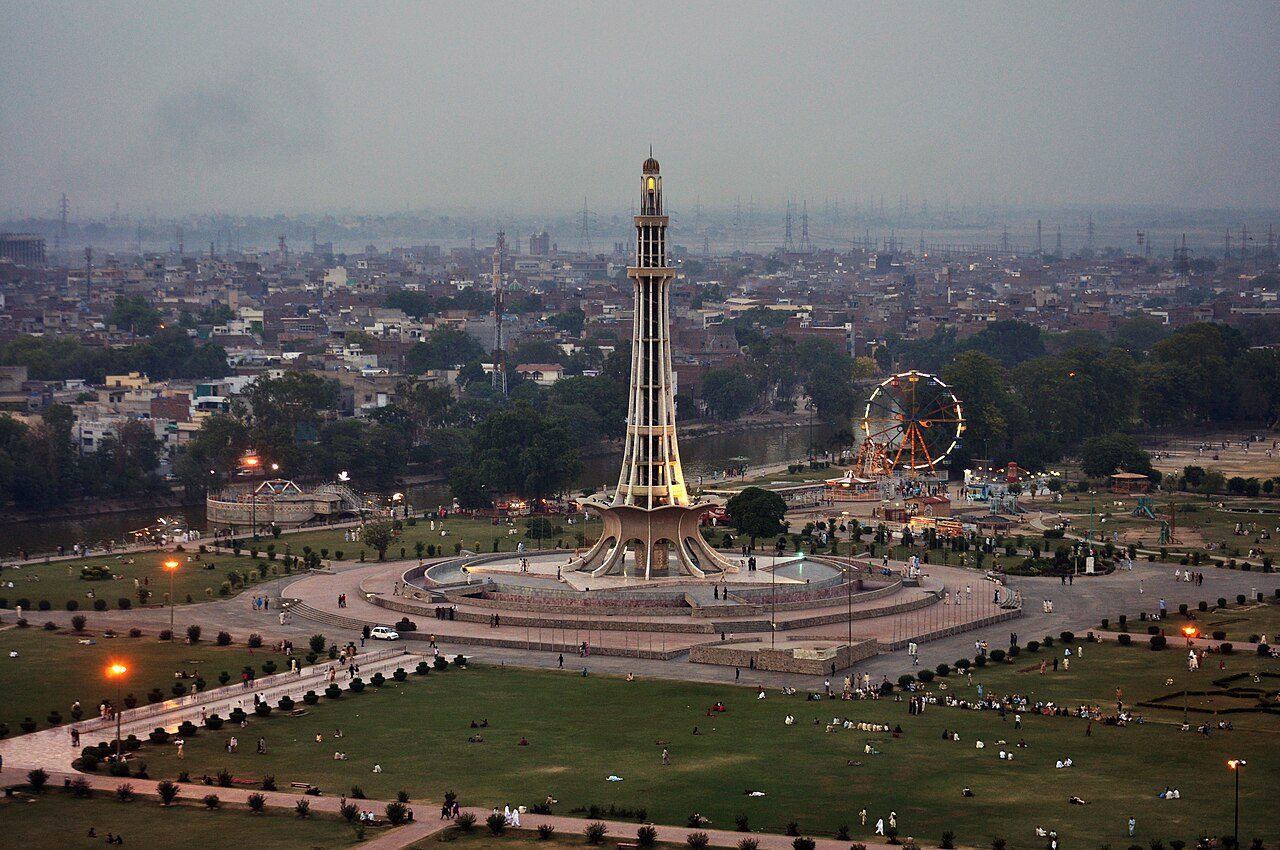
The photograph above shows Minar-e-Pakistan in Lahore at dusk — a modern tower raised on the site where the Lahore Resolution was passed in 1940. It stands here because Lahore's own turning point came in 1849. Under Ranjit Singh, from 1799, Lahore had been the capital of a Sikh empire that held the Punjab for half a century; after his death the empire weakened, and two Anglo-Sikh wars followed. In the second of them, the Sikh army's resistance broke in the winter of 1848–49.
On 12 March 1849 the Sikh army surrendered at the end of the Second Anglo-Sikh War, and Britain annexed the Punjab. Lahore passed under British rule, becoming in time a provincial capital of colleges, courts and railway workshops. The annexation completed Britain's territorial conquest of the Indian subcontinent's northwest — the frontier province it would hold until 1947 — and closed the last major independent Indian state. The city that had been a Mughal seat and a Sikh capital entered its British century, at the end of which, in the same park the tower now marks, the demand for Pakistan would be made.
The year's other firsts were quieter and as durable. On 23 January Elizabeth Blackwell received her medical degree at Geneva, New York, becoming the first woman in the United States to do so — a degree won against the profession's closed doors, and the breach through which generations of women doctors followed. On 14 February James K. Polk was photographed in the White House, the first American president photographed while in office; he died on 15 June, at 53, just three months after leaving office. And on 10 March Abraham Lincoln applied for a patent for a device to lift boats over shoals — the only U.S. president ever to hold a patent, filing paperwork in the same spring an empire fell.
Freedom and its enemies run through the autumn. On 17 September Harriet Tubman escaped from slavery in Maryland; she would return repeatedly to guide scores of others to freedom on the Underground Railroad. On 22 August Austria had attacked Venice with unmanned balloon bombs, often described as the first aerial bombardment — war reaching, however crudely, for the sky. On 5 June Denmark adopted a constitution abolishing absolute monarchy. And on 16 November a Russian court sentenced the novelist Fyodor Dostoevsky to death for anti-government activities, a sentence commuted at the scaffold itself — the mock execution that marked his work for life. The year closed having lost two masters in ten days: Poe, dead in Baltimore on 7 October at 40 in circumstances still unexplained, and Chopin, dead in Paris on 17 October at 39 after years of tuberculosis.
Timeline of 1849
- 23 January
Elizabeth Blackwell receives her medical degree at Geneva, New York — the first woman in the United States to do so.
- 14 February
James K. Polk is photographed in the White House, the first American president photographed while in office.
- 10 March
Abraham Lincoln applies for a patent for a device to lift boats over shoals — the only U.S. president ever to hold a patent.
- 12 March
The Sikh army surrenders at the end of the Second Anglo-Sikh War, and Britain annexes the Punjab.
- 10 April
Walter Hunt patents the safety pin.
- 28 May
Anne Brontë, author of The Tenant of Wildfell Hall, dies — the youngest Brontë sister.
- 5 June
Denmark adopts a new constitution, abolishing absolute monarchy and establishing a constitutional monarchy.
- 15 June
James K. Polk, 11th president of the United States, dies at 53, three months after leaving office.
- 22 August
Austria attacks Venice with unmanned balloon bombs, often described as the first aerial bombardment.
- 17 September
Harriet Tubman escapes from slavery in Maryland.
- 7 October
Edgar Allan Poe dies in Baltimore at 40, in circumstances still unexplained.
- 17 October
Frédéric Chopin dies in Paris at 39, after years of tuberculosis.
- 16 November
A Russian court sentences Fyodor Dostoevsky to death; the sentence is commuted at the scaffold.
Why 1849 still matters
1849 still matters, first, on the map. The annexation of the Punjab completed the British conquest of India and created the northwestern frontier whose lines — through partition in 1947 and after — still organise South Asian politics. Lahore's own arc makes the point in one city: Sikh capital until 1849, British provincial capital thereafter, and in 1940 the place where the Lahore Resolution demanded the independent Muslim-majority states that became Pakistan. The tower in the photograph stands on that 1940 site, looking over a city whose modern history begins with the surrender of 1849.
Blackwell's degree and Tubman's escape mark the year's other kind of turning point: barriers breached by individuals. Blackwell's graduation on 23 January opened American medicine to women in fact rather than in argument. Tubman's escape on 17 September began a career of return journeys that made her the Underground Railroad's most famous conductor — an enslaved woman who, having freed herself, went back, repeatedly, into danger for others.
The culture lost and gained in the same months: Poe and Chopin died within ten October days, Anne Brontë on 28 May, while Emma Lazarus — whose sonnet 'The New Colossus' would be inscribed on the Statue of Liberty — was born on 22 July, and Ivan Pavlov, whose work reshaped the study of learning, on 14 September. Dostoevsky's commuted sentence gave literature its great novelist of crime and redemption, reprieved at the scaffold's foot. Few years join an empire's completion to so many beginnings carried in single lives.
1849 on The History Trail
An empire completed, a degree earned and an escape to freedom — 1849 day by day.
- March 12 in History — The Sikh army surrenders and Britain annexes the Punjab.
- January 23 in History — Elizabeth Blackwell earns her medical degree.
- September 17 in History — Harriet Tubman escapes from slavery.
- October 7 in History — Edgar Allan Poe dies in Baltimore.
- March 10 in History — Abraham Lincoln applies for his patent.
- November 16 in History — Dostoevsky is sentenced to death — and reprieved.
Sources
- Encyclopaedia Britannica — On This Day: March 12
- HISTORY — What Happened on March 12
- Encyclopaedia Britannica — On This Day: January 23
- Encyclopaedia Britannica — On This Day: September 17
- Encyclopaedia Britannica — On This Day: October 7
- Encyclopaedia Britannica — On This Day: November 16
The facts on this page were checked against these sources on 19 November 2026. The History Trail's permanent pages are researched and written for this site; the live profiles elsewhere on The History Trail are assembled automatically from Wikipedia and Wikidata.
About the Author
Researched and written by the The History Trail Editorial Team — the accountable editorial function behind this site's permanent story pages. The team works from the published sources cited on each page; it does not invent historians, reviewers or credentials, and it corrects errors openly.
Fact Check
Every load-bearing fact on this page traces to one of the sources listed above, and significant claims link to their source in the text. Our checking method is described on the methodology page; errors can be reported via the corrections page.
Sources & Citations
Cite this page as: The History Trail Editorial Team, The History Trail — this article's title, publication and update dates are shown beneath its headline. The full source list appears under Sources above; the site's source standards are on the sources page.