
On This Day
October 7 in History
On 7 October 2001, twenty-six days after September 11, American and British forces began bombing Taliban and al-Qaeda targets in Afghanistan, opening Operation Enduring Freedom — a war that would last two decades. October 7 is also the day of the Battle of Lepanto in 1571, the founding of East Germany in 1949 and the conclusion of the Dumbarton Oaks Conference in 1944.
Choose another date: open the On This Day calendar to browse events, births and deaths for any day of the year.
At a Glance
- The date
- Night of 7 October 2001, twenty-six days after the September 11 attacks
- The trigger
- The Taliban's refusal to surrender Osama bin Laden and close al-Qaeda's camps
- The opening blow
- About fifty Tomahawk cruise missiles plus bomber and carrier strikes, per the Pentagon's briefing that day
- The targets
- Taliban air defences, airfields and command sites and al-Qaeda camps, in and around Kabul, Kandahar and other cities
- The announcement
- President George W. Bush addressed the nation as the strikes began
- The first result
- The Taliban fled Kabul on 12 November 2001; their regime collapsed within two months
- The long result
- The war lasted twenty years, ending with the American withdrawal and the Taliban's return in 2021
Events on this day
- 1571A Holy League fleet destroys the Ottoman fleet at the Battle of Lepanto, the last great battle fought by galleys.
- 1763Britain's Royal Proclamation of 1763 reserves the lands west of the Appalachians for Native peoples and forbids colonial settlement there.
- 1765Delegates from nine American colonies meet as the Stamp Act Congress in New York to protest British taxation.
- 1780American militia defeat a Loyalist force at the Battle of Kings Mountain in South Carolina, a turning point in the southern war.
- 1870French minister Léon Gambetta escapes besieged Paris by balloon to organise resistance in the provinces.
- 1913Ford's first moving assembly line begins work at Highland Park, transforming car production and industry generally.
- 1916Georgia Tech beats Cumberland University 222–0, the most lopsided score in American college football history.
- 1944The Dumbarton Oaks Conference concludes, agreeing the framework that becomes the United Nations.
- 1949The German Democratic Republic — East Germany — is formally founded in the Soviet occupation zone.
- 1950Mother Teresa founds the Missionaries of Charity in Kolkata to serve 'the poorest of the poor'.
- 1985Palestinian gunmen hijack the Italian cruise ship Achille Lauro in the Mediterranean, murdering passenger Leon Klinghoffer.
- 2001American and British forces begin air strikes on Taliban and al-Qaeda targets in Afghanistan — the featured story above.
- 2023Hamas launches a surprise attack on Israel, killing nearly 1,200 people and taking more than 250 hostages, and triggering the Gaza war.
Born on this day
- 1885Niels Bohr — Danish physicist whose model of the atom won the Nobel Prize and reshaped physics.
- 1931Desmond Tutu — South African archbishop whose moral voice helped end apartheid; Nobel Peace Prize laureate.
- 1952Vladimir Putin — president of Russia, in office, with one interruption, since 2000.
- 1955Yo-Yo Ma — Chinese-American cellist, among the most celebrated classical musicians of his age.
Died on this day
- 1708Guru Gobind Singh — tenth and last human Guru of Sikhism, who founded the Khalsa.
- 1849Edgar Allan Poe — American writer of The Raven and pioneering detective stories, dead in Baltimore at 40 in circumstances still unexplained.
- 1894Oliver Wendell Holmes Sr. — American physician, poet and essayist, father of the Supreme Court justice.
- 2006Anna Politkovskaya — Russian journalist renowned for her reporting on Chechnya, shot dead in her Moscow apartment building.
The featured story: the U.S.-led attack on Afghanistan begins, 7 October 2001
On the night of 7 October 2001, twenty-six days after the September 11 attacks, American and British forces opened the war in Afghanistan. At about half past twelve in the afternoon, Washington time — night over Afghanistan — bombers and carrier aircraft struck Taliban and al-Qaeda targets across the country, and ships and submarines in the Arabian Sea fired some fifty Tomahawk cruise missiles. The targets included air defences, airfields, command centres and training camps around Kabul, Kandahar, Jalalabad, Herat and Mazar-e-Sharif. As the first bombs fell, President George W. Bush addressed the American people from the White House, announcing that the United States had begun strikes against al-Qaeda camps and Taliban military installations, and that the operation's name was Enduring Freedom.
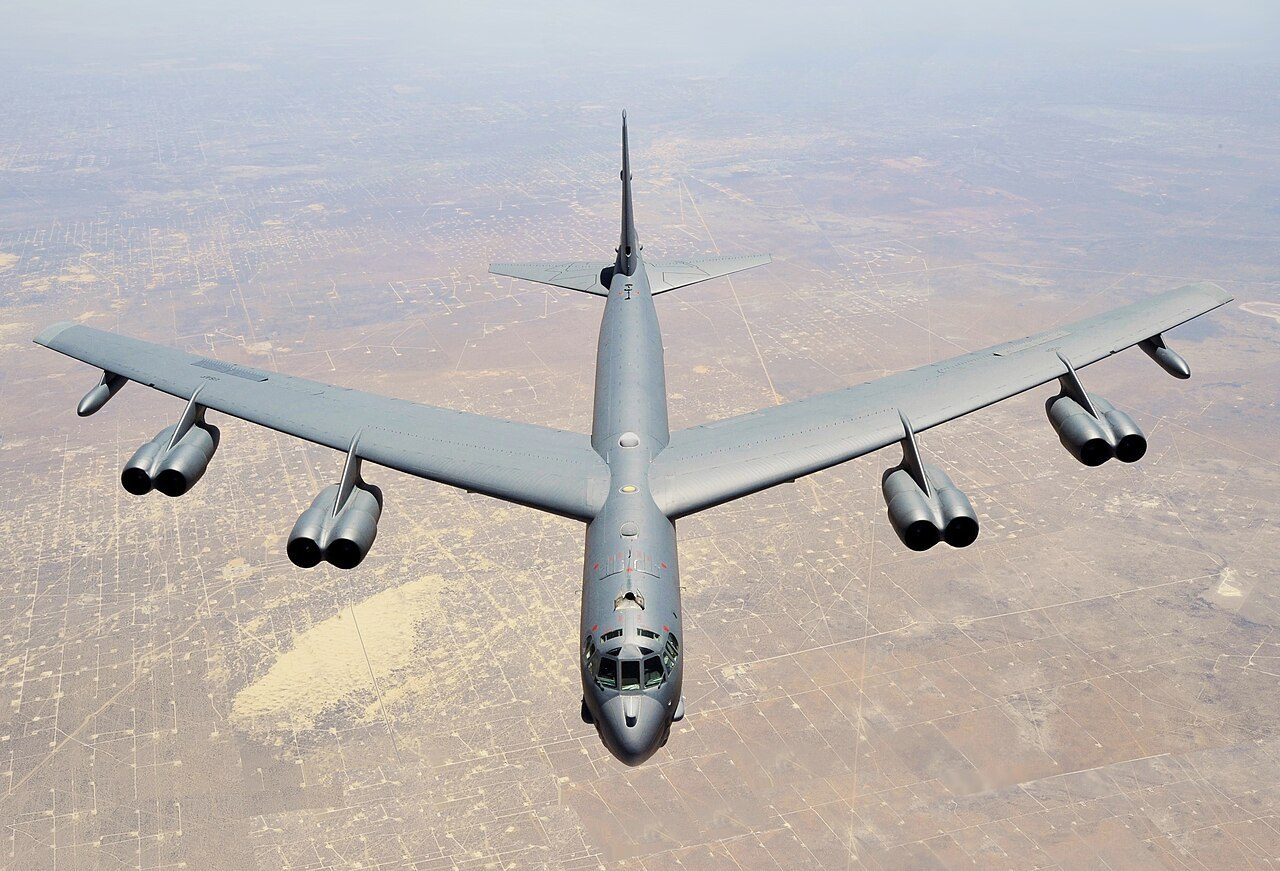
The attack came at the end of an ultimatum refused. After September 11, Washington had demanded that the Taliban, who ruled most of Afghanistan, surrender Osama bin Laden and his al-Qaeda network and close their camps. The Taliban refused to hand him over without evidence, and the deadline passed. The opening force was formidable and deliberately varied: B-1, B-2 and B-52 bombers — the B-2s flying round trips from Missouri, among the longest combat missions ever flown — carrier jets from USS Enterprise and USS Carl Vinson, and the Tomahawks, aimed first at blinding the Taliban's modest air defences. On the ground, the United States backed the Northern Alliance, the Afghan opposition that still held the country's northeast, with special forces and air power.
The campaign moved faster than almost anyone expected. With American aircraft destroying Taliban positions ahead of them, Northern Alliance fighters advanced through October, took Mazar-e-Sharif, and on 12 November entered Kabul as the Taliban melted away. Kandahar, the Taliban's spiritual home, fell in early December, and the regime that had sheltered al-Qaeda collapsed — though bin Laden himself escaped at Tora Bora, and the Taliban leadership withdrew to regroup. A new Afghan government under Hamid Karzai took office, backed by an international coalition, and what was supposed to be a short punitive campaign became an open-ended nation-building war.
It lasted, in the end, two decades — the longest war in American history. The Taliban insurgency outlasted four U.S. presidents; the last American forces withdrew in August 2021, and the Taliban returned to power in Kabul almost twenty years after they had been driven from it. The strikes of 7 October 2001 thus opened a conflict whose ending eerily mirrored its beginning. The date also marks the start of the wider 'war on terror', with consequences — in Iraq, in surveillance law, in the politics of the whole region — that reached far beyond the targets of that first night.
Why this date matters
October 7 is a date of frameworks laid and frameworks broken. Lepanto fixed the Mediterranean's balance in 1571; the Royal Proclamation tried to fix America's frontier in 1763; Dumbarton Oaks sketched the United Nations in 1944; East Germany was founded on it in 1949 and Mother Teresa founded her order on it in 1950. Its modern weight, though, comes from 2001, when the answer to a September morning arrived over Kabul in October darkness — the opening of America's longest war, and of a century's argument about how democracies should fight enemies who wear no uniform. The date keeps its double character: charters and bombardments, proclaimed on the same square of the calendar.
Sources
- Encyclopaedia Britannica — On This Day: October 7
- HISTORY — U.S.-Led Attack on Afghanistan Begins
- George W. Bush White House Archives — Statement of 7 October 2001
- The Avalon Project, Yale Law School — Rumsfeld and Myers Briefing on Enduring Freedom, 7 October 2001
The facts on this page were checked against these sources on 19 November 2026. The History Trail's permanent pages are researched and written for this site; the live profiles elsewhere on The History Trail are assembled automatically from Wikipedia and Wikidata.
About the Author
Researched and written by the The History Trail Editorial Team — the accountable editorial function behind this site's permanent story pages. The team works from the published sources cited on each page; it does not invent historians, reviewers or credentials, and it corrects errors openly.
Fact Check
Every load-bearing fact on this page traces to one of the sources listed above, and significant claims link to their source in the text. Our checking method is described on the methodology page; errors can be reported via the corrections page.
Sources & Citations
Cite this page as: The History Trail Editorial Team, The History Trail — this article's title, publication and update dates are shown beneath its headline. The full source list appears under Sources above; the site's source standards are on the sources page.