
Years
1848 in History
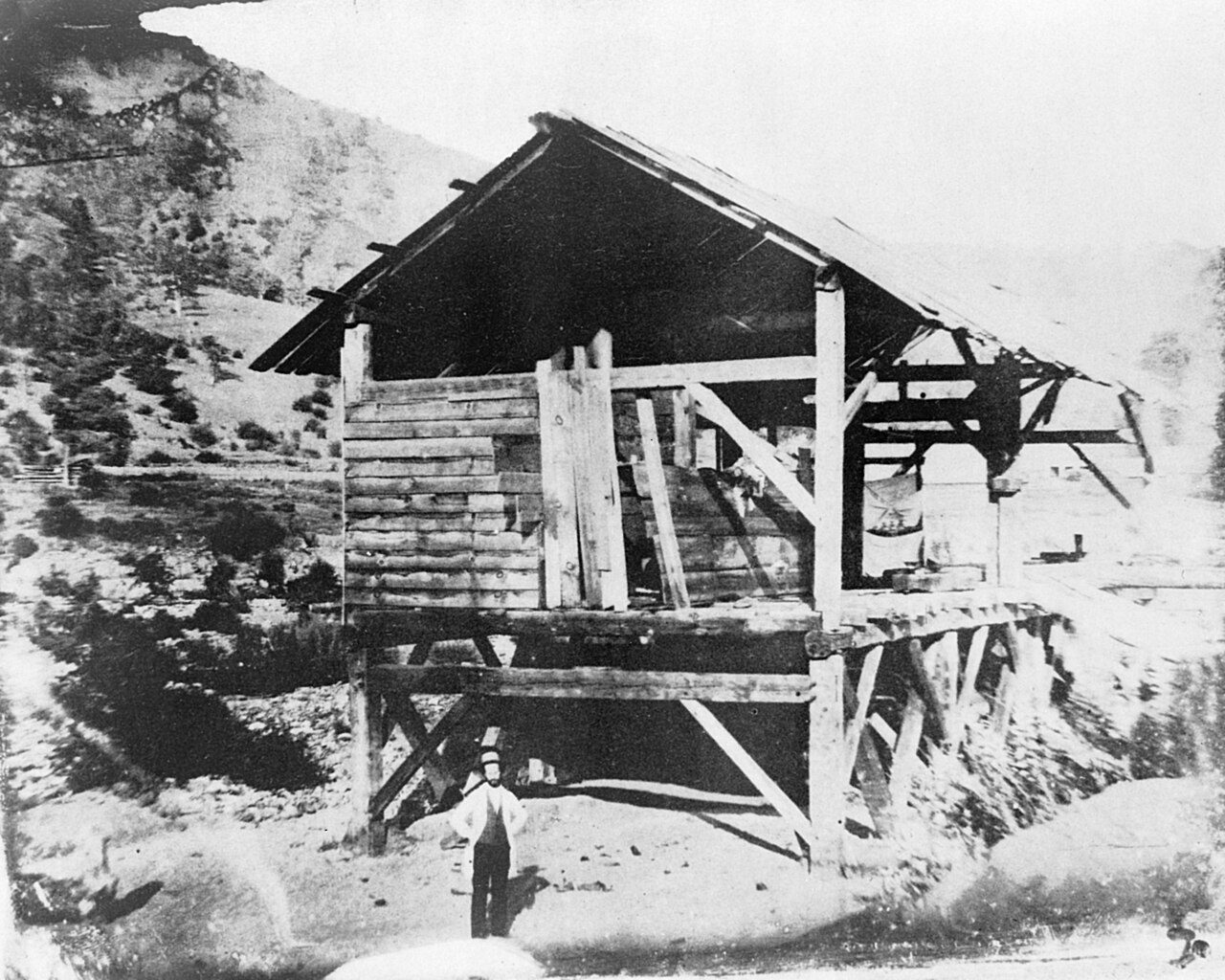
1848 is remembered as the year of revolutions — and it began with gold. In January James Marshall found gold at Sutter's Mill in California, a discovery that drew some 300,000 people west. In February the Communist Manifesto was published in London and revolution in Paris drove King Louis-Philippe from his throne, part of a wave of uprisings across Europe. In July, at Seneca Falls, the first women's rights convention in American history demanded, among much else, the vote.
At a Glance
- Defining events
- The wave of revolutions across Europe, and the California gold discovery that triggers the Gold Rush
- The discovery
- Gold found in the tailrace of Sutter's Mill at Coloma, California, 24 January
- The treaty
- Guadalupe Hidalgo, 2 February — Mexico cedes California, Nevada, Utah and Arizona to the United States
- The pamphlet
- The Communist Manifesto, by Marx and Engels, published in London on 21 February
- The fall
- King Louis-Philippe of France abdicates and flees Paris, 24 February
- The convention
- Seneca Falls, 19–20 July — the first women's rights convention in the United States
The defining story: gold at Sutter's Mill and a world in revolt
On the morning of 24 January 1848, James Wilson Marshall walked down to inspect the tailrace of the sawmill he was building on the South Fork of the American River at Coloma, California. The water had been shut off overnight to deepen the channel, and in the gravel something glittered: a few soft, yellow flakes, which he bit, hammered between stones, and carried in his hat to show the workmen. Tests at the mill — including boiling a flake in lye soap without tarnishing it — confirmed it was gold. The mill belonged to John Sutter, founder of the settlement around which Sacramento would grow, and Sutter saw ruin in the discovery: he wanted his mill finished and his workers sober, and swore everyone to secrecy. It could not hold. Workers talked, more gold was found downstream, and the San Francisco merchant Sam Brannan — who had quietly stocked his store with picks, pans and shovels — paraded through the streets holding a bottle of gold dust, shouting the news. By summer the rush was on.
The timing was extraordinary. California was not yet legally American: the Mexican-American War had ended in the field, but the Treaty of Guadalupe Hidalgo, which transferred California to the United States, was signed on 2 February — nine days after the discovery — and Mexico ceded the territory, with Nevada, Utah and Arizona, without knowing that the gravel of one of its rivers had just made it the richest prize of the war. The news then travelled slowly east, and only on 5 December did President James K. Polk confirm to Congress that gold had been found, turning rumour into the Gold Rush that transformed the American West: the discovery drew some 300,000 people west and sped California to statehood in 1850.
Europe, meanwhile, was coming apart. On 21 February The Communist Manifesto, by Karl Marx and Friedrich Engels, was published in London — a pamphlet that would outlast every government then standing. Three days later, on 24 February, King Louis-Philippe of France abdicated and fled Paris as revolution swept the capital, one uprising in the wave that crossed the continent in 1848. The old order's symbols fell with the regimes: in Washington the same week, John Quincy Adams, the sixth president, collapsed in the House of Representatives, where the ex-president served as a congressman, and died two days later. In America the year's expansion continued by paperwork as well as gold: Wisconsin was admitted to the Union as the 30th state on 29 May.
The year's most durable American event, though, was a meeting arranged in nine days over tea. In July five women — Lucretia Mott, Martha Coffin Wright, Jane Hunt, Mary Ann M'Clintock and Elizabeth Cady Stanton — resolved to hold the convention on the rights of women they had first contemplated in 1840, when women delegates to the World Anti-Slavery Convention in London had been barred from the floor. Some 300 people crowded into the Wesleyan Chapel at Seneca Falls on 19 July — so many that the chapel door had to be unlocked by a child lifted through a window. Stanton read the Declaration of Sentiments, deliberately built on the Declaration of Independence with its famous insertion — 'all men and women are created equal' — followed by grievances and twelve resolutions demanding the overturning of women's legal subordination. The convention concluded the next day, 20 July. The year's strangest footnote came in September, when railroad foreman Phineas Gage survived an iron rod being driven through his skull in Vermont, becoming a landmark case in the study of the brain and personality.
Timeline of 1848
- 9 January
Caroline Herschel dies at 97 — the German-British astronomer who was the first woman to discover a comet.
- 24 January
James Marshall discovers gold in the tailrace of Sutter's Mill at Coloma, California.
- 2 February
The Treaty of Guadalupe Hidalgo ends the Mexican-American War; Mexico cedes California, Nevada, Utah and Arizona.
- 21 February
The Communist Manifesto, by Karl Marx and Friedrich Engels, is published in London.
- 23 February
John Quincy Adams collapses in the House of Representatives, where he serves as a congressman; he dies two days later.
- 24 February
King Louis-Philippe of France abdicates and flees Paris as revolution sweeps the capital.
- 19 March
Wyatt Earp is born — the American lawman famed for the gunfight at the O.K. Corral.
- 29 May
Wisconsin is admitted to the Union as the 30th state.
- 7 June
Paul Gauguin is born — the French Post-Impressionist painter of Tahitian scenes.
- 19 July
The Seneca Falls Convention, the first women's rights convention in the United States, opens in New York.
- 20 July
The first Women's Rights Convention concludes at Seneca Falls.
- 13 September
Railroad foreman Phineas Gage survives an iron rod being driven through his skull in Vermont.
- 5 December
President Polk confirms to Congress that gold has been found in California, turning rumour into the Gold Rush.
- 19 December
Emily Brontë dies of tuberculosis at 30, a year after publishing Wuthering Heights under a man's name.
Why 1848 still matters
1848 still matters because so many of the modern world's arguments were opened in it at once. The revolutions that swept Europe mostly failed in the short term — thrones were restored and assemblies dissolved — but they announced the demands, for constitutions, national self-rule and wider suffrage, that the rest of the century would have to answer. The Communist Manifesto, published in the same February week that Paris rose, supplied one of the answers that would dominate the century after that. And at Seneca Falls a nine-days'-notice meeting in a small chapel set the organised women's rights movement on its road: the Declaration of Sentiments' demand for the vote took another 72 years to win, and of the hundred people who signed it, exactly one — Charlotte Woodward, a 19-year-old glove-maker in 1848 — lived to see the Nineteenth Amendment ratified in 1920.
The gold rush remade a continent faster than any revolution. A discovery its owners tried to keep secret emptied California's towns into the hills within months, drew some 300,000 people west once the president confirmed it, and sped California to statehood by 1850 — a state created, in effect, by gravel in a mill-race. It is the year's deepest pattern: consequences not sized like their causes. A few flakes of metal, a pamphlet printed in London, a declaration read in a chapel — each looked modest in 1848 and proved enormous. Even the year's science ran on the theme: a Vermont foreman walked away from an iron rod through his skull and became, unwillingly, the founding case of a new science of the brain.
1848 on The History Trail
1848 carries two featured stories on The History Trail — the gold discovery and the Seneca Falls Convention.
- January 24 in History — gold is discovered at Sutter's Mill, California.
- July 19 in History — the Seneca Falls Convention opens, the first women's rights convention in America.
- July 20 in History — the Seneca Falls Convention concludes.
- February 21 in History — the Communist Manifesto is published in London.
- December 5 in History — President Polk confirms the California gold discovery to Congress.
- Communism — the movement whose founding pamphlet appeared in February 1848.
Sources
- Encyclopaedia Britannica — On This Day: January 24
- Smithsonian Magazine — The Discovery of Gold on This Date in 1848 at Sutter's Creek Kicked Off the California Gold Rush
- Encyclopaedia Britannica — On This Day: February 2
- Encyclopaedia Britannica — On This Day: February 24
- Encyclopaedia Britannica — On This Day: July 19
- HISTORY — Seneca Falls Convention begins
- Encyclopaedia Britannica — On This Day: December 5
- Encyclopaedia Britannica — On This Day: December 19
The facts on this page were checked against these sources on 19 November 2026. The History Trail's permanent pages are researched and written for this site; the live profiles elsewhere on The History Trail are assembled automatically from Wikipedia and Wikidata.
About the Author
Researched and written by the The History Trail Editorial Team — the accountable editorial function behind this site's permanent story pages. The team works from the published sources cited on each page; it does not invent historians, reviewers or credentials, and it corrects errors openly.
Fact Check
Every load-bearing fact on this page traces to one of the sources listed above, and significant claims link to their source in the text. Our checking method is described on the methodology page; errors can be reported via the corrections page.
Sources & Citations
Cite this page as: The History Trail Editorial Team, The History Trail — this article's title, publication and update dates are shown beneath its headline. The full source list appears under Sources above; the site's source standards are on the sources page.