
Years
1960 in History
1960 is the Year of Africa, when independence swept a continent from Chad to Nigeria — and the year apartheid showed its face at Sharpeville, where police killed 69 protesters. Adolf Eichmann was captured in Buenos Aires, the largest earthquake ever recorded struck Chile, and John F. Kennedy won the American presidency in the first election fought on television.
At a Glance
- Defining event
- The 'Year of Africa' — Chad, the Congo, Nigeria and other states win independence in a single year
- Shock of the year
- The Sharpeville massacre of 21 March: police kill 69 anti-pass protesters, including 8 women and 10 children
- Justice pursued
- Adolf Eichmann, the Gestapo's head of Jewish affairs, is captured in Buenos Aires on 11 May
- Nature's record
- The Valdivia earthquake of 22 May — magnitude 9.5, the largest ever recorded; death estimates range from about 490 to 5,700
- Politics changes medium
- The first televised presidential debate on 26 September is watched by an estimated 70 million Americans
- A new president
- John F. Kennedy defeats Richard Nixon on 8 November, the youngest man elected president at 43
The defining story: the Year of Africa
Nineteen sixty is remembered as the Year of Africa. Chad became independent from France on 11 August, the first of France's African colonies to take independence that year; the Republic of the Congo followed on 15 August, Cyprus became an independent republic on 16 August, Senegal on 20 August, Nigeria — the most populous country in Africa — on 1 October, and Mauritania on 28 November. A continent's map was redrawn in a single year, and the new states arrived at the United Nations just as the Cold War rivals were competing for their allegiance.
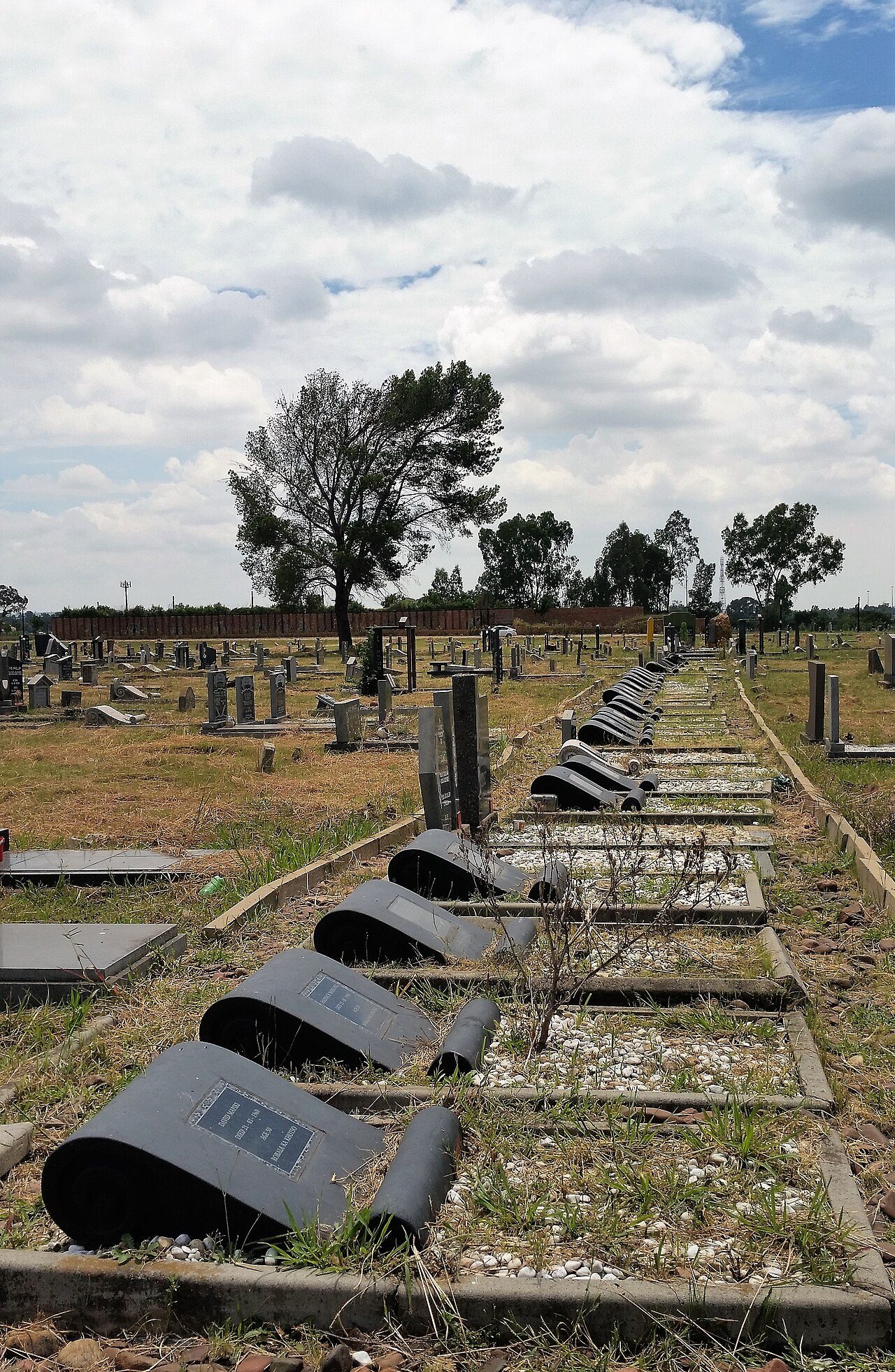
The year's conscience was tested first in South Africa. On 21 March, police fired on a crowd protesting the pass laws outside Sharpeville police station, killing 69 people — including 8 women and 10 children — and wounding 180. Most of the dead, the on-site record notes, were shot in the back as they ran, a fact that destroyed the official claim of self-defence. A state of emergency followed; the ANC and PAC were banned, and the UN Security Council condemned South Africa in Resolution 134, its first such action on apartheid. In the United States, the movement against segregation had found its own new tactic a month earlier: on 1 February, four Black students began the Greensboro sit-ins at a segregated Woolworth lunch counter in North Carolina, sparking a wave of sit-ins across the South. On 14 November, six-year-old Ruby Bridges walked into William Frantz Elementary School in New Orleans under escort of four US marshals, the only Black pupil assigned there that day, while white parents withdrew their children in boycott.
Justice for an older crime arrived on 11 May, when Israeli agents captured Adolf Eichmann in Buenos Aires. Eichmann, the Gestapo's head of Jewish affairs, had been living in Argentina as 'Ricardo Klement'; the hunt had begun with a blind Dachau survivor, Lothar Hermann, whose daughter was dating Eichmann's son and who pieced together the family's true identity. Eichmann was flown to Israel, tried in Jerusalem in proceedings televised worldwide, and hanged on 1 June 1962 — the only civil execution carried out in the State of Israel.
The rest of the year mixed Cold War danger with natural catastrophe and a new political age. On 1 May an American U-2 spy plane piloted by Francis Gary Powers was shot down over the Soviet Union, wrecking a Paris summit. On 9 May the United States approved the first birth-control pill for general use. On 22 May an earthquake of magnitude 9.5 — the largest ever recorded — devastated Valdivia and southern Chile, rupturing about 1,000 kilometres of coastline and sending a tsunami across the Pacific; estimates of the dead range from about 490 to 5,700. And on 26 September, an estimated 70 million Americans watched John F. Kennedy and Richard Nixon in the first televised presidential debate; on 8 November Kennedy, at 43, defeated Nixon by about 113,000 popular votes to become the youngest man elected president.
Timeline of 1960
- 1 February
Four Black students begin the Greensboro sit-ins at a segregated Woolworth lunch counter in North Carolina.
- 13 February
France explodes its first atomic bomb in the Sahara, becoming the world's fourth nuclear power.
- 21 March
South African police kill 69 anti-pass protesters at Sharpeville.
- 1 May
An American U-2 spy plane piloted by Francis Gary Powers is shot down over the Soviet Union.
- 9 May
The United States approves the first birth-control pill for general use.
- 11 May
Israeli agents capture Adolf Eichmann in Buenos Aires, Argentina.
- 22 May
An earthquake of magnitude 9.5, the largest ever recorded, devastates Valdivia and southern Chile.
- 11 August
Chad becomes independent from France, the first of France's African colonies to do so in the 'Year of Africa'.
- 15 August
The Republic of the Congo wins independence from France, with Brazzaville as its capital.
- 26 September
Kennedy and Nixon meet in the first televised presidential debate, watched by an estimated 70 million.
- 1 October
Nigeria becomes independent of Britain, joining the wave of decolonisation.
- 8 November
John F. Kennedy, at 43, defeats Richard Nixon to become the youngest man elected US president.
- 14 November
Six-year-old Ruby Bridges walks into William Frantz Elementary School in New Orleans, desegregating it.
- 20 December
The National Liberation Front — the Viet Cong — is formally established in South Vietnam.
Why 1960 still matters
The Year of Africa changed who sits at the world's tables. The new states of 1960 transformed the United Nations' balance and made decolonisation the decade's defining process; Sharpeville, meanwhile, fixed apartheid in the world's conscience. The UN later made 21 March the International Day for the Elimination of Racial Discrimination, and in South Africa the date is kept as Human Rights Day — the massacre's graves at Phelindaba Cemetery are now a protected national heritage site.
The Eichmann capture established a principle the century had only promised: that the organisers of genocide could be hunted across continents and tried, in public and on television, wherever they hid. His Jerusalem trial of 1961, televised worldwide, let survivors testify to a global audience and set the pattern for modern war-crimes justice.
And the first televised debate permanently changed how democracies choose leaders: an estimated 70 million watched Kennedy and Nixon, and politics after 1960 would be conducted for the camera. Between the sit-ins of February and Ruby Bridges in November, the year also showed the counter-image — ordinary people, including a six-year-old girl, walking through the frame and changing it.
1960 on The History Trail
The year's biggest stories have full pages of their own on The History Trail.
- March 21 in History — police kill 69 anti-pass protesters in the Sharpeville massacre.
- May 11 in History — Israeli agents capture Adolf Eichmann in Buenos Aires.
- May 22 in History — the Valdivia earthquake, magnitude 9.5, the largest ever recorded.
- September 26 in History — Kennedy and Nixon meet in the first televised presidential debate.
- November 14 in History — Ruby Bridges desegregates her New Orleans school.
- United Nations — the body whose Security Council condemned South Africa over Sharpeville in Resolution 134.
Sources
- Encyclopaedia Britannica — On This Day: February 1
- Encyclopaedia Britannica — On This Day: February 13
- HISTORY — Massacre in Sharpeville
- South African Government — International Day for the Elimination of Racial Discrimination
- Encyclopaedia Britannica — Adolf Eichmann, Argentina, Holocaust & Capture
- Encyclopaedia Britannica — On This Day: May 22
The facts on this page were checked against these sources on 19 November 2026. The History Trail's permanent pages are researched and written for this site; the live profiles elsewhere on The History Trail are assembled automatically from Wikipedia and Wikidata.
About the Author
Researched and written by the The History Trail Editorial Team — the accountable editorial function behind this site's permanent story pages. The team works from the published sources cited on each page; it does not invent historians, reviewers or credentials, and it corrects errors openly.
Fact Check
Every load-bearing fact on this page traces to one of the sources listed above, and significant claims link to their source in the text. Our checking method is described on the methodology page; errors can be reported via the corrections page.
Sources & Citations
Cite this page as: The History Trail Editorial Team, The History Trail — this article's title, publication and update dates are shown beneath its headline. The full source list appears under Sources above; the site's source standards are on the sources page.