
Years
1951 in History
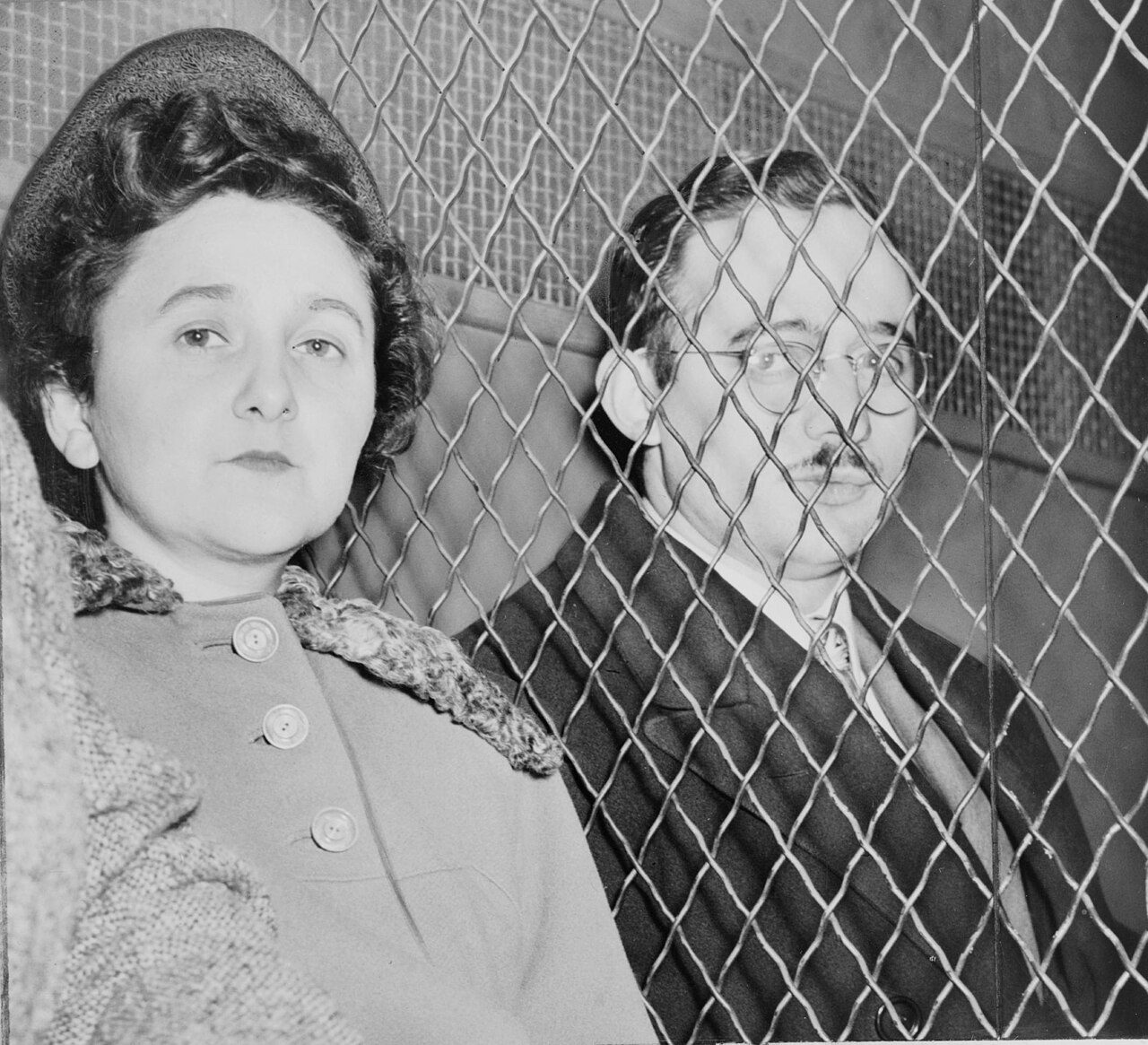
1951 is remembered for a sentence no American court had passed on civilians before: on 5 April, in a federal courtroom in New York, Julius and Ethel Rosenberg were sentenced to death in the electric chair for conspiracy to commit espionage — passing atomic secrets to the Soviet Union. The same Cold War year saw President Truman relieve General Douglas MacArthur in Korea, the first commercial computer dedicated at the Census Bureau, the Festival of Britain open on a bomb-scarred Thames, and the Marshall Plan expire after delivering more than $13 billion to Western Europe.
At a Glance
- Defining event
- Julius and Ethel Rosenberg are sentenced to death for conspiracy to commit espionage, 5 April — the first American civilians ever given a death sentence for espionage
- Civilian control
- President Truman relieves General Douglas MacArthur of his commands in Korea, 11 April
- Computing first
- UNIVAC I, the first commercially produced electronic computer in the United States, is dedicated at the Census Bureau, 14 June
- On television
- Truman's San Francisco speech becomes the first live transcontinental TV broadcast in the U.S., 4 September; I Love Lucy premieres on 15 October
- Settlement
- 49 nations sign the Treaty of Peace with Japan at San Francisco, 8 September, formally ending the Pacific War's legal state
- Closed account
- The Marshall Plan expires on 31 December, having delivered more than $13 billion of American aid to rebuild Western Europe
The defining story: a death sentence for espionage
On 5 April 1951, in a federal courtroom in New York, Judge Irving Kaufman sentenced Julius and Ethel Rosenberg to death in the electric chair for conspiracy to commit espionage. The couple had been convicted a week earlier, on 29 March, of passing American atomic secrets to the Soviet Union, and they were the first American civilians ever sentenced to death for espionage — and, as it proved, the only ones executed for it in the Cold War. 'I consider your crime worse than murder,' the judge told them, blaming them for the Korean War and for the deaths of thousands of soldiers.
The case had begun with a chain of arrests. The physicist Klaus Fuchs confessed in Britain to spying at Los Alamos; his courier Harry Gold led the FBI to David Greenglass, a machinist who had worked on the bomb project and who testified that he had passed sketches of its lens moulds to his brother-in-law, Julius Rosenberg. Ethel's part, according to her brother, was to type the stolen notes. The prosecution's case was that the Rosenbergs had handed the Soviet Union the design of the atomic bomb, and that the Soviet test of 1949, years ahead of American expectations, was the result. Their trial had opened in New York on 6 March; it ended, three weeks later, in the only capital espionage sentence of the American Cold War.
Six days after the sentence, the war the judge had invoked produced the year's other great confrontation. On 11 April President Harry S. Truman relieved General Douglas MacArthur of his commands in Korea, asserting civilian control of the military over the war's most famous soldier. The April 11 record frames the day as a contest between planning and authority: a president asserting the most careful principle of civil government by sacking his most famous general. Between the courtroom and the dismissal, April 1951 concentrated the Cold War's two disciplines — secrecy punished at home, command subordinated abroad.
The rest of the year built the peace the Cold War was freezing. On 3 May the Festival of Britain opened in London, a national exhibition meant to lift a rationed, bomb-scarred country. On 14 June UNIVAC I, the first commercially produced electronic computer in the United States, was dedicated at the Census Bureau. On 8 September, in San Francisco, 49 nations signed the Treaty of Peace with Japan, formally ending the Pacific War's legal state; four days earlier, Truman's speech in that city had become the first live transcontinental television broadcast in the United States, and on 15 October I Love Lucy premiered on CBS, inventing much of the grammar of the television situation comedy. On 24 December Libya became independent — the first country to gain independence through the United Nations — and on 31 December the Marshall Plan expired, having delivered more than $13 billion of American aid to rebuild Western Europe.
Timeline of 1951
- 27 February
The Twenty-second Amendment to the U.S. Constitution is ratified, limiting presidents to two terms in office.
- 6 March
The trial of Julius and Ethel Rosenberg, accused of passing atomic secrets to the Soviet Union, opens in New York.
- 29 March
Julius and Ethel Rosenberg are convicted in New York of conspiring to pass atomic secrets to the Soviet Union; both are executed in 1953.
- 5 April
Julius and Ethel Rosenberg are sentenced to death for conspiracy to commit espionage — the first American civilians ever given a death sentence for espionage.
- 11 April
President Harry S. Truman relieves General Douglas MacArthur of his commands in Korea, asserting civilian control of the military.
- 3 May
The Festival of Britain opens in London, a national exhibition meant to lift a rationed, bomb-scarred country.
- 14 June
UNIVAC I, the first commercially produced electronic computer in the United States, is dedicated at the Census Bureau.
- 16 July
J. D. Salinger's novel The Catcher in the Rye is published in the United States.
- 4 September
President Harry Truman's speech in San Francisco becomes the first live transcontinental television broadcast in the United States.
- 8 September
In San Francisco, 49 nations sign the Treaty of Peace with Japan, formally ending the Pacific War's legal state.
- 15 October
I Love Lucy premieres on CBS, inventing much of the grammar of the television situation comedy; the same day, Mexican chemist Luis Miramontes synthesises norethindrone, the compound that makes the oral contraceptive pill possible.
- 24 December
Libya becomes independent, the first country to gain independence through the United Nations, with Idris I as its king.
- 31 December
The Marshall Plan expires, having delivered more than $13 billion of American aid to rebuild Western Europe.
Why 1951 still matters
The Rosenberg case remains the Cold War's most argued American trial. The sentence was unprecedented — no American civilians had been sentenced to death for espionage before, and none has been since — and the couple were executed in 1953. The legal shape of the charge is part of the argument: they were tried not for treason, which the Constitution defines narrowly, but for conspiracy to commit espionage, a charge that allowed a death sentence for acts committed while the United States and the Soviet Union were formally allies. Lawyers still argue about whether the punishment could lawfully fit the crime, and the case set the emotional temperature of the anti-communist years.
Truman's dismissal of MacArthur, six days later, settled the opposite question for good: that in the American system even the most celebrated commander serves at civilian pleasure, in wartime, in public, without appeal. Together the two April decisions defined the early Cold War state — absolute about secrets, absolute about subordination. The year's quieter firsts pointed the other way, toward the world that state would inhabit: UNIVAC began the commercial computer age at the Census Bureau, the first coast-to-coast broadcast and I Love Lucy built television's national audience and its comic grammar, and the pill's enabling compound was synthesised in a Mexican laboratory on the day Lucy premiered.
And the Marshall Plan's expiry on the year's last day closed the reconstruction ledger: more than $13 billion delivered to rebuild Western Europe, the largest single act of the postwar settlement, ending on schedule in the same year that the peace treaty with Japan ended the Pacific War in law. 1951 was the year the postwar world stopped being improvised and became permanent — its alliances, its computers, its television, and its fears.
1951 on The History Trail
A death sentence in New York is this year's featured story on The History Trail, with a sacked general and a first computer beside it.
- April 5 in History — The Rosenbergs are sentenced to death in 1951 — the first American civilians ever given that sentence for espionage.
- April 11 in History — Truman relieves MacArthur in 1951, on the date Apollo 13 blasted off in 1970.
- June 14 in History — UNIVAC I is dedicated in 1951, on Flag Day's date.
- September 8 in History — 49 nations sign the Treaty of Peace with Japan in 1951.
- December 31 in History — The Marshall Plan expires in 1951, on the date Yeltsin handed over Russia in 1999.
- European Union — The long road from the Marshall Plan's rebuilt Europe of 1951 to a union.
Sources
- HISTORY — What Happened on April 5
- Encyclopaedia Britannica — On This Day: April 11
- Encyclopaedia Britannica — On This Day: March 29
- Encyclopaedia Britannica — On This Day: June 14
- Encyclopaedia Britannica — On This Day: September 8
- Encyclopaedia Britannica — On This Day: December 31
- Encyclopaedia Britannica — On This Day: October 15
The facts on this page were checked against these sources on 19 November 2026. The History Trail's permanent pages are researched and written for this site; the live profiles elsewhere on The History Trail are assembled automatically from Wikipedia and Wikidata.
About the Author
Researched and written by the The History Trail Editorial Team — the accountable editorial function behind this site's permanent story pages. The team works from the published sources cited on each page; it does not invent historians, reviewers or credentials, and it corrects errors openly.
Fact Check
Every load-bearing fact on this page traces to one of the sources listed above, and significant claims link to their source in the text. Our checking method is described on the methodology page; errors can be reported via the corrections page.
Sources & Citations
Cite this page as: The History Trail Editorial Team, The History Trail — this article's title, publication and update dates are shown beneath its headline. The full source list appears under Sources above; the site's source standards are on the sources page.