
On This Day
April 5 in History
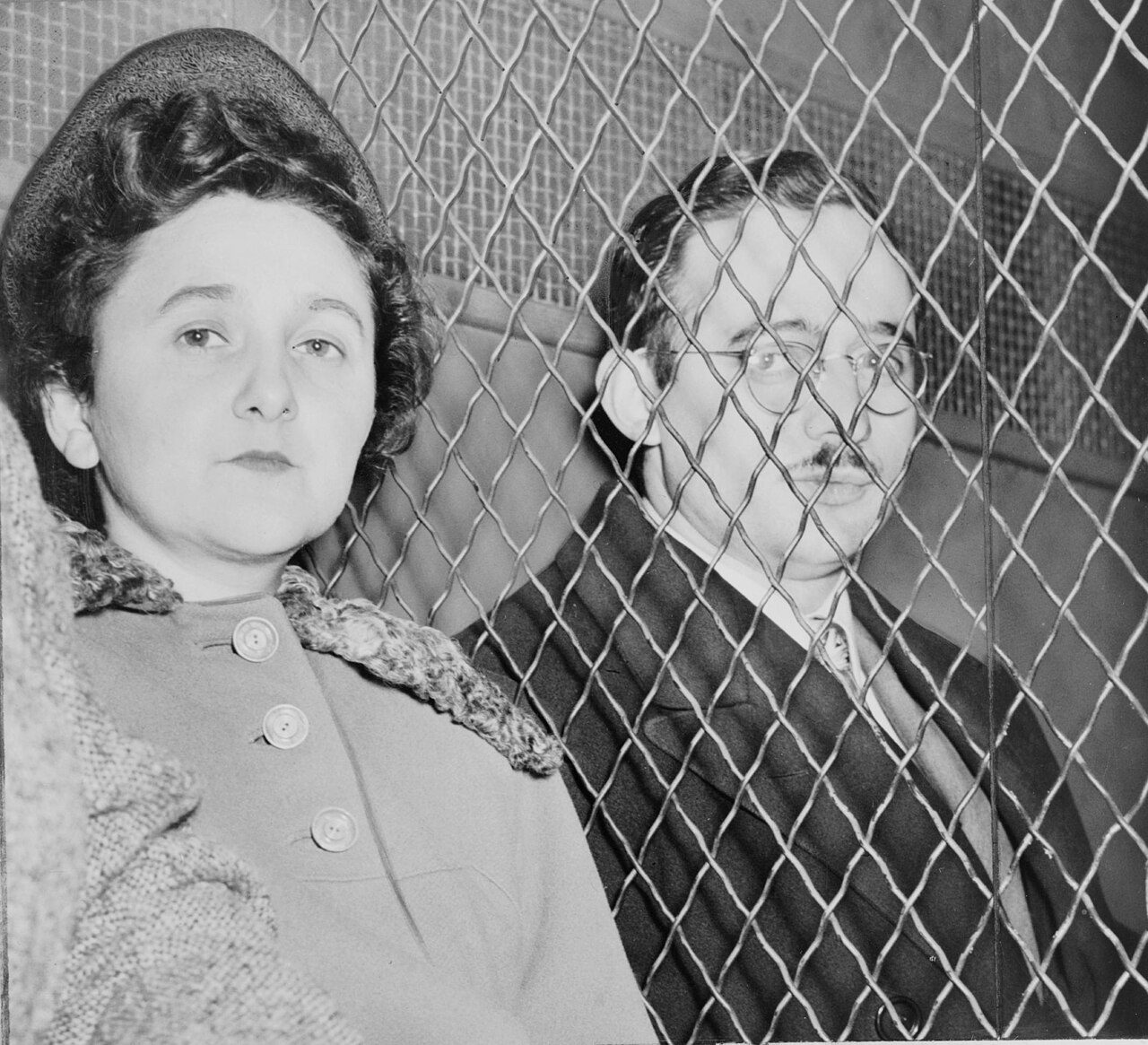
On 5 April 1951 Julius and Ethel Rosenberg were sentenced to die in the electric chair for passing atomic secrets to the Soviet Union — the first American civilians ever given a death sentence for espionage. April 5 is also the day Pocahontas married John Rolfe in 1614 and Winston Churchill retired in 1955.
Choose another date: open the On This Day calendar to browse events, births and deaths for any day of the year.
At a Glance
- The charge
- Conspiracy to commit espionage — passing atomic secrets to the Soviet Union
- The judge
- Irving Kaufman, who called the crime 'worse than murder'
- The evidence
- Testimony of Ethel's brother David Greenglass, a Los Alamos machinist
- The sentence
- Death in the electric chair; a worldwide clemency campaign followed
- The execution
- Both were executed at Sing Sing on 19 June 1953, after Eisenhower refused clemency
- The reassessment
- Later Soviet documents confirmed Julius ran a spy ring; Ethel's role remains disputed
Events on this day
- 1614In Virginia, Pocahontas, daughter of the Powhatan chief, marries English tobacco planter John Rolfe, sealing a period of peace between settlers and Native peoples.
- 1621The Mayflower sets sail from Plymouth, Massachusetts, back to England, five months after delivering the Pilgrims.
- 1792George Washington casts the first presidential veto in U.S. history, rejecting a bill on congressional apportionment.
- 1818Chilean and Argentine forces under José de San Martín defeat the Spanish at the Battle of Maipú, securing Chilean independence.
- 1859Charles Darwin sends the first three chapters of On the Origin of Species to his publisher.
- 1879Chile declares war on Bolivia and Peru, opening the War of the Pacific, fought over the nitrate-rich Atacama coast.
- 1893By the Mendenhall Order, the United States defines its yard and pound in terms of the metre and kilogram, anchoring American measures to the metric standards.
- 1895Playwright Oscar Wilde is arrested in London on charges of gross indecency, the beginning of his fall and imprisonment.
- 1933President Franklin D. Roosevelt creates the Emergency Conservation Work program, the authority under which the Civilian Conservation Corps puts millions of young men to work.
- 1951Julius and Ethel Rosenberg are sentenced to death for conspiracy to commit espionage — the featured story above.
- 1955Winston Churchill resigns as British prime minister at the age of 80, ending his second term in office.
- 1984Kareem Abdul-Jabbar scores his 31,420th point, passing Wilt Chamberlain to become the NBA's all-time leading scorer.
Born on this day
- 1732Jean-Honoré Fragonard — French painter of the Rococo, famous for The Swing.
- 1820Nadar — French portrait photographer and balloonist, born Gaspard-Félix Tournachon.
- 1837Algernon Charles Swinburne — English poet whose verse scandalised and dazzled Victorian readers.
- 1856Booker T. Washington — American educator, founder of Tuskegee Institute and the most influential Black leader of his generation.
- 1908Bette Davis — American film star of Jezebel and All About Eve, twice an Oscar winner.
- 1937Colin Powell — American general and the first Black U.S. secretary of state.
Died on this day
- 1976Howard Hughes — American aviator, film producer and industrialist, dead a recluse in Houston at 70.
- 1994Kurt Cobain — lead singer of Nirvana, dead by suicide in Seattle at 27, the defining loss of the grunge generation.
- 2008Charlton Heston — American actor of Ben-Hur and The Ten Commandments and later president of the National Rifle Association, dead at 84.
The featured story: the Rosenbergs are sentenced to death, 5 April 1951
On 5 April 1951, in a federal courtroom in New York, Judge Irving Kaufman sentenced Julius and Ethel Rosenberg to death in the electric chair for conspiracy to commit espionage. The couple had been convicted a week earlier of passing American atomic secrets to the Soviet Union, and, as HISTORY records, they were the first American civilians ever sentenced to death for espionage, and the only ones executed for it in the Cold War. 'I consider your crime worse than murder,' the judge told them, blaming them for the Korean War and for the deaths of thousands of soldiers.
The case had begun with a chain of arrests: the physicist Klaus Fuchs confessed in Britain to spying at Los Alamos; his courier Harry Gold led the FBI to David Greenglass, a machinist who had worked on the bomb project and who testified that he had passed sketches of its lens moulds to his brother-in-law, Julius Rosenberg. Ethel's part, according to her brother, was to type the stolen notes. The prosecution's case was that the Rosenbergs had handed the Soviet Union the design of the atomic bomb, and that the Soviet test of 1949, years ahead of American expectations, was the result.
The sentence detonated argument around the world. Supporters of the couple, including many who doubted Ethel's guilt in particular, filled streets in Paris, London and New York; the Pope appealed for clemency, and so did Albert Einstein. President Eisenhower refused, twice. On 19 June 1953, after two years of appeals, the Rosenbergs were executed at Sing Sing prison, Julius first, then Ethel, leaving two young sons. Their guilt has been debated ever since: documents released decades later, including Soviet cables, confirmed that Julius ran a spy ring, while the evidence that Ethel knowingly took part was far thinner than the jury was told.
The sentencing, more than the trial, fixed the case in memory. No other peacetime espionage defendants in America have been sent to the chair, and the judge's reasoning, that espionage could be worse than murder because of the wars it might cause, was written for the frightened America of 1951, at war in Korea and convinced the bomb's secret had been stolen. Whether the punishment fitted either defendant's actual role remains the question the case still asks.
Why this date matters
April 5 is a date of sentences and signatures: a marriage that made a peace in 1614, a veto that set a constitutional precedent in 1792, a war declared over desert nitrates in 1879, three chapters of Darwin posted to a publisher in 1859, and, in 1951, a death sentence for espionage that no American court had imposed on civilians before and none has repeated. Churchill's resignation the same day four years later closed a different era quietly. The date shows how much history turns on single documents and single decisions, made by one person, on one day.
Sources
- Encyclopaedia Britannica — On This Day: April 5
- HISTORY — What Happened on April 5
- Wikipedia — April 5
- Encyclopaedia Britannica — Julius and Ethel Rosenberg
The facts on this page were checked against these sources on 19 November 2026. The History Trail's permanent pages are researched and written for this site; the live profiles elsewhere on The History Trail are assembled automatically from Wikipedia and Wikidata.
About the Author
Researched and written by the The History Trail Editorial Team — the accountable editorial function behind this site's permanent story pages. The team works from the published sources cited on each page; it does not invent historians, reviewers or credentials, and it corrects errors openly.
Fact Check
Every load-bearing fact on this page traces to one of the sources listed above, and significant claims link to their source in the text. Our checking method is described on the methodology page; errors can be reported via the corrections page.
Sources & Citations
Cite this page as: The History Trail Editorial Team, The History Trail — this article's title, publication and update dates are shown beneath its headline. The full source list appears under Sources above; the site's source standards are on the sources page.