
On This Day
April 4 in History
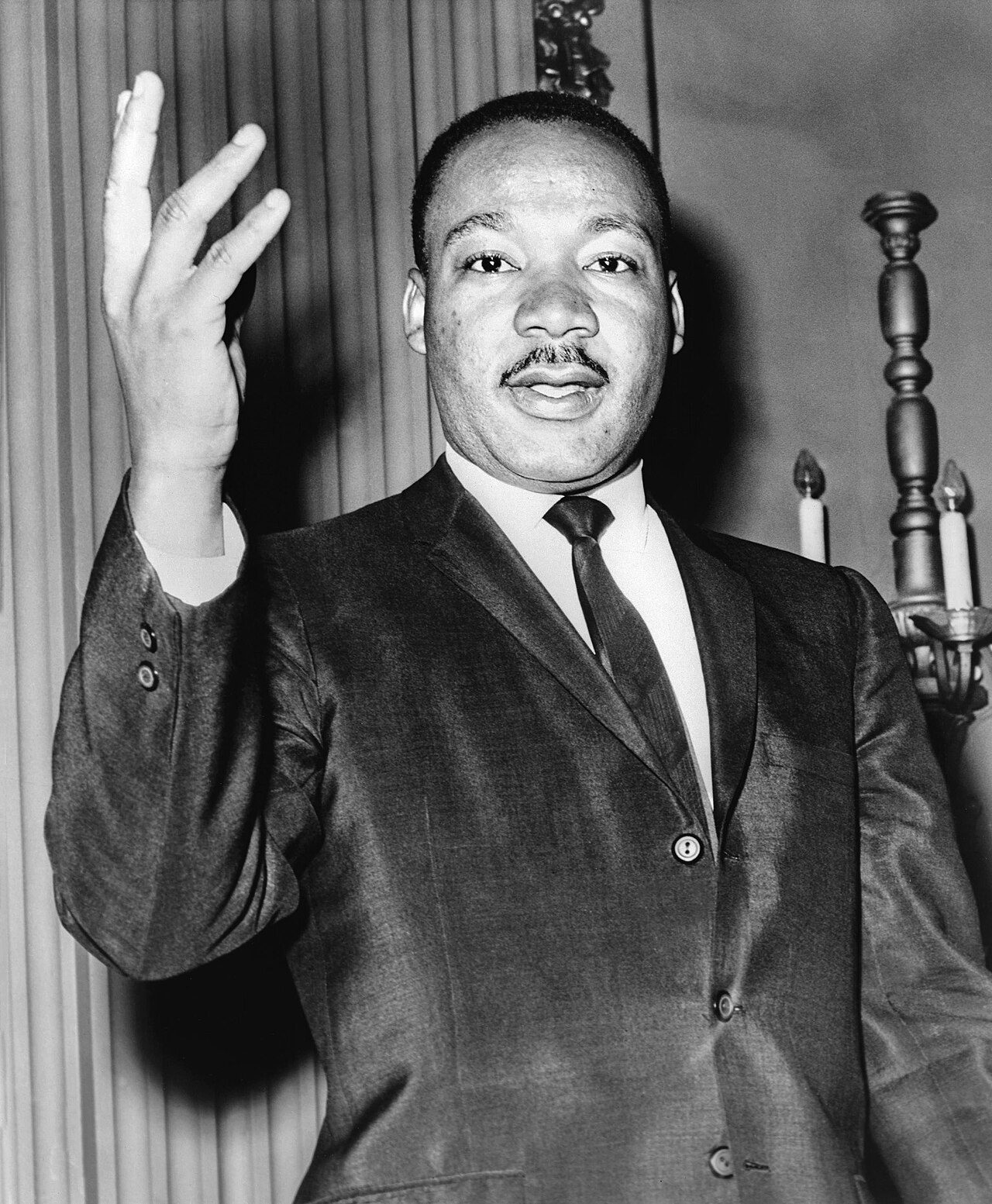
On 4 April 1968 Martin Luther King Jr. was shot dead on a Memphis motel balcony, where he had come to support striking sanitation workers; riots followed in more than a hundred cities, and the Fair Housing Act passed within a week. April 4 is also the day NATO was founded in 1949 and Microsoft in 1975.
Choose another date: open the On This Day calendar to browse events, births and deaths for any day of the year.
At a Glance
- The place
- The Lorraine Motel, Memphis, Tennessee, now the National Civil Rights Museum
- The cause
- King was in Memphis supporting the sanitation workers' strike and launching his Poor People's Campaign
- The last speech
- 'I've Been to the Mountaintop', delivered the night before, 3 April 1968
- The assassin
- James Earl Ray, an escaped fugitive, captured in London and sentenced to 99 years
- The reaction
- Rioting in more than 100 U.S. cities; tens of thousands of troops deployed
- The legacy
- The Fair Housing Act signed on 11 April 1968, the final statute of the civil rights era
Events on this day
- 1776George Washington marches his army from Boston to New York to prepare the defence of the city.
- 1841William Henry Harrison dies of pneumonia a month after his inauguration, the first U.S. president to die in office, and John Tyler becomes the first vice president to succeed.
- 1841Edgar Allan Poe's 'The Murders in the Rue Morgue', the first modern detective story, is published in a Philadelphia magazine.
- 1850Los Angeles, founded as a Spanish pueblo in 1781, is incorporated as an American city.
- 1862The Union's Peninsular Campaign begins, as George McClellan's army advances toward Richmond by way of the Yorktown peninsula.
- 1949The United States, Canada and ten European nations sign the treaty creating NATO, the Western military alliance.
- 1958The peace symbol designed by Gerald Holtom for the Campaign for Nuclear Disarmament makes its first public appearance, on the Aldermaston march.
- 1959French Sudan and Senegal form the Mali Federation, a short-lived step toward West African unity.
- 1960Ben-Hur wins eleven Academy Awards, including Best Picture, a record haul later tied but never beaten outright.
- 1968Martin Luther King Jr. is assassinated in Memphis while supporting striking sanitation workers — the featured story above.
- 1969Surgeon Denton Cooley implants the first complete artificial heart in a human patient, in Houston, Texas.
- 1973The World Trade Center is officially opened in New York, its Twin Towers then the tallest buildings in the world.
- 1975Bill Gates and Paul Allen found Microsoft in Albuquerque, New Mexico, to sell software for the new personal computers.
- 2002Angola's government and the UNITA rebels sign the ceasefire that ends 27 years of civil war.
Born on this day
- 1785Bettina von Arnim — German writer and composer, a central figure of German Romanticism.
- 1819Maria II — queen regnant of Portugal, the only American-born European monarch, born in Rio de Janeiro.
- 1884Isoroku Yamamoto — Japanese admiral who planned the attack on Pearl Harbor.
- 1913Muddy Waters — American bluesman from Mississippi whose electric Chicago sound laid the ground for rock and roll.
- 1914Marguerite Duras — French novelist and filmmaker, author of The Lover.
- 1928Maya Angelou — American poet and memoirist, author of I Know Why the Caged Bird Sings.
Died on this day
- 1841William Henry Harrison — ninth president of the United States, dead of pneumonia 32 days after taking office.
- 1968Martin Luther King Jr. — American Baptist minister and leader of the civil rights movement, assassinated in Memphis at 39.
- 2013Roger Ebert — the Chicago Sun-Times film critic who made film criticism a popular art, dead at 70.
The featured story: Martin Luther King Jr. is assassinated, 4 April 1968
On the evening of 4 April 1968, Martin Luther King Jr. stepped onto the balcony of the Lorraine Motel in Memphis, Tennessee, and a single rifle shot struck him down. He was pronounced dead an hour later, at the age of 39. As HISTORY records, the assassin was James Earl Ray, a 40-year-old escaped fugitive who had fired from a rooming house across the street; the murder of the civil rights movement's foremost leader set off grief, anger and rioting in more than a hundred American cities.
King had come to Memphis to stand with the city's sanitation workers, Black men who had struck in February after two of their colleagues were crushed to death in a faulty garbage truck, and whose picket signs read simply 'I Am a Man'. The strike was meant to be the opening of his new Poor People's Campaign, an attempt to unite poor Americans of every race around economic justice. The night before he died, at Mason Temple, he delivered the speech now known as 'I've Been to the Mountaintop', ending with words that read like farewell: he had seen the promised land, he said, and he might not get there with them.
The aftermath was swift and terrible. Riots burned through Washington, Chicago, Baltimore and dozens of other cities; tens of thousands of troops were deployed, and scores of people were killed. King's funeral, on 9 April, drew tens of thousands of mourners to Atlanta, and his widow Coretta Scott King flew to Memphis to lead the sanitation workers' march in his place; the strike was settled days later on terms close to the workers' demands. Ray, captured at London's Heathrow Airport that June, pleaded guilty and was sentenced to 99 years; he spent the rest of his life trying, and failing, to withdraw the plea.
Within a week of the assassination, Congress passed the Fair Housing Act, the last great statute of the civil rights era, which King had campaigned for and which had been stalled for years. The movement he led did not die with him, but it lost the one voice that had held its moral centre. Memphis marked the Lorraine Motel's balcony with a wreath, and the site is now the National Civil Rights Museum, a memorial to a man whose last campaign was fought, deliberately, for garbage men.
Why this date matters
April 4 is one of those dates where the whole twentieth century seems to pass in a day: an alliance signed in 1949 that still stands, a symbol sketched in 1958 that still marches, two towers opened in 1973 that no longer stand, a software company founded in 1975 that still shapes daily life, and, at the centre of it, a murder in 1968 that changed a nation's laws within a week and its memory forever. It also holds two presidential deaths 127 years apart in method and meaning, one by pneumonia, one by a rifle.
Sources
- Encyclopaedia Britannica — On This Day: April 4
- HISTORY — What Happened on April 4
- Wikipedia — April 4
- Encyclopaedia Britannica — Martin Luther King, Jr.
The facts on this page were checked against these sources on 19 November 2026. The History Trail's permanent pages are researched and written for this site; the live profiles elsewhere on The History Trail are assembled automatically from Wikipedia and Wikidata.
About the Author
Researched and written by the The History Trail Editorial Team — the accountable editorial function behind this site's permanent story pages. The team works from the published sources cited on each page; it does not invent historians, reviewers or credentials, and it corrects errors openly.
Fact Check
Every load-bearing fact on this page traces to one of the sources listed above, and significant claims link to their source in the text. Our checking method is described on the methodology page; errors can be reported via the corrections page.
Sources & Citations
Cite this page as: The History Trail Editorial Team, The History Trail — this article's title, publication and update dates are shown beneath its headline. The full source list appears under Sources above; the site's source standards are on the sources page.