
On This Day
September 8 in History
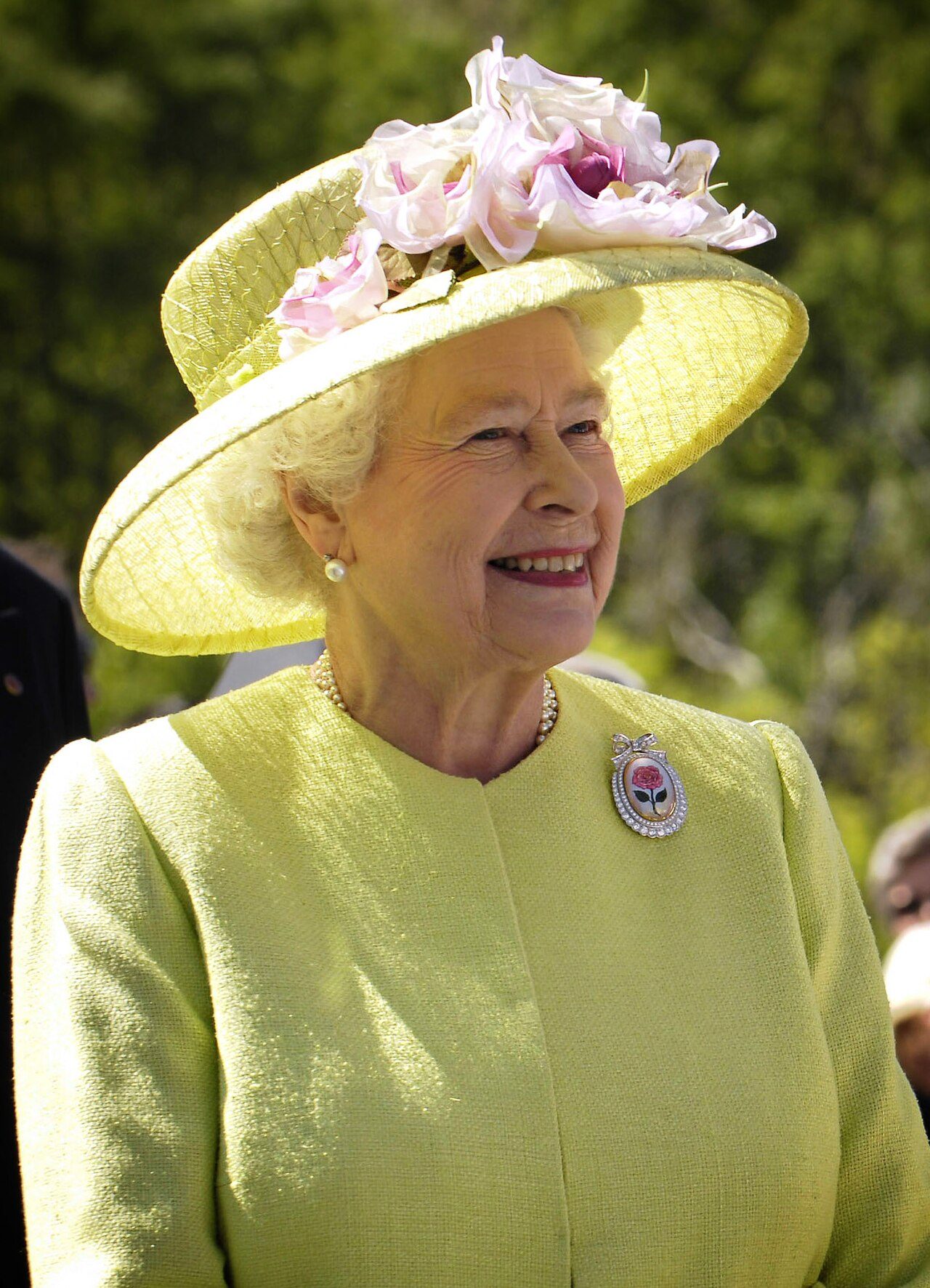
On 8 September 2022 Queen Elizabeth II died peacefully at Balmoral Castle in Scotland, aged 96, ending a reign of 70 years and 214 days — the longest of any British monarch. Her eldest son succeeded her at once as Charles III. September 8 is also the day Michelangelo's David was unveiled in 1504, the siege of Leningrad began in 1941, Italy's surrender was announced in 1943, and Star Trek first aired in 1966.
Choose another date: open the On This Day calendar to browse events, births and deaths for any day of the year.
At a Glance
- The death
- Elizabeth II died at Balmoral Castle at 3:10 p.m. on 8 September 2022, aged 96; her death certificate recorded the cause as old age
- The reign
- 70 years and 214 days, from 6 February 1952 — the longest reign of any British monarch and of any queen regnant in history
- The succession
- Her eldest son became King Charles III at the moment of her death; his accession was proclaimed on 10 September
- The realms
- At her death she was queen of 15 Commonwealth realms, including the United Kingdom, Canada, Australia and New Zealand
- The announcement
- Buckingham Palace announced the death that evening; the BBC's presenters changed into black as the news broke
- The funeral
- Her state funeral was held at Westminster Abbey on 19 September 2022, the first state funeral in Britain since Churchill's in 1965
Events on this day
- 1504Michelangelo's marble statue of David is unveiled in the Piazza della Signoria in Florence.
- 1664Dutch New Amsterdam surrenders to the English and is renamed New York.
- 1863At the Second Battle of Sabine Pass, a small Confederate force repels a Union invasion of Texas at the Sabine River.
- 1900A catastrophic hurricane strikes Galveston, Texas; estimates of the dead range from about 6,000 to 12,000, making it the deadliest natural disaster in U.S. history.
- 1915A German Zeppelin bombs Aldersgate in central London, killing 22 people, in one of the First World War's most destructive airship raids on the capital.
- 1941German forces complete the encirclement of Leningrad, beginning a siege that lasts until January 1944 and kills an estimated million civilians.
- 1943General Dwight Eisenhower publicly announces Italy's surrender to the Allies, five days after the armistice was secretly signed.
- 1945American troops land at Inchon and enter Seoul to accept the Japanese surrender in southern Korea, beginning the division of Korea at the 38th parallel.
- 1951In San Francisco, 49 nations sign the Treaty of Peace with Japan, formally ending the Pacific War's legal state.
- 1954The Southeast Asia Treaty Organization, SEATO, is founded in Manila by eight nations to resist communism in Asia.
- 1966Star Trek premieres on American television on NBC, beginning a three-season run that grows into a vast franchise.
- 1974President Gerald Ford grants former president Richard Nixon a full and unconditional pardon for any crimes connected with Watergate.
- 2022Queen Elizabeth II dies at Balmoral and Charles III succeeds her — the featured story above.
Born on this day
- 1157Richard I — king of England, the 'Lionheart' of crusading fame.
- 1841Antonin Dvorak — Czech composer of the 'New World' Symphony.
- 1925Peter Sellers — English comic actor of Dr Strangelove and the Pink Panther films.
- 1932Patsy Cline — American country singer of 'Crazy' and 'I Fall to Pieces'.
- 1933Asha Bhosle — Indian playback singer, among the most recorded artists in history.
- 1979Pink — American singer-songwriter, born Alecia Moore.
Died on this day
- 1949Richard Strauss — German composer of Der Rosenkavalier and Also sprach Zarathustra, dead at 85.
- 1965Dorothy Dandridge — American actress and singer, the first Black woman nominated for the Best Actress Oscar.
- 1977Zero Mostel — American actor who originated the roles of Tevye and Pseudolus.
- 2022Elizabeth II — queen of the United Kingdom and 14 other realms, dead at Balmoral at 96 after a reign of more than 70 years.
The featured story: Queen Elizabeth II dies at Balmoral, 8 September 2022
She had been on the throne so long that she had become a unit of historical measurement. Elizabeth II came to the throne on 6 February 1952, a 25-year-old in Kenya who learned of her father's death at a safari lodge; she was crowned in 1953 in the first coronation shown on television. When she died, she had reigned for 70 years and 214 days — longer than any British monarch, longer than Queen Victoria by seven years, and longer than any queen regnant anywhere in recorded history. Fifteen prime ministers had served under her, from Winston Churchill to Liz Truss, whom she had appointed, frail and smiling, at Balmoral just two days before her death.
The end, when it came, was swift and carefully stage-managed by decades of planning under the codename Operation London Bridge. On the morning of 8 September 2022 Buckingham Palace took the unusual step of announcing that the Queen was under medical supervision and that her doctors were concerned; her children and grandchildren travelled to Balmoral through the day. She died peacefully at 3:10 in the afternoon, with the King and Queen Consort — as Charles and Camilla instantly became — at the castle. The death certificate, published later, gave the cause simply as old age. At 6:30 p.m. the palace announced the death to the world; flags came down to half-mast, and the BBC interrupted its programmes as its presenter, already in a black tie, read the statement.
The succession was instantaneous and seamless, as the system intends: the moment she died, Charles was king. He took the name Charles III, issued his first statement as monarch that evening, addressed the nation on television the next day, and was formally proclaimed by the Accession Council on 10 September. What followed was an eleven-day national liturgy of mourning on a scale Britain had not staged since 1965: the coffin's journey from Balmoral to Edinburgh and then to London, the lying-in-state in Westminster Hall past which an estimated quarter of a million people filed — the famous Queue, miles long — and finally the state funeral at Westminster Abbey on 19 September, attended by presidents, prime ministers and royalty from across the world, before her burial beside Prince Philip at Windsor.
The historical weight of the day lies in the span it closed. Elizabeth II's reign covered the whole second half of the British twentieth century and the first fifth of the twenty-first: the end of empire, the Cold War, Britain's entry into and exit from Europe, the transformation of the Commonwealth from an imperial system into a voluntary association of 56 nations. She had been head of state for 15 realms at her death and for 32 sovereign states at one time or another. For the great majority of people alive in those realms, she was the only monarch they had ever known — which is why 8 September 2022 felt, even to republicans, like the end of an era rather than merely the death of a very old, very dutiful woman.
Why this date matters
September 8 is a date of thresholds between ages. A Renaissance statue is unveiled in 1504 and a Dutch colony becomes English New York in 1664; a siege that will define the Eastern Front begins in 1941 and a surrender that reshapes Europe is announced in 1943; Korea's division starts in 1945 and its peace treaty is signed in 1951. In 2022 the date closed the longest reign in British history. Few days hold both the unveiling of David and the end of the second Elizabethan age, and the span between them is the measure of the date.
Sources
- Encyclopaedia Britannica — On This Day: September 8
- HISTORY — This Day in History: September 8
- Wikipedia — Death and state funeral of Elizabeth II
- Wikipedia — September 8
The facts on this page were checked against these sources on 19 November 2026. The History Trail's permanent pages are researched and written for this site; the live profiles elsewhere on The History Trail are assembled automatically from Wikipedia and Wikidata.
About the Author
Researched and written by the The History Trail Editorial Team — the accountable editorial function behind this site's permanent story pages. The team works from the published sources cited on each page; it does not invent historians, reviewers or credentials, and it corrects errors openly.
Fact Check
Every load-bearing fact on this page traces to one of the sources listed above, and significant claims link to their source in the text. Our checking method is described on the methodology page; errors can be reported via the corrections page.
Sources & Citations
Cite this page as: The History Trail Editorial Team, The History Trail — this article's title, publication and update dates are shown beneath its headline. The full source list appears under Sources above; the site's source standards are on the sources page.