
On This Day
September 9 in History
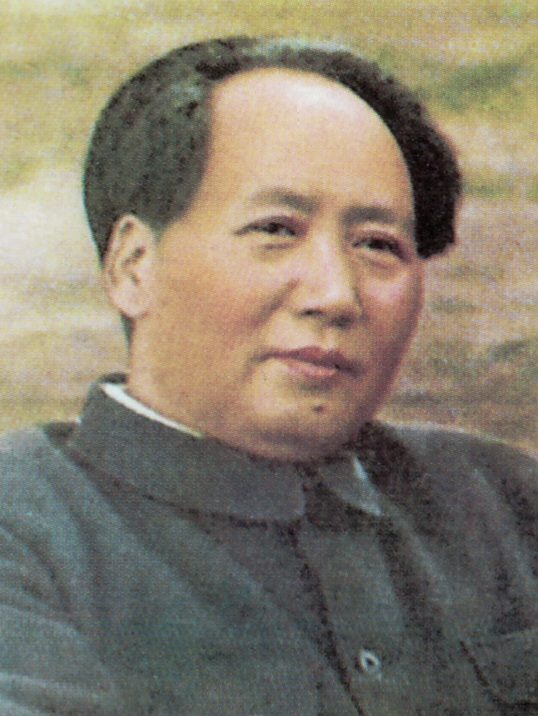
Shortly after midnight on 9 September 1976, Mao Zedong died in Beijing at the age of 82. The founder of the People's Republic of China had ruled the world's most populous country for 27 years; his death closed the Cultural Revolution he had launched a decade earlier and opened the struggle that would transform China. September 9 is also the day the Continental Congress named the United States in 1776, California became a state in 1850, and Elizabeth II became Britain's longest-reigning monarch in 2015.
Choose another date: open the On This Day calendar to browse events, births and deaths for any day of the year.
At a Glance
- The death
- Mao died at 00:10 on 9 September 1976 in Beijing, aged 82, after a series of heart attacks in his final year
- The reign
- He had led the Chinese Communist Party to victory in 1949 and founded the People's Republic of China on 1 October that year
- The campaigns
- His Great Leap Forward (1958–62) was followed by famine in which tens of millions died; his Cultural Revolution (1966–76) convulsed China for a decade
- The mourning
- China observed a week of national mourning; his body lay in state at the Great Hall of the People
- The succession
- Hua Guofeng succeeded him; within a month the 'Gang of Four', including Mao's widow, were arrested, and by 1978 Deng Xiaoping was ascendant
- The verdict
- In 1981 the Party officially judged Mao's contributions primary and his errors secondary — the famous '70 percent right, 30 percent wrong' assessment
Events on this day
- 337The three sons of Constantine the Great succeed him as co-emperors, dividing the Roman Empire between them.
- 1513At the Battle of Flodden, an English army destroys the invading Scots; King James IV of Scotland is killed with much of his nobility.
- 1543Mary Stuart, nine months old, is crowned Queen of Scots at Stirling Castle.
- 1776The Continental Congress formally declares the name of the new nation to be the 'United States' of America, replacing 'United Colonies'.
- 1791The new federal capital of the United States is named Washington, in honour of the president.
- 1850California is admitted to the Union as the 31st state, skipping the usual territorial stage entirely.
- 1919The Boston police strike begins, leaving the city briefly unguarded and making Governor Calvin Coolidge's reputation.
- 1942A Japanese floatplane launched from a submarine drops incendiary bombs on an Oregon forest, the first air attack on the U.S. mainland.
- 1947Operators of the Harvard Mark II computer find a moth trapped in a relay — the first literal computer 'bug', taped into the logbook.
- 1948The Democratic People's Republic of Korea — North Korea — is proclaimed in Pyongyang, completing the peninsula's division.
- 1956Elvis Presley makes his first appearance on The Ed Sullivan Show, watched by an estimated 60 million viewers.
- 1971Prisoners seize control of Attica prison in New York state, beginning a four-day uprising that ends with 43 dead.
- 1976Mao Zedong dies in Beijing — the featured story above.
- 2015Queen Elizabeth II surpasses Queen Victoria to become Britain's longest-reigning monarch.
Born on this day
- 1585Cardinal Richelieu — French statesman, chief minister of Louis XIII and architect of France's rise.
- 1828Leo Tolstoy — Russian novelist of War and Peace and Anna Karenina.
- 1890Harland Sanders — American founder of Kentucky Fried Chicken, franchised from the age of 62.
- 1941Otis Redding — American soul singer of '(Sittin' On) The Dock of the Bay'.
- 1960Hugh Grant — English actor of Four Weddings and a Funeral.
- 1966Adam Sandler — American comedian and actor.
Died on this day
- 1087William the Conqueror — Norman duke who conquered England in 1066, dead of injuries after a fall from his horse in France.
- 1513James IV — king of Scotland, killed at the Battle of Flodden.
- 1901Henri de Toulouse-Lautrec — French artist of the Moulin Rouge posters, dead at 36.
- 1976Mao Zedong — founder of the People's Republic of China, dead in Beijing at 82.
- 2003Edward Teller — Hungarian-American physicist, a leading figure in the development of the hydrogen bomb.
- 2024James Earl Jones — American actor, the voice of Darth Vader, dead at 93.
The featured story: Mao Zedong dies in Beijing, 9 September 1976
Mao Zedong's last year was a dying fall. The old revolutionary, who had proclaimed the People's Republic from Tiananmen Gate in 1949 and ruled China for twenty-seven years, suffered major heart attacks in March and July 1976 and a third on 5 September that left him an invalid. In the small hours of 9 September — at ten minutes past midnight, by the official account — he died, aged 82. The announcement was withheld until the afternoon, when radio across China interrupted its programmes: the Chairman of the Chinese Communist Party, founder of the People's Republic and of the People's Liberation Army, was dead, and a week of national mourning began.
The scale of the life was difficult to overstate then and remains so. Mao had led a peasant-based communist movement through two decades of civil war and invasion to total victory, unified China under a single government for the first time in generations, and set about remaking the largest society on earth. The remaking came at a staggering human price. The Great Leap Forward of 1958–62, his attempt to vault China into industrial modernity through backyard furnaces and collectivised farms, collapsed into a famine in which tens of millions of people died — estimates vary widely. In 1966, sidelined after that catastrophe, he launched the Cultural Revolution, mobilising millions of young Red Guards against his own party and state; a decade of persecution, closed universities, destroyed heritage and factional violence followed, ending only with his death.
The succession he left behind was a trap of his own making. His chosen heir, Hua Guofeng, held the famous deathbed mandate — 'With you in charge, I am at ease' — but the radicals around Mao's widow Jiang Qing, the Gang of Four, expected to inherit the revolution. Within a month of the funeral, on 6 October 1976, Hua and the army arrested the Gang of Four in a bloodless coup that crowds celebrated in Tiananmen Square. Mao's body, against his own signed wish to be cremated, was embalmed and installed in a mausoleum in Tiananmen Square, where it lies still. Power then passed, step by step, to the man Mao had twice purged: Deng Xiaoping, who by 1978 was launching the reforms that would turn China toward the market.
In 1981 the Communist Party delivered its official verdict, judging that Mao's contributions to the revolution were primary and his errors secondary — the '70–30' assessment that still frames his standing in China. His portrait still overlooks Tiananmen, his face is on every banknote, and the party he founded still rules in his name, even as it governs a country transformed by policies he would not have chosen. That is the paradox 9 September 1976 created: China could neither continue with Mao nor repudiate him, and the settlement it reached — revere the founder, reverse much of his work — has held for half a century.
Why this date matters
September 9 is a day when names and nations are fixed and founders fall. Congress gives the United States its name in 1776 and its capital a name in 1791; California joins the Union in 1850 and North Korea is proclaimed in 1948; a nine-month-old queen is crowned in Scotland in 1543 and a king of Scotland dies on the same date thirty years earlier. In 1976 the founder of the largest nation on earth dies and an era ends in Beijing, while in 2015, on the same date, a monarch in London quietly passes Victoria's record — two kinds of longevity, revolutionary and constitutional, sharing a day.
Sources
- Encyclopaedia Britannica — On This Day: September 9
- HISTORY — This Day in History: September 9
- Wikipedia — Mao Zedong
- Wikipedia — September 9
The facts on this page were checked against these sources on 19 November 2026. The History Trail's permanent pages are researched and written for this site; the live profiles elsewhere on The History Trail are assembled automatically from Wikipedia and Wikidata.
About the Author
Researched and written by the The History Trail Editorial Team — the accountable editorial function behind this site's permanent story pages. The team works from the published sources cited on each page; it does not invent historians, reviewers or credentials, and it corrects errors openly.
Fact Check
Every load-bearing fact on this page traces to one of the sources listed above, and significant claims link to their source in the text. Our checking method is described on the methodology page; errors can be reported via the corrections page.
Sources & Citations
Cite this page as: The History Trail Editorial Team, The History Trail — this article's title, publication and update dates are shown beneath its headline. The full source list appears under Sources above; the site's source standards are on the sources page.