
Years
1877 in History
1877 is a year of first performances. In March, Australia and England played the first cricket Test match in Melbourne; in July, Spencer Gore won the first Wimbledon Championships; and in November Thomas Edison announced the phonograph, the first machine to record and reproduce sound. Around those firsts, Russia's war with the Ottoman Empire set Balkan nations on the road to independence, and the American West lost Crazy Horse and heard Chief Joseph surrender.
At a Glance
- Defining event
- Edison's phonograph announced, 21 November 1877 — the first machine to record and reproduce sound
- First Test
- First cricket Test match begins in Melbourne, 15 March; Australia beat England by 45 runs
- First Wimbledon
- First Wimbledon Championships begin, 9 July; Spencer Gore wins the gentlemen's singles
- War in the Balkans
- Russia declares war on the Ottoman Empire, 24 April
- The West closes
- Crazy Horse killed at Fort Robinson, 5 September; Chief Joseph surrenders, 5 October
- A moon found
- Asaph Hall discovers Phobos, the larger moon of Mars, 18 August
The defining story: the year sound was captured
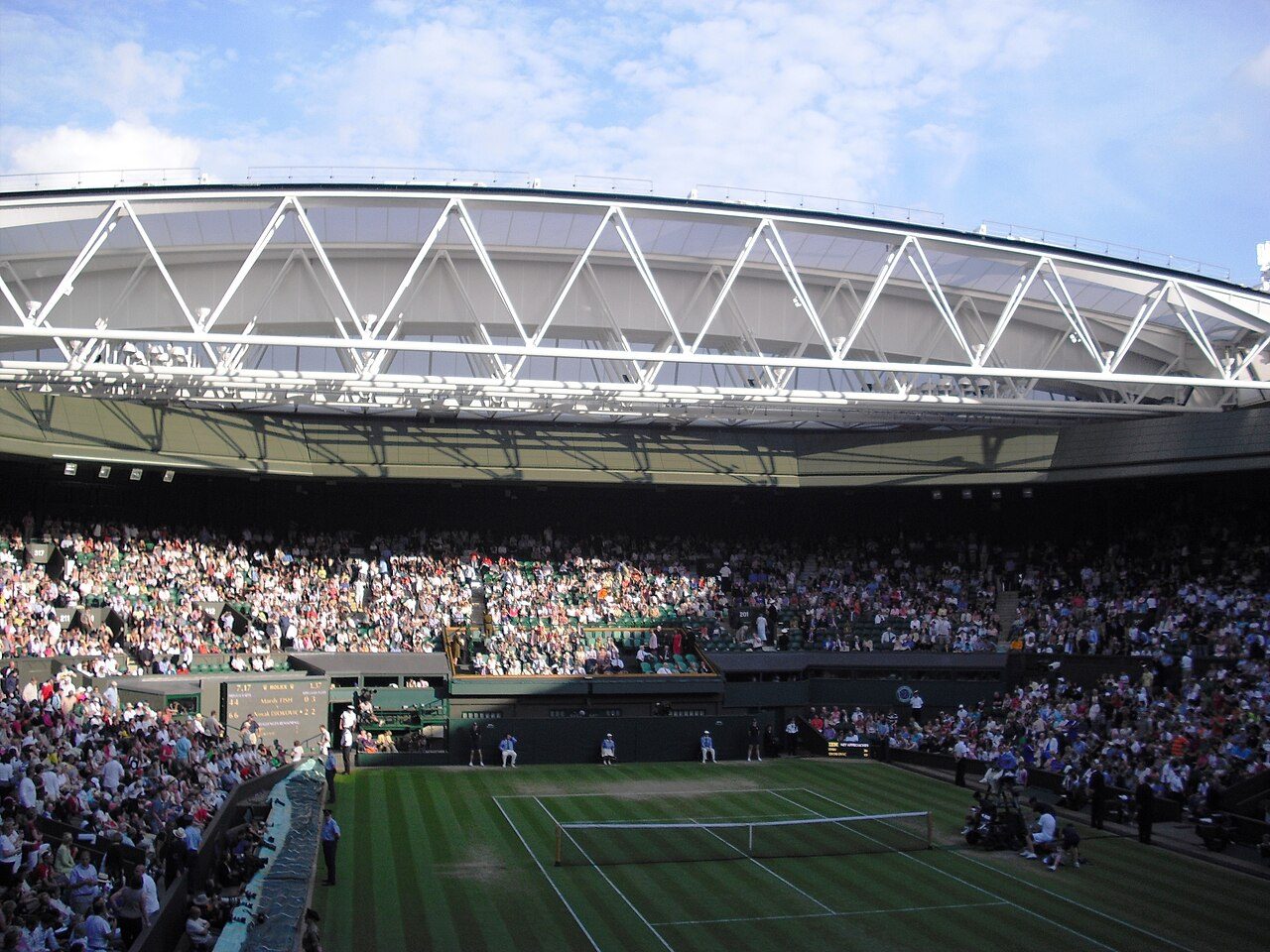
Sport organised itself first. On 15 March the first cricket Test match began in Melbourne, and Australia defeated England by 45 runs — the first match in the Test structure that became international cricket's summit. On 9 July the first Wimbledon Championships began at the All England Croquet and Lawn Tennis Club, where Spencer Gore won the gentlemen's singles, the only event, from 22 entrants. The Wimbledon record notes that the tournament began as a small fundraiser by a croquet club that had only just added a fashionable new game — and that its first champion doubted the game had a future at all.
Politics ran bloodier. On 24 April Russia declared war on the Ottoman Empire; the last Russo-Turkish War ended with Romania, Serbia and Montenegro independent of Turkish rule. In the American West the long resistance ended within a month: on 5 September the Oglala Lakota leader Crazy Horse was fatally bayoneted by a soldier at Fort Robinson, Nebraska, a year after the victory at the Little Bighorn, and on 5 October Chief Joseph surrendered to United States troops in Montana, ending the Nez Perce flight with the speech remembered for 'I will fight no more forever'. An earthquake and tsunami at Iquique, then in Peru, killed more than 2,500 people on 9 May.
The year's wonder came in November. On 21 November Edison's phonograph — the first machine to record and reproduce sound — was announced to the public, with Scientific American calling it a wonderful invention. On 29 November Edison demonstrated it publicly, reciting 'Mary Had a Little Lamb' into the tinfoil machine, and on 6 December, in New Jersey, he made the recitation again for the record that became one of the first recordings of the human voice. By Christmas Eve the U.S. Patent Office had received his application for the phonograph.
The quieter entries carry their own weight: on 14 June Henry Ossian Flipper, born into slavery, became the first Black graduate of West Point; on 18 August Asaph Hall discovered Phobos, the larger of Mars's two moons; on 24 September Saigō Takamori, remembered as the 'last samurai', died at the Battle of Shiroyama after leading the Satsuma Rebellion; and on 24 November Anna Sewell's Black Beauty was published in London, the novel that transformed attitudes to animal welfare.
Timeline of 1877
- 15 March
The first cricket Test match begins in Melbourne; Australia defeats England by 45 runs.
- 24 April
Russia declares war on the Ottoman Empire, opening the last Russo-Turkish War.
- 9 May
An earthquake and tsunami strike Iquique, killing more than 2,500 people.
- 14 June
Henry Ossian Flipper, born into slavery, becomes the first Black graduate of West Point.
- 2 July
Hermann Hesse, German-Swiss novelist of Steppenwolf and Siddhartha, is born.
- 9 July
The first Wimbledon Championships begin; Spencer Gore wins the gentlemen's singles.
- 18 August
American astronomer Asaph Hall discovers Phobos, the larger of the two moons of Mars.
- 29 August
Brigham Young, the Mormon leader who led his church to Utah, dies.
- 5 September
Crazy Horse is fatally bayoneted at Fort Robinson, Nebraska.
- 24 September
Saigō Takamori dies at the Battle of Shiroyama, remembered as the 'last samurai'.
- 5 October
Chief Joseph surrenders in Montana, ending the Nez Perce flight.
- 21 November
Thomas Edison's phonograph, the first machine to record and reproduce sound, is announced to the public.
- 24 November
Anna Sewell's Black Beauty is published in London.
- 31 December
Gustave Courbet, French painter and leader of the Realist movement, dies in exile in Switzerland.
Why 1877 still matters
The phonograph changed what a voice was: for the first time, sound — and with it music, speech and memory — could be stored, replayed and sold. Every recording since descends from Edison's tinfoil cylinder and a nursery rhyme. The two sporting firsts proved just as durable: Test cricket and Wimbledon, both begun in 1877 as modest ventures, became the oldest institutions of their sports, Wimbledon still the only Grand Slam played on grass.
The Balkan settlement that followed Russia's war redrew south-eastern Europe and set the national questions that would detonate in 1914. In America, the deaths and surrenders of 1877 closed the era of armed Native resistance on the northern plains and in the Northwest, while Flipper's graduation at West Point marked a first that the army itself would not follow up for generations.
Black Beauty did its work in a different register, turning a horse's autobiography into a lever on law and custom around animal welfare. A year that began with a cricket match in Melbourne ended with a machine in New Jersey that could give a voice back to its owner — 1877 taught the world to keep what had always vanished: a performance, a match, a sound.
1877 on The History Trail
Two sporting firsts and a talking machine lead this year on The History Trail.
- July 9 in History — The first Wimbledon Championships begin at Worple Road.
- March 15 in History — The first cricket Test match begins in Melbourne.
- November 21 in History — Edison's phonograph is announced to the public.
- April 24 in History — Russia declares war on the Ottoman Empire.
- October 5 in History — Chief Joseph surrenders, ending the Nez Perce flight.
- The Championships, Wimbledon — The oldest tennis tournament, first held in July 1877.
- Cricket — The game whose first Test match was played in 1877.
Sources
- Encyclopaedia Britannica — On This Day: March 15
- Encyclopaedia Britannica — On This Day: April 24
- HISTORY — This Day in History: July 9
- Encyclopaedia Britannica — On This Day: November 21
- Encyclopaedia Britannica — On This Day: October 5
- Encyclopaedia Britannica — On This Day: June 14
The facts on this page were checked against these sources on 19 November 2026. The History Trail's permanent pages are researched and written for this site; the live profiles elsewhere on The History Trail are assembled automatically from Wikipedia and Wikidata.
About the Author
Researched and written by the The History Trail Editorial Team — the accountable editorial function behind this site's permanent story pages. The team works from the published sources cited on each page; it does not invent historians, reviewers or credentials, and it corrects errors openly.
Fact Check
Every load-bearing fact on this page traces to one of the sources listed above, and significant claims link to their source in the text. Our checking method is described on the methodology page; errors can be reported via the corrections page.
Sources & Citations
Cite this page as: The History Trail Editorial Team, The History Trail — this article's title, publication and update dates are shown beneath its headline. The full source list appears under Sources above; the site's source standards are on the sources page.