
On This Day
July 9 in History
On 9 July 1816 the Congress of Tucumán, meeting in a colonial house in San Miguel de Tucumán, declared the United Provinces of the Río de la Plata independent of Spain — the legal birth of Argentina. July 9 is also the day Catherine the Great took the Russian throne in 1762, the Fourteenth Amendment was ratified in 1868, and the first Wimbledon Championships began in 1877.
Choose another date: open the On This Day calendar to browse events, births and deaths for any day of the year.
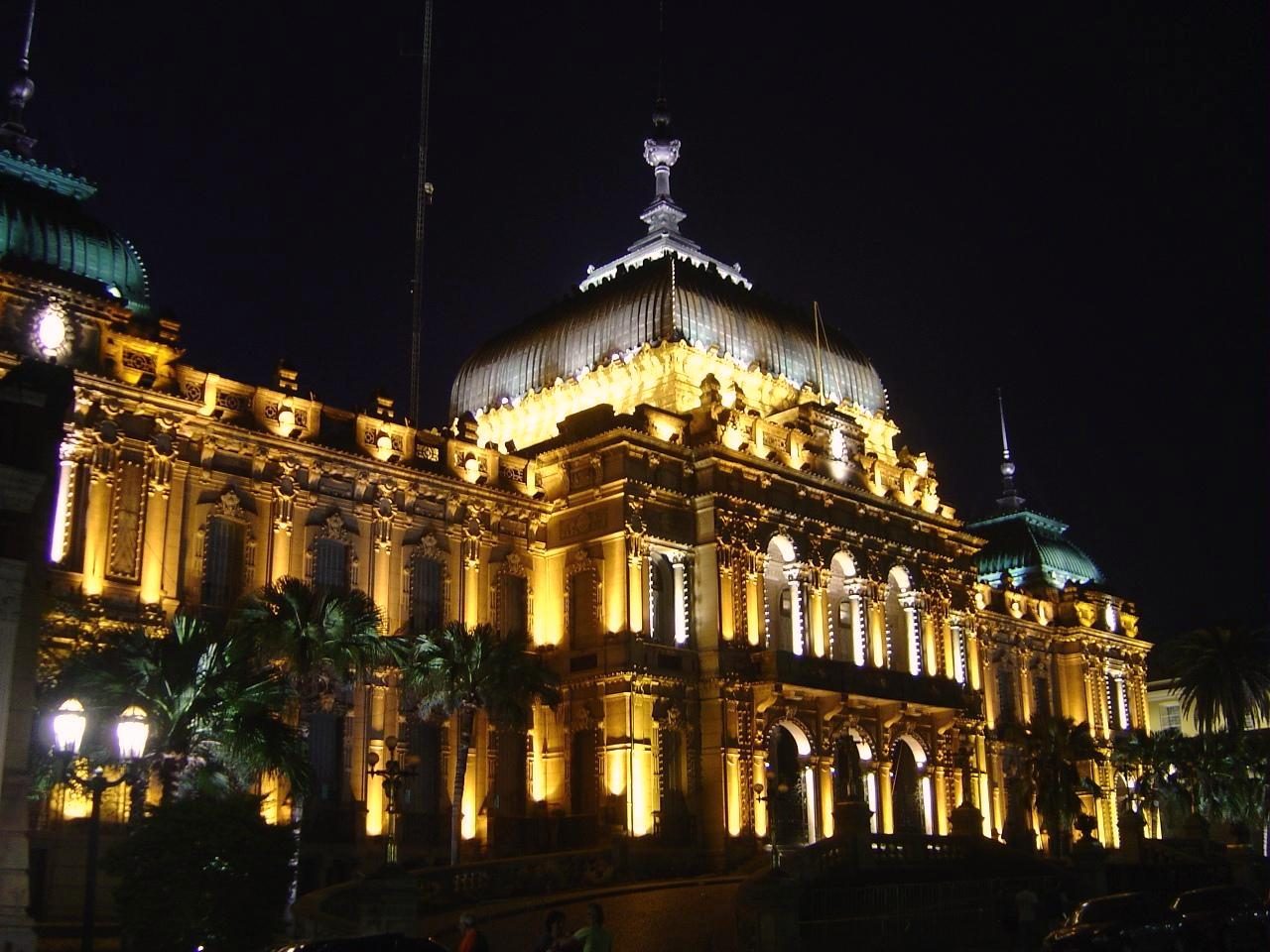
At a Glance
- Declared
- 9 July 1816, at San Miguel de Tucumán, by the Congress of Tucumán
- What was declared
- The independence of the United Provinces of the Río de la Plata (the United Provinces of South America) from the kings of Spain
- The process began
- The May Revolution of 25 May 1810, which deposed the viceroy in Buenos Aires
- The war
- The Argentine war of independence ran from 1810 to 1818; San Martín pledged support to the act in August 1816
- The place
- The Casa Histórica de la Independencia, declared a National Historic Monument in 1941 and now a museum
- Marked today
- 9 July is Argentina's national day
Events on this day
- 1762Catherine the Great is proclaimed empress of Russia after a palace coup deposes her husband, Peter III, beginning a reign of 34 years.
- 1816The Congress of Tucumán declares the independence of the United Provinces of the Río de la Plata from Spain — the featured story above.
- 1846United States naval forces raise the American flag at Yerba Buena, the settlement that becomes San Francisco, taking it from Mexico.
- 1863The siege of Port Hudson, Louisiana, ends with the Confederate surrender, completing Union control of the Mississippi River begun at Vicksburg.
- 1868The Fourteenth Amendment to the U.S. Constitution is ratified, guaranteeing citizenship and equal protection of the laws to all persons born or naturalised in the United States.
- 1877The first Wimbledon Championships begin at the All England Croquet and Lawn Tennis Club; Spencer Gore wins the gentlemen's singles.
- 1915German forces in South West Africa surrender to South African troops, one of the first campaigns of the First World War to conclude.
- 1955The Russell–Einstein Manifesto is issued in London, warning of the dangers of nuclear weapons; it leads to the Pugwash conferences of scientists.
- 1962Bob Dylan records 'Blowin' in the Wind' in New York, the song that makes his name as a songwriter of protest.
- 1993DNA testing is reported to have identified the remains of Russia's last tsar, Nicholas II, and his family, executed in 1918.
- 2011South Sudan becomes independent of Sudan, the world's newest country, after a referendum ends decades of civil war.
- 2020The U.S. Supreme Court decides McGirt v. Oklahoma, ruling that much of eastern Oklahoma remains Native American reservation land for criminal-law purposes.
Born on this day
- 1911John Archibald Wheeler — American physicist who coined the term 'black hole' and revived the study of general relativity.
- 1947O. J. Simpson — American football star and actor, whose 1995 murder trial became a national spectacle; he was acquitted.
- 1956Tom Hanks — American actor, two-time Oscar winner for Philadelphia and Forrest Gump.
- 1964Courtney Love — American singer and actress, frontwoman of the band Hole.
Died on this day
- 1797Edmund Burke — Irish-born statesman and philosopher, author of Reflections on the Revolution in France.
- 1850Zachary Taylor — twelfth president of the United States, dead in office after sixteen months, of a sudden digestive illness; succeeded by Millard Fillmore.
- 1856Amedeo Avogadro — Italian physicist whose hypothesis about gases gave chemistry Avogadro's number.
- 1974Earl Warren — fourteenth Chief Justice of the United States, whose court decided Brown v. Board of Education.
- 2002Rod Steiger — American actor, Oscar winner for In the Heat of the Night, dead in Los Angeles at 77.
The featured story: Argentina declares independence, 9 July 1816
On 9 July 1816, in a colonial house in San Miguel de Tucumán, in what is now northern Argentina, the Congress of Tucumán formally declared the independence of the United Provinces of the Río de la Plata from Spain. The delegates, drawn from provinces across the former viceroyalty, had been meeting since March in a city chosen partly for its central position and partly to balance the dominance of Buenos Aires. The act they adopted that day severed, in law, three centuries of Spanish rule.
The declaration came six years after the process began. The May Revolution of 25 May 1810 had deposed the Spanish viceroy in Buenos Aires and installed a local junta, ruling at first in the name of the captive Ferdinand VII. In the years that followed, patriot armies fought royalist forces across the viceroyalty — in the northwest, in the Banda Oriental, in Upper Peru — while the question of whether the break with Spain should be made formal, and what state should replace the viceroyalty, remained open and divisive.
At Tucumán the congress debated monarchy and republic without settling the form of the future state, but on independence itself it acted decisively: the act of 9 July declared the United Provinces free and independent of the kings of Spain and their metropolis, and the declaration was later extended to any other foreign domination. The following month José de San Martín, preparing in Mendoza the army that would cross the Andes to liberate Chile and Peru, pledged his support to the act. The war of independence ran on until 1818 and beyond, but the legal birth of Argentina is dated from this day.
The house where the congress met — the home of the Bazán family, now the Casa Histórica de la Independencia — became the country's most sacred civic site. Declared a National Historic Monument in 1941, it was reconstructed in its original layout after partial demolition, and now houses the museum of independence. The 9th of July is Argentina's national day, marked each year with ceremonies in Tucumán and celebrations across the country.
Why this date matters
July 9 is a day of foundings and definitions. Argentina declared itself on it; the United States defined citizenship itself in the Fourteenth Amendment on it, and in 2020 its Supreme Court was still ruling on what the map drawn in that era means. South Sudan joined the world on it in 2011. Even the day's leisure is foundational: Wimbledon began on it, and Dylan recorded the anthem of a generation on it. The date's business is deciding what a country is — its borders, its citizens, its independence — and writing the decision down.
Sources
- Encyclopaedia Britannica — On This Day: July 9
- HISTORY — This Day in History: July 9
- Encyclopaedia Britannica — On This Day podcast: July 9
- Wikipedia — Casa de Tucumán
- Encyclopaedia Britannica — Rod Steiger
The facts on this page were checked against these sources on 19 November 2026. The History Trail's permanent pages are researched and written for this site; the live profiles elsewhere on The History Trail are assembled automatically from Wikipedia and Wikidata.
About the Author
Researched and written by the The History Trail Editorial Team — the accountable editorial function behind this site's permanent story pages. The team works from the published sources cited on each page; it does not invent historians, reviewers or credentials, and it corrects errors openly.
Fact Check
Every load-bearing fact on this page traces to one of the sources listed above, and significant claims link to their source in the text. Our checking method is described on the methodology page; errors can be reported via the corrections page.
Sources & Citations
Cite this page as: The History Trail Editorial Team, The History Trail — this article's title, publication and update dates are shown beneath its headline. The full source list appears under Sources above; the site's source standards are on the sources page.