
Years
1976 in History
1976 is remembered for an era ending in Beijing and a generation rising in Soweto. Mao Zedong died on 9 September, closing the Cultural Revolution he had launched ten years earlier; weeks later his widow's Gang of Four was arrested. In June, police fired on Soweto's school students and began apartheid's long end. In Montreal, a 14-year-old gymnast scored a perfect 10 the scoreboard could not display, and in California three men founded Apple.
At a Glance
- Defining event
- Mao Zedong dies in Beijing on 9 September 1976, aged 82
- Era ends
- The Gang of Four is arrested on 6 October, ending the Cultural Revolution era
- Uprising
- Police fire on marching school students in Soweto, 16 June
- Sporting first
- Nadia Comaneci scores the first perfect 10 in Olympic gymnastics, 18 July
- Disaster
- The Tangshan earthquake kills at least 242,000 people, 28 July
- Founded
- Steve Jobs, Steve Wozniak and Ronald Wayne found Apple Computer on 1 April
The defining story: the death of Mao Zedong
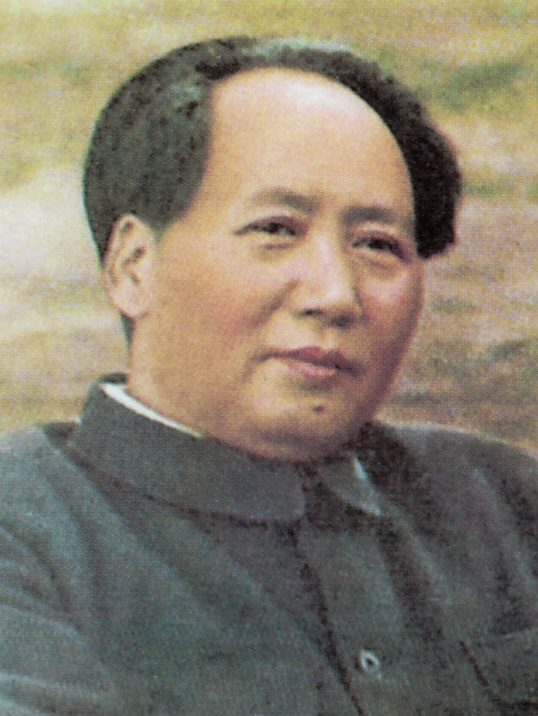
Shortly after midnight on 9 September 1976, Mao Zedong died in Beijing at the age of 82. The founder of the People's Republic of China had ruled the world's most populous country for twenty-seven years, and his last year had been a dying fall: major heart attacks in March and July, and a third on 5 September that left him an invalid. The announcement was withheld until the afternoon, when radio across China interrupted its programmes to report that the Chairman was dead, and a week of national mourning began. The portrait on this page, published in Quotations from Chairman Mao Tse-tung, the Little Red Book, is the face that had overlooked China for a generation.
The scale of the life was difficult to overstate then and remains so. Mao had led a peasant-based communist movement through two decades of civil war and invasion to total victory, unified China under a single government, and set about remaking the largest society on earth. The remaking came at a staggering human price: the Great Leap Forward collapsed into a famine in which tens of millions died, by estimates that vary widely, and in 1966, sidelined after that catastrophe, he launched the Cultural Revolution — the decade of purges and Red Guard violence that his death now closed.
The succession he left behind was a trap of his own making. His chosen heir, Hua Guofeng, held a famous deathbed mandate, but the radicals around Mao's widow Jiang Qing, the Gang of Four, expected to inherit the revolution. Within a month of the funeral, on 6 October, Hua and the army arrested the Gang of Four in a bloodless coup that crowds celebrated in Tiananmen Square. Power then passed, step by step, to the man Mao had twice purged: Deng Xiaoping. Mao's body, against his own signed wish to be cremated, was embalmed and installed in a mausoleum in Tiananmen Square, where it lies still.
China's turning point shared the year with resistance elsewhere. On 16 June, thousands of Black school students in Soweto marched against a decree requiring half their subjects to be taught in Afrikaans; police fired tear gas, set dogs on them, and then fired directly into the crowd. Among the first shot was 12-year-old Hector Pieterson, whose photograph, carried by a fellow student, went around the world within hours. The government's own commission eventually recorded 575 dead across the months of unrest that followed. Seven weeks earlier and later, the year's other extremes met: Concorde entered commercial service on 21 January, and on 28 July the Tangshan earthquake devastated a Chinese city, killing at least 242,000 people.
Timeline of 1976
- 12 January
Agatha Christie, creator of Hercule Poirot and Miss Marple and the best-selling novelist of all time, dies at 85.
- 21 January
Concorde enters commercial service with simultaneous flights from London and Paris, beginning passenger supersonic travel.
- 1 April
Steve Jobs, Steve Wozniak and Ronald Wayne found Apple Computer Inc. in California.
- 16 June
Police open fire on marching school students in Soweto, South Africa, igniting an uprising against apartheid.
- 2 July
North and South Vietnam are formally reunified as the Socialist Republic of Vietnam.
- 3 July
Israeli commandos storm a hijacked airliner at Entebbe airport in Uganda in a night raid, rescuing more than a hundred hostages.
- 18 July
Nadia Comaneci scores the first perfect 10 in Olympic gymnastics at the Montreal Games.
- 20 July
NASA's Viking 1 becomes the first spacecraft to land successfully on Mars.
- 28 July
The Tangshan earthquake devastates the Chinese city of Tangshan, killing at least 242,000 people.
- 9 September
Mao Zedong, founder of the People's Republic of China, dies in Beijing at 82.
- 17 September
NASA rolls out its first space shuttle orbiter, Enterprise, named after a campaign by Star Trek fans.
- 6 October
In China, the Gang of Four, including Mao's widow Jiang Qing, is arrested, ending the Cultural Revolution era.
- 21 November
Rocky, written by and starring Sylvester Stallone, premieres in New York City.
Why 1976 still matters
In 1981 the Communist Party delivered its official verdict on Mao: his contributions to the revolution were primary and his errors secondary — the 70–30 assessment that still frames his standing in China. His portrait still overlooks Tiananmen Square and his face is on every banknote, even as the party governs a country transformed by policies he would not have chosen. That is the paradox 9 September 1976 created: China could neither continue with Mao nor repudiate him, and the settlement it reached — revere the founder, reverse much of his work — has held for half a century.
Soweto's legacy ran the other way, from the powerless upward. A generation radicalised in a single day took over the anti-apartheid fight from its elders, international condemnation hardened into sanctions pressure, and the state that had seemed immovable began its long retreat toward the negotiations of the early 1990s. Since 1994, 16 June has been a South African public holiday, Youth Day, and the Hector Pieterson Museum stands two blocks from where he fell — the clearest example in modern history, the record says, of schoolchildren, unarmed, shifting the fate of a state.
Montreal supplied the year's image of perfection: Comaneci collected seven perfect 10s in all, left with three gold medals, and changed gymnastics' direction toward younger, smaller, more acrobatic athletes — a revolution whose costs are still debated. The perfect 10 itself did not survive; the scoring system was rebuilt in 2006 and the 10.00 abolished as a maximum. And in a California garage economy, Apple Computer's founding on 1 April began the company that would put 1976's other revolutions — computing, communication — into ordinary hands.
1976 on The History Trail
Mao's death, the Soweto uprising and Nadia Comaneci's perfect 10 carry featured stories on The History Trail.
- September 9 in History — Mao Zedong dies in Beijing, closing the Cultural Revolution era.
- June 16 in History — Police fire on Soweto's marching school students.
- July 18 in History — Nadia Comaneci scores the first perfect 10 in Olympic gymnastics.
- April 1 in History — Apple Computer is founded in California.
- Apple Inc. — The company founded on 1 April 1976.
- Agatha Christie — The best-selling novelist of all time, who died in January 1976.
Sources
- Encyclopaedia Britannica — On This Day: September 9
- Encyclopaedia Britannica — On This Day: June 16
- Encyclopaedia Britannica — On This Day: July 18
- Encyclopaedia Britannica — On This Day: January 12
- Encyclopaedia Britannica — On This Day: January 21
- Encyclopaedia Britannica — On This Day: October 6
The facts on this page were checked against these sources on 19 November 2026. The History Trail's permanent pages are researched and written for this site; the live profiles elsewhere on The History Trail are assembled automatically from Wikipedia and Wikidata.
About the Author
Researched and written by the The History Trail Editorial Team — the accountable editorial function behind this site's permanent story pages. The team works from the published sources cited on each page; it does not invent historians, reviewers or credentials, and it corrects errors openly.
Fact Check
Every load-bearing fact on this page traces to one of the sources listed above, and significant claims link to their source in the text. Our checking method is described on the methodology page; errors can be reported via the corrections page.
Sources & Citations
Cite this page as: The History Trail Editorial Team, The History Trail — this article's title, publication and update dates are shown beneath its headline. The full source list appears under Sources above; the site's source standards are on the sources page.