
On This Day
June 16 in History
On 16 June 1976, police in Soweto opened fire on thousands of Black school students marching against compulsory teaching in Afrikaans — killing, among the first, 12-year-old Hector Pieterson, and igniting the uprising that began apartheid's long end. June 16 is also the day Valentina Tereshkova became the first woman in space and Ford was founded.
Choose another date: open the On This Day calendar to browse events, births and deaths for any day of the year.
At a Glance
- The grievance
- The Afrikaans Medium Decree: half of secondary-school subjects in Black schools to be taught in Afrikaans
- The march
- An estimated 10,000–20,000 Soweto students marched on 16 June 1976 toward Orlando Stadium
- The shooting
- Police fired on the crowd; among the first killed were Hector Pieterson, 12, and Hastings Ndlovu, 15
- The toll
- Officially 23 dead at first; the Cillié Commission later recorded 575 deaths in the ensuing unrest — figures remain disputed
- The photograph
- Sam Nzima's picture of the dying Pieterson carried by Mbuyisa Makhubu was published worldwide within hours
- The legacy
- 16 June is now South Africa's Youth Day; the uprising revived the liberation struggle and hardened world opinion
Events on this day
- 1884America's first purpose-built roller coaster, the Switchback Railway, opens at Coney Island, charging five cents a ride.
- 1903Henry Ford founds the Ford Motor Company in Detroit with $28,000 raised from a dozen investors.
- 1911The Computing-Tabulating-Recording Company is founded in New York; renamed in 1924, it becomes IBM.
- 1933President Franklin D. Roosevelt signs the Banking Act, creating federal deposit insurance through the FDIC.
- 1960Alfred Hitchcock's Psycho premieres in New York, shocking audiences and rewriting the rules of screen horror.
- 1961Dancer Rudolf Nureyev defects to the West at Paris's Le Bourget airport, slipping his Soviet minders.
- 1963Valentina Tereshkova is launched aboard Vostok 6 and becomes the first woman in space.
- 1976Police open fire on marching school students in Soweto — the featured story above.
- 2012Liu Yang flies aboard Shenzhou 9 and becomes China's first woman in space, 49 years after Tereshkova.
- 2015Donald Trump announces his candidacy for president of the United States at Trump Tower in New York.
Born on this day
- 1829Geronimo — Chiricahua Apache leader who resisted Mexican and American expansion for three decades.
- 1890Stan Laurel — English comic actor, the thin half of Laurel and Hardy.
- 1917Katharine Graham — publisher who led The Washington Post through the Pentagon Papers and Watergate.
- 1938Joyce Carol Oates — American novelist of extraordinary productivity and range.
- 1970Phil Mickelson — American golfer who won six major championships across three decades.
- 1971Tupac Shakur — American rapper whose work made him hip-hop's most mythologised figure after his murder at 25.
Died on this day
- 1944Marc Bloch — French historian and Resistance fighter, shot by the Gestapo near Lyon.
- 1970Brian Piccolo — Chicago Bears running back whose death from cancer at 26 inspired the film Brian's Song.
- 1977Wernher von Braun — German-American rocket engineer behind both the V-2 and the Saturn V, dead at 65.
- 2016Jo Cox — British MP murdered in her constituency a week before the Brexit referendum, at 41.
The featured story: the Soweto uprising, 16 June 1976
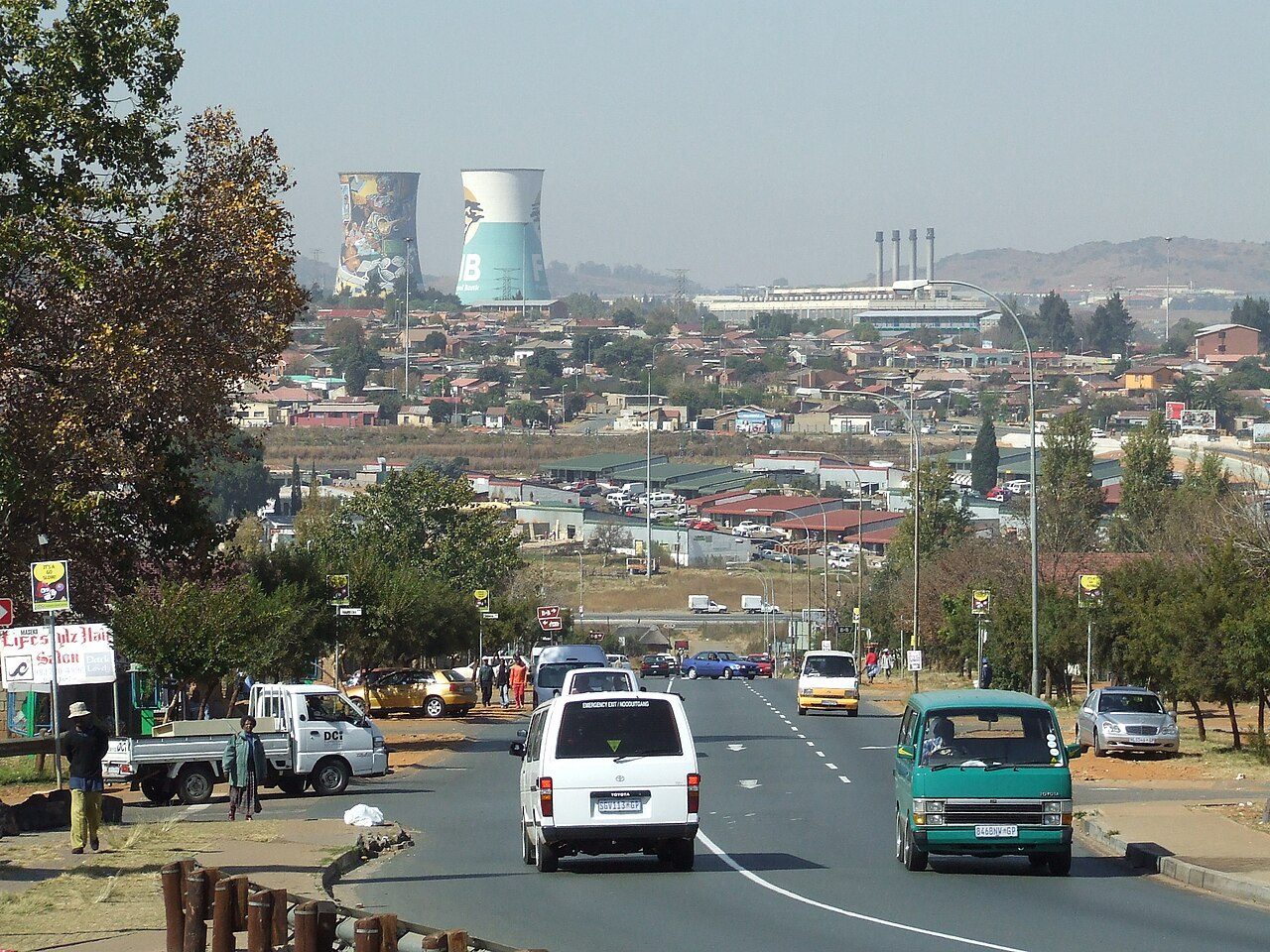
On the cold, overcast morning of 16 June 1976, thousands of school students in Soweto, the great Black township outside Johannesburg, left their classrooms and converged for a march they had planned themselves. Their grievance was a decree of South Africa's apartheid government: from 1975, half of all subjects in Black secondary schools were to be taught through the medium of Afrikaans — the language of the oppressor, as the students called it — a language many of their teachers themselves barely commanded. Estimates of the crowd that morning range from 10,000 to 20,000 children, many in school uniform, carrying placards reading 'Down with Afrikaans'.
The march was meant to be peaceful, and its destination was the Orlando Stadium. It never arrived. Police blocked the route, fired tear gas, set dogs on the students, and then — as the official commission later established — fired directly into the crowd without adequate warning. Among the first shot was 12-year-old Hector Pieterson, who was carried away by fellow student Mbuyisa Makhubu with his sister Antoinette running beside them. Photographer Sam Nzima's image of that moment went around the world within hours and became the defining picture of apartheid's brutality. Another student, Hastings Ndlovu, is believed to have been shot before him.
By nightfall Soweto was burning — government offices, vehicles and beer halls attacked, two white officials killed — and the revolt was spreading to townships across the country. The official death toll for the uprising's first days was put at 23; the government's own Cillié Commission eventually recorded 575 dead across the months of unrest that followed, most of them young, many shot in the back, and later research for South African History Online puts the number of schoolchildren killed at around 566. Thousands more were detained, and thousands of young people fled the country to join the liberation movements in exile.
Soweto changed the struggle's centre of gravity. A generation radicalised in a single day took over the fight from its elders; international condemnation hardened into sanctions pressure; and the apartheid state, which had seemed immovable, began its long retreat toward the negotiations of the early 1990s. Since 1994, 16 June has been a South African public holiday — Youth Day — and the Hector Pieterson Museum stands two blocks from where he fell. It remains the clearest example in modern history of schoolchildren, unarmed, shifting the fate of a state.
Why this date matters
June 16 pairs beginnings with reckonings. It gave the world the roller coaster, the Ford Motor Company, IBM, deposit insurance and the first woman in space — a striking cluster of things starting. But its centre of gravity is a township road in 1976, where children with placards met live ammunition, and a parliamentarian murdered in a Yorkshire street forty years later. The date keeps asking the same question in different centuries: what happens when ordinary people — students, voters, one young MP — decide that the arrangement of their lives is no longer acceptable?
Sources
- Encyclopaedia Britannica — On This Day: June 16
- HISTORY — What Happened on June 16
- South African History Online — Hector Pieterson
- Encyclopaedia Britannica — Hector Pieterson: the iconic image of the 1976 Soweto Uprising
- Wikimedia Commons — Soweto-002

The facts on this page were checked against these sources on 19 November 2026. The History Trail's permanent pages are researched and written for this site; the live profiles elsewhere on The History Trail are assembled automatically from Wikipedia and Wikidata.
About the Author
Researched and written by the The History Trail Editorial Team — the accountable editorial function behind this site's permanent story pages. The team works from the published sources cited on each page; it does not invent historians, reviewers or credentials, and it corrects errors openly.
Fact Check
Every load-bearing fact on this page traces to one of the sources listed above, and significant claims link to their source in the text. Our checking method is described on the methodology page; errors can be reported via the corrections page.
Sources & Citations
Cite this page as: The History Trail Editorial Team, The History Trail — this article's title, publication and update dates are shown beneath its headline. The full source list appears under Sources above; the site's source standards are on the sources page.