
Years
1930 in History
1930 is remembered for three beginnings made in a darkening world: on 18 February Clyde Tombaugh found Pluto, the body counted as the ninth planet for 76 years; on 12 March Gandhi set out on the Salt March, the defining act of defiance against British rule in India; and on 13 July the first FIFA World Cup kicked off in Montevideo. Around them the Great Depression deepened, as the Smoot-Hawley Tariff raised American duties to record levels.
At a Glance
- Defining event
- Clyde Tombaugh discovers Pluto at Lowell Observatory, 18 February
- Defiance
- Gandhi's Salt March, 12 March – 6 April: 240 miles to make illegal salt at Dandi
- Sport begins
- First FIFA World Cup, Montevideo, 13 July; Uruguay beats Argentina 4–2 in the final
- Depression deepens
- Smoot-Hawley Tariff signed 17 June, raising US duties to record levels
- Born this year
- Neil Armstrong (5 August) and Buzz Aldrin (20 January) — the first men on the Moon
- Crowned
- Haile Selassie is crowned emperor of Ethiopia, 2 November
The defining story: the farm boy who found a planet
Pluto was found by persistence, not by mathematics. Percival Lowell, the wealthy founder of the observatory at Flagstaff, Arizona, had become convinced that irregularities in the orbits of Uranus and Neptune betrayed a ninth planet — Planet X — and searched for it photographically until his death in 1916. The search resumed in 1929 with a new telescope and a new assistant: Clyde Tombaugh, a 24-year-old from a Kansas farm whose college hopes had been ruined by a hailstorm, hired after the observatory saw the careful drawings he had made of Mars and Jupiter with a homemade telescope. His formal job title mixed observing with groundskeeping.
The work was punishing. Night after night Tombaugh photographed the sky along the ecliptic in pairs of plates, taken days apart, each crowded with hundreds of thousands of stars. By day he sat at a blink comparator, flicking his eye rapidly between the two plates of a pair: stars stood still, but anything in the solar system would jump back and forth. On the afternoon of 18 February 1930, working through plates taken on 23 and 29 January, he found a faint object, about fifteenth magnitude, that jumped exactly as a body beyond Neptune should. He checked another plate; the object was there. He walked to the director's office and announced that he had found Planet X.
Further photographs confirmed the orbit, and the discovery was announced to the world on 13 March 1930 — Lowell's birthday, and the anniversary of the discovery of Uranus. The name Pluto, for the god of the distant dark, was proposed by an 11-year-old Oxford schoolgirl, Venetia Burney, and adopted in May; its first two letters are Percival Lowell's initials. For the rest of the century schoolchildren learned nine planets, and Tombaugh's point of light stood at the edge of the known solar system.
The same patience, turned to politics, was at work in India. On 12 March Gandhi set out from Sabarmati Ashram with 78 followers on a 240-mile march to Dandi to defy Britain's salt laws, and on 6 April he made salt from the sea in front of the world's press; by the end of 1930 some 60,000 people had been imprisoned in the campaign it ignited. In July, thirteen invited teams contested the first World Cup in Montevideo. And over everything hung the Depression: on 17 June President Hoover signed the Smoot-Hawley Tariff, raising American duties to record levels and deepening the world slump.
Timeline of 1930
- 18 February
Clyde Tombaugh discovers Pluto at Lowell Observatory, comparing photographic plates taken in January.
- 12 March
Gandhi sets out from Sabarmati Ashram with 78 followers on the Salt March to Dandi.
- 28 March
Turkey's government formally renames Constantinople as Istanbul and Angora as Ankara.
- 6 April
Gandhi reaches the sea at Dandi and makes salt, completing the Salt March against British rule.
- 21 April
Fire sweeps the Ohio State Penitentiary in Columbus, killing 320 inmates, many locked in their cells.
- 27 May
The Chrysler Building opens in New York; at 1,046 feet it is briefly the tallest building in the world.
- 17 June
President Hoover signs the Smoot-Hawley Tariff, raising American duties to record levels.
- 7 July
Construction begins on Boulder Dam, soon renamed Hoover Dam, across the Colorado River.
- 13 July
The first FIFA World Cup begins in Montevideo, Uruguay; France's Lucien Laurent scores its first goal.
- 30 July
Uruguay beats Argentina 4–2 in Montevideo to win the first FIFA World Cup.
- 9 August
Betty Boop makes her first screen appearance, in the animated cartoon Dizzy Dishes.
- 2 November
Haile Selassie is crowned emperor of Ethiopia in Addis Ababa.
Why 1930 still matters
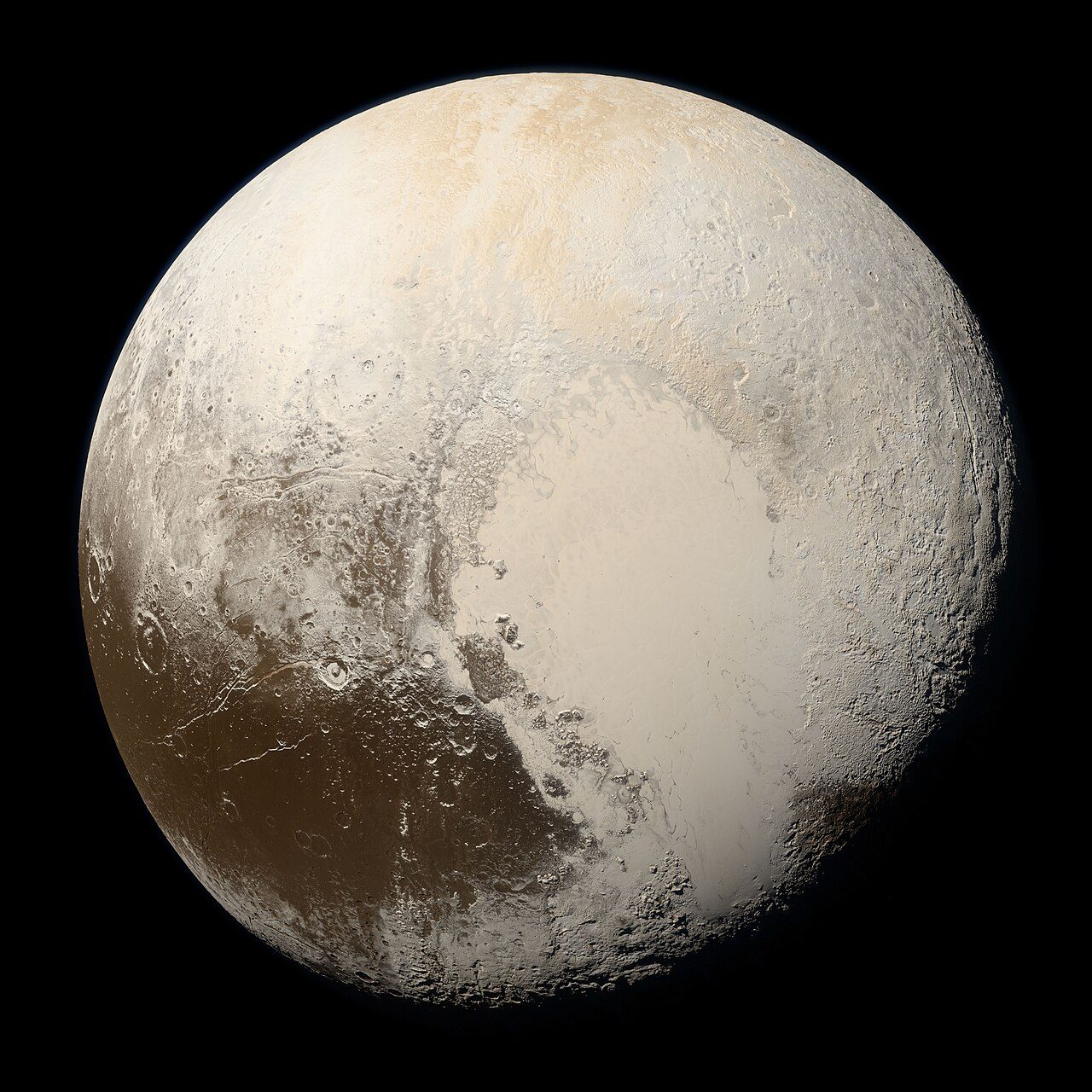
Pluto's story did not end at its discovery. Counted as the ninth planet until 2006, it was then reclassified a dwarf planet as larger kin were found beyond Neptune — yet it kept its hold on the public, and in July 2015 NASA's New Horizons spacecraft flew past it, imaging the world Tombaugh found as a single moving point of light. Pluto has still not finished one orbit of the Sun since its discovery: a Plutonian year lasts about 248 Earth years, so every observation ever made of it covers barely a third of a single one of its years. Tombaugh's blink comparator began a survey of the outer solar system that is, in that sense, still in its first season.
The Salt March became the template of modern civil disobedience: a law chosen because it was taxed, used by everyone and impossible to defend as a luxury, broken openly by a 60-year-old man walking to the sea, without a single act of violence, in front of the world's cameras. Its method — make the empire's law look absurd — travelled far beyond India, and the campaign it ignited put some 60,000 people in British prisons by the year's end while moving Indian independence from a demand to an expectation. The World Cup, improvised the same summer with thirteen invited teams and only four from Europe, grew into the most-watched sporting event on earth.
The year's births read like a cast list for the century's second half: Buzz Aldrin in January, Neil Armstrong in August — the first two men to walk on the Moon, born within months of the discovery of its most distant known world — and Sean Connery, Clint Eastwood, Warren Buffett and Stephen Sondheim. Against them stands the year's economics: the Smoot-Hawley Tariff of 17 June, the protectionist answer to a slump that protectionism deepened, remains the standing warning in every trade argument since.
1930 on The History Trail
All three of this year's featured days are here, with the World Cup's story told in full.
- February 18 in History — Clyde Tombaugh discovers Pluto at Lowell Observatory.
- March 12 in History — Gandhi begins the Salt March from Sabarmati Ashram to Dandi.
- July 13 in History — The first FIFA World Cup kicks off in Montevideo.
- FIFA World Cup — From 13 teams in Uruguay in 1930 to a tournament of billions.
- July 30 in History — Uruguay beats Argentina 4–2 to win the first World Cup.
- June 17 in History — The Smoot-Hawley Tariff raises American duties to record levels.
Sources
- HISTORY — Pluto discovered
- HISTORY — What Happened on March 12
- Encyclopaedia Britannica — On This Day: July 13
- Encyclopaedia Britannica — On This Day: June 17
- Encyclopaedia Britannica — On This Day: July 30
- Encyclopaedia Britannica — On This Day: November 2
The facts on this page were checked against these sources on 19 November 2026. The History Trail's permanent pages are researched and written for this site; the live profiles elsewhere on The History Trail are assembled automatically from Wikipedia and Wikidata.
About the Author
Researched and written by the The History Trail Editorial Team — the accountable editorial function behind this site's permanent story pages. The team works from the published sources cited on each page; it does not invent historians, reviewers or credentials, and it corrects errors openly.
Fact Check
Every load-bearing fact on this page traces to one of the sources listed above, and significant claims link to their source in the text. Our checking method is described on the methodology page; errors can be reported via the corrections page.
Sources & Citations
Cite this page as: The History Trail Editorial Team, The History Trail — this article's title, publication and update dates are shown beneath its headline. The full source list appears under Sources above; the site's source standards are on the sources page.