
On This Day
February 18 in History
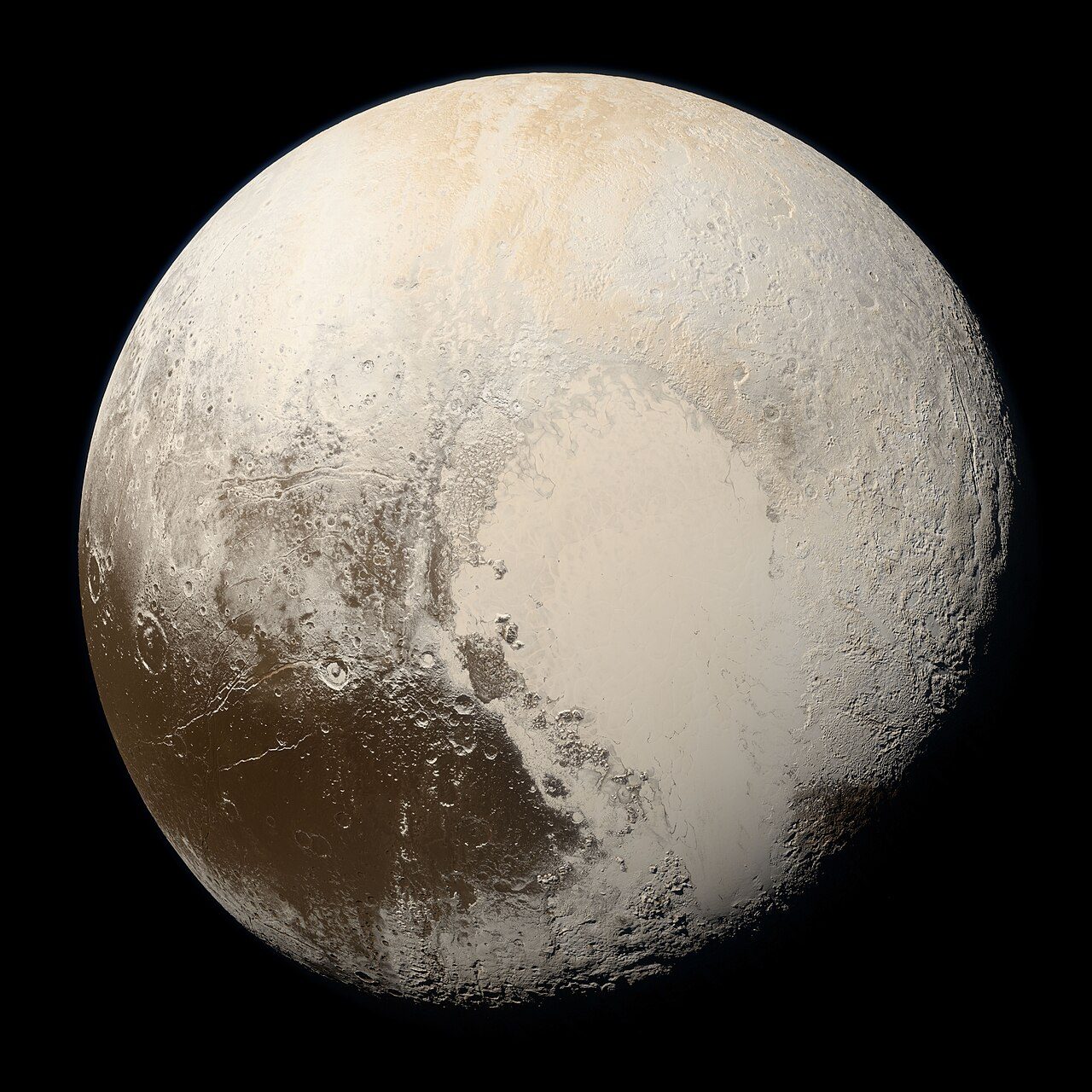
On 18 February 1930, at Lowell Observatory in Flagstaff, Arizona, a 24-year-old observatory assistant named Clyde Tombaugh compared two photographs of the same patch of sky and saw one faint point of light jump. It was the body the world would call Pluto — for 76 years the ninth planet, and still the most beloved dwarf planet in the sky. February 18 is also Toni Morrison's birthday, the day Martin Luther died in 1546, and the day Dale Earnhardt was killed at Daytona in 2001.
Choose another date: open the On This Day calendar to browse events, births and deaths for any day of the year.
At a Glance
- The search
- For Planet X — the unseen body Percival Lowell believed was tugging at the orbits of Uranus and Neptune
- The searcher
- Clyde Tombaugh, a Kansas farm boy with no formal training in astronomy, hired at Lowell Observatory in 1929 after sending in his drawings
- The method
- Photograph the same star field on different nights and compare the plates in a blink comparator, hunting for anything that moves
- The discovery
- 18 February 1930 — a moving point on plates taken on 23 and 29 January, far beyond the orbit of Neptune
- The announcement
- 13 March 1930 — chosen because it was Lowell's birthday and the anniversary of Herschel's discovery of Uranus
- The name
- Pluto, god of the underworld — suggested by Venetia Burney, an 11-year-old schoolgirl in Oxford
- The demotion
- 2006 — the International Astronomical Union reclassifies Pluto as a dwarf planet; NASA's New Horizons flies past it in 2015
Events on this day
- 1861Jefferson Davis is inaugurated at Montgomery, Alabama, as provisional president of the Confederate States of America.
- 1885Mark Twain's Adventures of Huckleberry Finn is published in the United States, the novel that becomes the centrepiece of American literature.
- 1930Clyde Tombaugh discovers Pluto at Lowell Observatory — the featured story above.
- 1943Hans and Sophie Scholl, of the White Rose resistance, are arrested at Munich University after scattering leaflets against the Nazi regime.
- 1978The first Ironman triathlon is held in Hawaii, combining a 2.4-mile swim, a 112-mile cycle and a marathon in a single day.
- 1979Snow falls in the Sahara Desert in southern Algeria, the first time in living memory that snow is recorded in the world's largest hot desert.
- 2001FBI agent Robert Hanssen is arrested after more than twenty years of spying for Moscow, one of the most damaging moles in American history.
- 2006Speed skater Shani Davis wins the 1,000 metres at Turin, becoming the first Black athlete to win an individual Winter Olympic gold medal.
- 2010WikiLeaks begins publishing classified American documents supplied by army analyst Chelsea Manning, the largest leak of state secrets in U.S. history to that date.
- 2022The first episode of the television series Severance is released; it goes on to win ten Emmy Awards.
Born on this day
- 1530Uesugi Kenshin — Japanese warlord of Echigo, one of the most powerful daimyo of the Sengoku period and a brilliant battlefield commander.
- 1838Ernst Mach — Austrian physicist and philosopher whose work on shock waves gave his name to the Mach number.
- 1848Louis Comfort Tiffany — American designer, master of Art Nouveau glass and founder of Tiffany Studios.
- 1883Nikos Kazantzakis — Greek writer, author of Zorba the Greek and The Last Temptation of Christ.
- 1931Toni Morrison — American novelist, author of Beloved, who in 1993 became the first Black woman to win the Nobel Prize in Literature.
- 1933Yoko Ono — Japanese-American artist and musician, collaborator and wife of John Lennon.
Died on this day
- 1546Martin Luther — German theologian who launched the Protestant Reformation, dead at Eisleben, the town of his birth, at 62.
- 1967J. Robert Oppenheimer — American physicist who led the Los Alamos laboratory that built the first atomic bomb, dead at 62.
- 2001Dale Earnhardt Sr. — American stock-car legend, killed in a crash on the final lap of the Daytona 500 at 49.
- 2017Norma McCorvey — the Jane Roe of Roe v. Wade, the 1973 case that legalised abortion across the United States, dead at 69.
The featured story: Clyde Tombaugh discovers Pluto, 18 February 1930
Pluto was found by persistence, not by mathematics. Percival Lowell, the wealthy founder of the observatory at Flagstaff, had become convinced that irregularities in the orbits of Uranus and Neptune betrayed a ninth planet — Planet X — and had searched for it photographically until his death in 1916. The search resumed in 1929 with a new telescope and a new assistant: Clyde Tombaugh, a 24-year-old from a Kansas farm whose college hopes had been ruined by a hailstorm, and who had been hired, as Britannica tells it, after the observatory saw the careful drawings he made of Mars and Jupiter with a homemade telescope. His formal job title mixed observing with groundskeeping.
The work was punishing. Night after night Tombaugh photographed the sky along the ecliptic in pairs of plates, taken days apart, each plate crowded with hundreds of thousands of stars. By day he sat at a blink comparator, an instrument that flicked his eye rapidly between the two plates of a pair: stars stood still, but anything in the solar system would jump back and forth. On the afternoon of 18 February 1930, working through plates taken on 23 and 29 January, he found a faint object, about fifteenth magnitude, that jumped exactly as a body beyond Neptune should. He checked another plate. The object was there. He walked to the director's office and announced that he had found Planet X.
Further photographs confirmed the orbit, and the discovery was announced to the world on 13 March 1930 — Lowell's birthday, and the anniversary of the discovery of Uranus. The name Pluto, for the god of the distant dark, was proposed by an 11-year-old Oxford schoolgirl, Venetia Burney, and adopted in May; its first two letters are Percival Lowell's initials. For the rest of the century schoolchildren learned nine planets, and Pluto, the smallest and coldest, was the favourite — even though astronomers slowly realised it was far too small to be the Planet X Lowell had predicted. The wobbles that launched the search turned out to be errors; Pluto was found by looking, not by calculation.
In 2006 the International Astronomical Union, having found a whole belt of Pluto-like worlds beyond Neptune, reclassified Pluto as a dwarf planet, to public dismay that has never entirely faded. Tombaugh, who died in 1997, did not live to see the demotion — but he did, in a sense, visit his discovery: a small canister of his ashes was fixed to NASA's New Horizons spacecraft, which flew past Pluto on 14 July 2015 and revealed mountains of water ice, a heart-shaped glacier and a thin blue sky. The farm boy who found a point of light in 1930 had his name carried past it, four and a half billion kilometres from the Kansas farm.
Why this date matters
February 18 is a day for people who changed the frame rather than the picture. Luther, who reframed Christianity, died on it; Toni Morrison, who reframed American literature, was born on it; a junior observatory assistant reframed the solar system on it in 1930. It also holds the Scholl siblings' arrest for leafleting against Hitler in 1943, the first Ironman in 1978 and Earnhardt's death at Daytona in 2001 — courage, endurance and risk, all in one date. Even its weather joins in: in 1979 it snowed in the Sahara.
Sources
- Encyclopaedia Britannica — On This Day: February 18
- HISTORY — Pluto discovered
- EarthSky — Clyde Tombaugh discovers Pluto
The facts on this page were checked against these sources on 19 November 2026. The History Trail's permanent pages are researched and written for this site; the live profiles elsewhere on The History Trail are assembled automatically from Wikipedia and Wikidata.
About the Author
Researched and written by the The History Trail Editorial Team — the accountable editorial function behind this site's permanent story pages. The team works from the published sources cited on each page; it does not invent historians, reviewers or credentials, and it corrects errors openly.
Fact Check
Every load-bearing fact on this page traces to one of the sources listed above, and significant claims link to their source in the text. Our checking method is described on the methodology page; errors can be reported via the corrections page.
Sources & Citations
Cite this page as: The History Trail Editorial Team, The History Trail — this article's title, publication and update dates are shown beneath its headline. The full source list appears under Sources above; the site's source standards are on the sources page.