
Years
1862 in History
1862 is remembered for the September week that changed the American Civil War: the Battle of Antietam on 17 September, the bloodiest single day in American military history, and five days later Lincoln's preliminary Emancipation Proclamation, which warned that enslaved people in states still in rebellion on 1 January 1863 would be 'thenceforward, and forever free'. The year also saw the first ironclad warship duel and Mexico's victory at Puebla.
At a Glance
- Defining event
- Preliminary Emancipation Proclamation, 22 September 1862
- Bloodiest day
- Antietam, 17 September — roughly 23,000 casualties in one day
- Naval turning point
- Monitor and Virginia fight the first ironclad battle, 9 March
- Opened the year
- Lincoln's General War Order No. 1, 27 January, orders a general Union advance
- Beyond the war
- Homestead Act signed 20 May, offering settlers 160 acres of public land
- Closed the year
- USS Monitor sinks off Cape Hatteras on 31 December, sixteen crew lost
The defining story: Antietam and the proclamation
The American Civil War entered its second year with President Abraham Lincoln impatient for action. On 27 January 1862 he issued General War Order No. 1, directing all Union land and sea forces to advance against the Confederacy. In the west the advance came quickly: on 6 February Ulysses S. Grant and Andrew Foote captured Fort Henry in Tennessee, opening the Tennessee River to Union gunboats. At sea the war changed shape on 9 March, when USS Monitor duelled CSS Virginia for four hours at Hampton Roads; the draw saved the Union blockade and rendered every wooden warship in the world obsolete.
Spring brought slaughter and slow emancipation together. The Battle of Shiloh, fought on 6 and 7 April in Tennessee, ended in a Union victory after two days of killing that shocked both sides. On 16 April Lincoln signed the act abolishing slavery in the District of Columbia, with compensation to owners, and on 29 April Union naval forces under David Farragut took formal possession of New Orleans, the Confederacy's largest city and port. On 20 May he signed the Homestead Act, offering settlers 160 acres of public land. In June Robert E. Lee struck George McClellan's army at Mechanicsville, opening the Seven Days' Battles outside Richmond.
On 22 July Lincoln read his cabinet a first draft of an emancipation proclamation, but agreed to wait for a Union military victory before issuing it, lest it look like an act of desperation. The wait was hard. In August Lee won the Second Battle of Bull Run, and Lincoln reluctantly restored McClellan to full command on 2 September. Then fortune turned: on 13 September Union soldiers near Frederick, Maryland, found a lost copy of Lee's campaign orders wrapped around cigars, revealing the Confederate plan. Two days later Stonewall Jackson captured Harpers Ferry and some 12,000 Union troops, the largest surrender of United States forces in the war.
On 17 September the armies met at Antietam in Maryland. With roughly 23,000 casualties, it remains the bloodiest single day in American military history, but Lee's invasion of the North was turned back — the victory, narrow and incomplete, that Lincoln had been waiting for. Five days later, on 22 September, he issued the preliminary Emancipation Proclamation: enslaved people in states still in rebellion on 1 January 1863 would be 'thenceforward, and forever free'. No Confederate state accepted the hundred-day ultimatum. On 1 December Lincoln defended the proclamation in his annual message to Congress, and the year closed bleakly — defeat at Fredericksburg on 13 December, and on its last day the Monitor, hero of Hampton Roads, sinking in a storm off Cape Hatteras with sixteen of her crew.
Timeline of 1862
- 27 January
Lincoln issues General War Order No. 1, directing all Union land and sea forces to advance against the Confederacy.
- 6 February
Grant and Foote capture Fort Henry in Tennessee, opening the Tennessee River to Union gunboats.
- 9 March
USS Monitor and CSS Virginia fight the first battle between ironclad warships, at Hampton Roads.
- 6 April
The Battle of Shiloh opens in Tennessee, one of the bloodiest engagements of the Civil War.
- 16 April
Lincoln signs the act abolishing slavery in the District of Columbia, with compensation to owners.
- 5 May
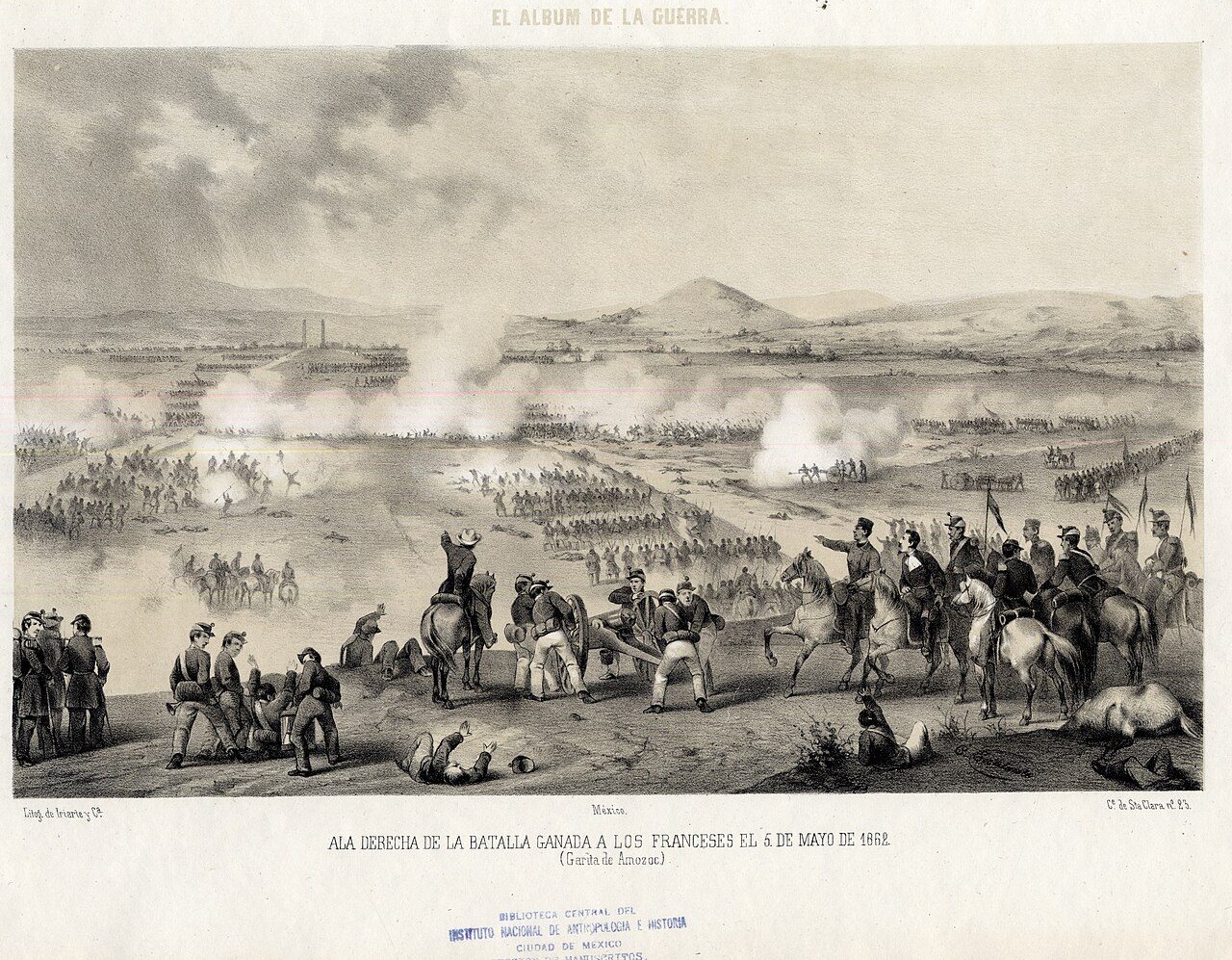
Mexican forces under General Ignacio Zaragoza defeat the French at the Battle of Puebla — Cinco de Mayo.
- 20 May
Lincoln signs the Homestead Act, offering settlers 160 acres of public land.
- 22 July
Lincoln reads his cabinet a first draft of the Emancipation Proclamation, but waits for a military victory.
- 17 August
The US–Dakota War begins in Minnesota, sparked by broken treaties and starvation among the Dakota people.
- 17 September
Antietam: roughly 23,000 casualties on the bloodiest single day in American military history; Lee's invasion is turned back.
- 22 September
Lincoln issues the preliminary Emancipation Proclamation, setting 1 January 1863 as the date of freedom.
- 13 December
At Fredericksburg, Lee's Confederates repel repeated Union assaults on Marye's Heights.
- 31 December
USS Monitor sinks in a storm off Cape Hatteras, with the loss of sixteen of her crew.
Why 1862 still matters
1862 was the year the Civil War changed its meaning. It began as a war to restore the Union; after 22 September it was also, by presidential proclamation, a war against slavery in the rebellious states. The proclamation's limits were stark — it reached only enemy territory, where the Union could not yet enforce it — but it made emancipation advance street by street with the Union armies, and it fixed the war's moral stakes for the world watching from outside. Lincoln's 22 August reply to Horace Greeley, insisting his paramount object was to save the Union, reads differently once the document he had already drafted is known.
The year's other firsts compounded quietly. The ironclad duel at Hampton Roads started the world's navies again from zero: within months of their fight, both prototypes were gone — Virginia burned by her own crew in May, Monitor sunk on New Year's Eve — yet no navy ever built a first-class wooden warship again. The Legal Tender Act of 25 February and the greenbacks that entered circulation in March created American paper money as a war measure, and the Homestead Act reshaped settlement of the West for generations.
The year also carries the war's other face. The US–Dakota War, begun in August amid broken treaties and starvation, ended on 26 December with thirty-eight Dakota men hanged at Mankato, the largest mass execution in United States history. And far from the American battlefields, two events of 1862 echoed for a century: Mexico's victory at Puebla on 5 May, still celebrated as Cinco de Mayo, and Otto von Bismarck's appointment as minister president of Prussia on 23 September, beginning the career that would unify Germany.
1862 on The History Trail
Three of this year's days carry featured stories on The History Trail, from the ironclads to the proclamation itself.
- March 9 in History — USS Monitor and CSS Virginia fight the first battle between ironclad warships at Hampton Roads.
- May 5 in History — Mexican forces defeat the French at Puebla — the victory celebrated as Cinco de Mayo.
- September 22 in History — Lincoln issues the preliminary Emancipation Proclamation, five days after Antietam.
- September 17 in History — Antietam, the bloodiest single day in American military history.
- September 23 in History — Otto von Bismarck is appointed minister president of Prussia.
- December 26 in History — Thirty-eight Dakota men are hanged at Mankato after the US–Dakota War.
Sources
- Encyclopaedia Britannica — On This Day: March 9
- HISTORY — Lincoln issues preliminary Emancipation Proclamation
- National Archives — Emancipation Proclamation (1863)
- Encyclopaedia Britannica — On This Day: September 17
- Encyclopaedia Britannica — On This Day: May 20
- Encyclopaedia Britannica — On This Day: December 26
The facts on this page were checked against these sources on 19 November 2026. The History Trail's permanent pages are researched and written for this site; the live profiles elsewhere on The History Trail are assembled automatically from Wikipedia and Wikidata.
About the Author
Researched and written by the The History Trail Editorial Team — the accountable editorial function behind this site's permanent story pages. The team works from the published sources cited on each page; it does not invent historians, reviewers or credentials, and it corrects errors openly.
Fact Check
Every load-bearing fact on this page traces to one of the sources listed above, and significant claims link to their source in the text. Our checking method is described on the methodology page; errors can be reported via the corrections page.
Sources & Citations
Cite this page as: The History Trail Editorial Team, The History Trail — this article's title, publication and update dates are shown beneath its headline. The full source list appears under Sources above; the site's source standards are on the sources page.