
On This Day
September 23 in History
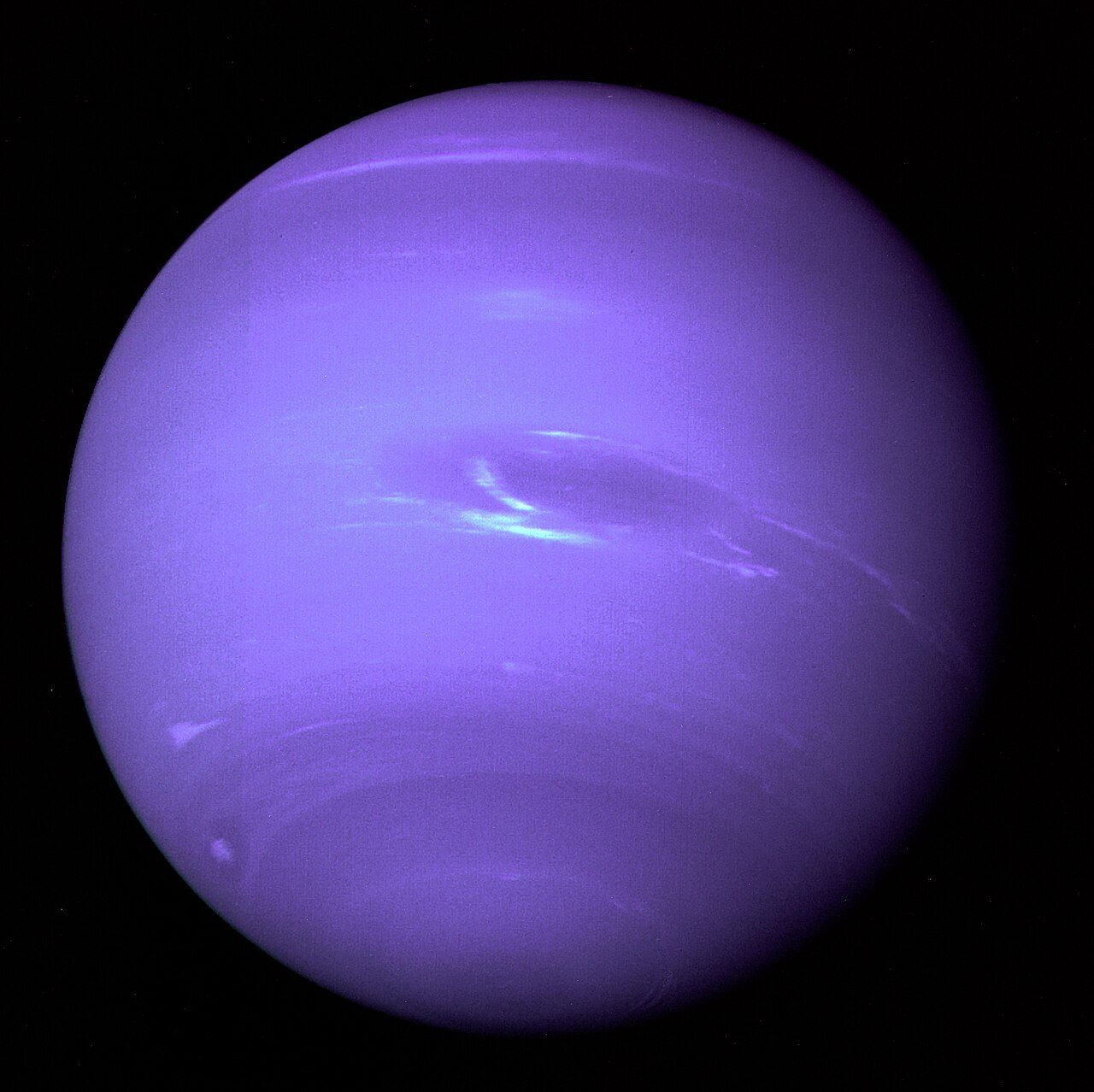
On the night of 23 September 1846, at the Berlin Observatory, Johann Gottfried Galle pointed his telescope where French mathematician Urbain Le Verrier's calculations said an unseen planet must be — and found Neptune, the first planet discovered by mathematics before it was seen. September 23 is also the day Lewis and Clark returned to St. Louis, Nintendo was founded, and Saudi Arabia was unified.
Choose another date: open the On This Day calendar to browse events, births and deaths for any day of the year.
At a Glance
- The problem
- Uranus kept straying from its predicted orbit, implying an unseen planet was pulling on it
- The prediction
- Urbain Le Verrier in Paris and John Couch Adams in Cambridge independently calculated where the planet must be
- The night
- 23 September 1846 — Galle receives Le Verrier's letter and finds Neptune the same evening, within about a degree of the predicted place
- The observer's helper
- Galle's assistant Heinrich d'Arrest suggested checking a new star chart, which showed a 'star' that was not a star
- The proof
- Neptune's movement against the background stars over the following night confirmed it was a planet
- The sequel
- Only one spacecraft, NASA's Voyager 2 in 1989, has ever visited Neptune
Events on this day
- 1779John Paul Jones, commanding Bonhomme Richard, defeats HMS Serapis off Flamborough Head in one of the American Revolution's famous sea fights.
- 1806The Lewis and Clark expedition reaches St. Louis, completing its two-and-a-half-year journey to the Pacific and back.
- 1846Galle and d'Arrest observe Neptune at Berlin, where Le Verrier's calculations predicted it — the featured story above.
- 1862Otto von Bismarck is appointed minister president of Prussia, beginning the career that unifies Germany.
- 1889Fusajiro Yamauchi founds Nintendo in Kyoto, Japan, to make hand-painted playing cards.
- 1932The kingdoms of Hejaz and Nejd are unified by royal decree as the Kingdom of Saudi Arabia under Abdulaziz Ibn Saud.
- 1941Charles de Gaulle forms a Free French government-in-exile in London to continue the fight against Germany.
- 1957The Little Rock Nine briefly enter Central High School in Arkansas before police, fearing the mob outside, remove them for their safety.
- 1980Bob Marley plays his last concert, in Pittsburgh; he dies of cancer the following year.
- 1992Goaltender Manon Rhéaume plays a preseason game for the Tampa Bay Lightning, the first woman to appear in a major North American professional league.
Born on this day
- 63 BCAugustus — born Gaius Octavius, who became the first Roman emperor and founder of the Principate.
- 1920Mickey Rooney — American actor whose career, begun in childhood, lasted nine decades.
- 1926John Coltrane — American jazz saxophonist and composer of A Love Supreme.
- 1930Ray Charles — American singer and pianist who fused gospel, blues and country into soul music.
- 1949Bruce Springsteen — American rock singer-songwriter, 'the Boss', of Born to Run and Born in the U.S.A.
Died on this day
- 1836María Malibran — Spanish opera singer, one of the most celebrated voices of her age, dead at 28 after a riding accident.
- 1939Sigmund Freud — Austrian founder of psychoanalysis, who died in exile in London a year after fleeing Nazi Vienna.
- 1973Pablo Neruda — Chilean poet and Nobel laureate, who died days after the military coup that overthrew Salvador Allende.
- 1987Bob Fosse — American choreographer and director of Cabaret and All That Jazz.
The featured story: Neptune is discovered, 23 September 1846
Neptune was found twice: first on paper, then in the sky. By the 1840s the planet Uranus, discovered in 1781, refused to follow the path Newton's laws prescribed for it. Astronomers faced a choice between doubting Newton or believing in an eighth planet, far beyond Uranus, whose gravity was tugging it off course. Two young mathematicians, working independently and in rivalry, chose the planet: John Couch Adams in Cambridge and Urbain Le Verrier in Paris each spent years computing where the invisible body had to be.
Adams finished first but could not persuade British astronomers to search promptly; the Astronomer Royal, George Airy, dallied, and a half-hearted Cambridge search actually recorded Neptune twice without recognising it. Le Verrier, meeting the same indifference in Paris, wrote instead to a stranger — Johann Gottfried Galle at the Berlin Observatory, enclosing his predicted position. The letter arrived on 23 September 1846, Galle's director gave permission that evening, and Galle, with his assistant Heinrich d'Arrest, turned the observatory's Fraunhofer refractor to the spot.
They found it within the hour. Comparing the sky against a newly printed Berlin star chart — d'Arrest's inspired suggestion — they spotted a star of the eighth magnitude that the chart did not contain, almost exactly where Le Verrier had said to look, within about a degree. Watched again the next night, the stranger had moved as a planet should. Galle wrote back to Le Verrier in astonishment that the planet whose place he had computed actually existed.
The discovery was a sensation and a scandal. It was the supreme public triumph of Newtonian gravitation — a planet conjured out of equations — and it set off an undignified priority quarrel between Britain and France over Adams and Le Verrier that diplomacy eventually settled by sharing the credit. Neptune, blue, cold and thirty times Earth's distance from the Sun, remained for over a century a speck known mostly by arithmetic. Not until 1989 did a spacecraft, Voyager 2, fly past and photograph its storms — the planet mathematics had found 143 years before anyone went to look at it closely.
Why this date matters
September 23 rewards people who finish long journeys. Lewis and Clark walk back into St. Louis after two and a half years; a letter crosses Europe and a planet appears in a telescope the same night; exiles and resisters — de Gaulle in London, nine schoolchildren in Little Rock — stake claims they cannot yet enforce. Even its foundings look long-range: Nintendo dealing playing cards in 1889, Saudi Arabia unified in 1932. It is a date for arrivals that were years in the making and easy to miss on the day. It also gave the world two of its favourite birthday gifts — a saxophonist, Coltrane, and a Boss, Springsteen — as if the date insisted that arrivals should be celebrated as well as endured, and that patience, properly kept, is eventually answered.
Sources
- Encyclopaedia Britannica — On This Day: September 23
- HISTORY — This Day in History: September 23
- Wikimedia — On This Day feed: September 23
- American Physical Society — September 23, 1846: Neptune's Existence Observationally Confirmed
- HISTORY — Planet Neptune is discovered
The facts on this page were checked against these sources on 19 November 2026. The History Trail's permanent pages are researched and written for this site; the live profiles elsewhere on The History Trail are assembled automatically from Wikipedia and Wikidata.
About the Author
Researched and written by the The History Trail Editorial Team — the accountable editorial function behind this site's permanent story pages. The team works from the published sources cited on each page; it does not invent historians, reviewers or credentials, and it corrects errors openly.
Fact Check
Every load-bearing fact on this page traces to one of the sources listed above, and significant claims link to their source in the text. Our checking method is described on the methodology page; errors can be reported via the corrections page.
Sources & Citations
Cite this page as: The History Trail Editorial Team, The History Trail — this article's title, publication and update dates are shown beneath its headline. The full source list appears under Sources above; the site's source standards are on the sources page.