
Years
1860 in History
1860 is the year the United States chose the president who would decide its survival — and began to break apart over the choice. Abraham Lincoln won the Republican nomination in May and the presidency on 6 November with under 40 per cent of the popular vote but 180 electoral votes. Six weeks later South Carolina voted unanimously to secede. Between those poles, the Pony Express carried mail across the continent in about ten days.
At a Glance
- Defining event
- Abraham Lincoln elected president, 6 November 1860
- The break
- South Carolina secedes, 20 December, voting 169-0 to dissolve the Union
- The nomination
- Lincoln wins the Republican nomination in Chicago, 18 May, on the third ballot
- Fastest mail
- The Pony Express begins, 3 April, crossing the continent in about ten days
- The portrait
- Mathew Brady photographs Lincoln in New York, 27 February, the day of the Cooper Union address
- Naval revolution
- HMS Warrior, the first seagoing iron-hulled armoured warship, launched 29 December
The defining story: an election and a secession
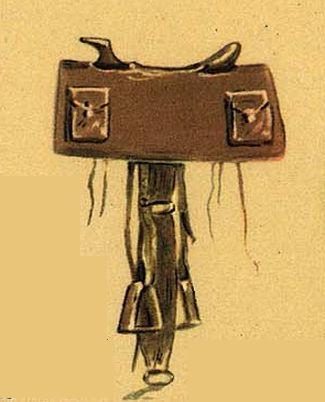
On 3 April 1860 riders galloped out of St. Joseph, Missouri, and Sacramento, California, at the same moment, each carrying a locked mochila of mail, and the Pony Express was under way. The westbound mail reached Sacramento in ten days — the fastest way to send a letter across the continent, a relay of riders changing horses every 10 to 15 miles at some 190 stations. In a country tearing itself apart, the Express bound California to the Union with timely news, and it would carry word of the year's great decision west faster than any ship or stagecoach.
That decision was being prepared in the East. On 27 February photographer Mathew Brady took Lincoln's portrait in New York on the day of his Cooper Union address, producing the image that introduced the candidate to America. On 18 May, in Chicago, Lincoln won the Republican presidential nomination on the third ballot, over William H. Seward. The Democrats had split over slavery in the territories; a fourth party hoped to save the Union by saying little. Lincoln barely campaigned, by the custom of the day, and in ten slave states he was not even on the ballot.
On 6 November he won anyway: under 40 per cent of the popular vote, but 180 electoral votes — more than the 152 needed, and more than all three of his opponents pooled. He carried every free state except New Jersey, which split its electors. Turnout among free men ran above 80 per cent. The result was understood at once as a verdict on slavery's future, and the South answered before Lincoln could take office.
On 20 December South Carolina's convention at Charleston voted unanimously, 169-0, to dissolve its union with the United States — the first secession, six weeks after the election. Within about fifteen minutes the Charleston Mercury had a broadside on the streets headlined 'THE UNION IS DISSOLVED!' — the first Confederate imprint. Six more Deep South states followed by February. The year that had begun with a portrait ended with a nation coming apart, and on 29 December Britain launched HMS Warrior, the first seagoing iron-hulled armoured warship — a glimpse of the industrial warfare to come.
Timeline of 1860
- 29 January
Anton Chekhov, Russian playwright and master of the short story, is born.
- 27 February
Mathew Brady photographs Abraham Lincoln in New York on the day of his Cooper Union address.
- 29 February
Herman Hollerith, whose punch-card tabulating machines led through his company to IBM, is born.
- 3 April
The Pony Express begins, carrying mail by relay rider between Missouri and California in about ten days.
- 9 May
J. M. Barrie, Scottish creator of Peter Pan, is born.
- 18 May
Abraham Lincoln wins the Republican presidential nomination in Chicago, on the third ballot.
- 30 June
At Oxford, Samuel Wilberforce and T. H. Huxley clash over Darwin's theory in the famous evolution debate.
- 3 August
William Kennedy Dickson, inventor of the first practical motion-picture camera, is born.
- 13 August
Annie Oakley, American sharpshooter and star of Buffalo Bill's Wild West show, is born.
- 6 September
Jane Addams, founder of Hull House and the first American woman to win the Nobel Peace Prize, is born.
- 17 October
The first Open Championship of golf is played at Prestwick in Scotland, with eight professionals competing.
- 6 November
Abraham Lincoln is elected the 16th president of the United States.
- 20 December
South Carolina becomes the first state to secede from the United States, voting 169-0.
- 29 December
HMS Warrior, the world's first seagoing iron-hulled armoured warship, is launched on the Thames.
Why 1860 still matters
Britannica calls the election of 1860 arguably the most consequential in American history, and the year shows why: the ballot box chose a president pledged against slavery's expansion, and the slave states' answer set in motion the process that destroyed slavery itself. The Civil War that followed preserved the Union and remade the country — the precise opposite of everything the Charleston convention had voted for.
The Pony Express lasted only eighteen months and lost its owners a fortune, killed by the telegraph in October 1861, yet it ran through the winter of 1860-61 without missing its schedule and lost, it is said, only one mail pouch. As a demonstration of what speed could do — and as the young republic's favourite image of itself, daring, tireless and westbound — it has never been overtaken. It also carried Lincoln's election and, in 1861, his inaugural address west at record speed, helping to hold a wavering California in the Union.
The quieter entries point forward too: Hollerith's punch cards founded data processing, Dickson's camera opened cinema, Jane Addams reshaped social reform, and HMS Warrior made every wooden warship in the world obsolete on the day she launched. 1860 decided America's future at the ballot box and then, in Charleston, announced that the decision would be tested by war.
1860 on The History Trail
An election, a secession and a ten-day mail lead this year on The History Trail.
- November 6 in History — Lincoln is elected president with 180 electoral votes.
- December 20 in History — South Carolina secedes, voting 169-0 to dissolve the Union.
- April 3 in History — The Pony Express begins delivering letters across the continent.
- May 18 in History — Lincoln wins the Republican nomination in Chicago.
- June 30 in History — Wilberforce and Huxley clash over Darwin's theory at Oxford.
- American Civil War — The war the secession winter of 1860-61 set in motion.
Sources
- Encyclopaedia Britannica — On This Day: April 3
- Encyclopaedia Britannica — On This Day: November 6
- Encyclopaedia Britannica — United States presidential election of 1860
- Encyclopaedia Britannica — On This Day: December 20
- Gilder Lehrman Institute of American History — South Carolina Secedes from the Union
- Encyclopaedia Britannica — On This Day: December 29
The facts on this page were checked against these sources on 19 November 2026. The History Trail's permanent pages are researched and written for this site; the live profiles elsewhere on The History Trail are assembled automatically from Wikipedia and Wikidata.
About the Author
Researched and written by the The History Trail Editorial Team — the accountable editorial function behind this site's permanent story pages. The team works from the published sources cited on each page; it does not invent historians, reviewers or credentials, and it corrects errors openly.
Fact Check
Every load-bearing fact on this page traces to one of the sources listed above, and significant claims link to their source in the text. Our checking method is described on the methodology page; errors can be reported via the corrections page.
Sources & Citations
Cite this page as: The History Trail Editorial Team, The History Trail — this article's title, publication and update dates are shown beneath its headline. The full source list appears under Sources above; the site's source standards are on the sources page.