
On This Day
November 6 in History
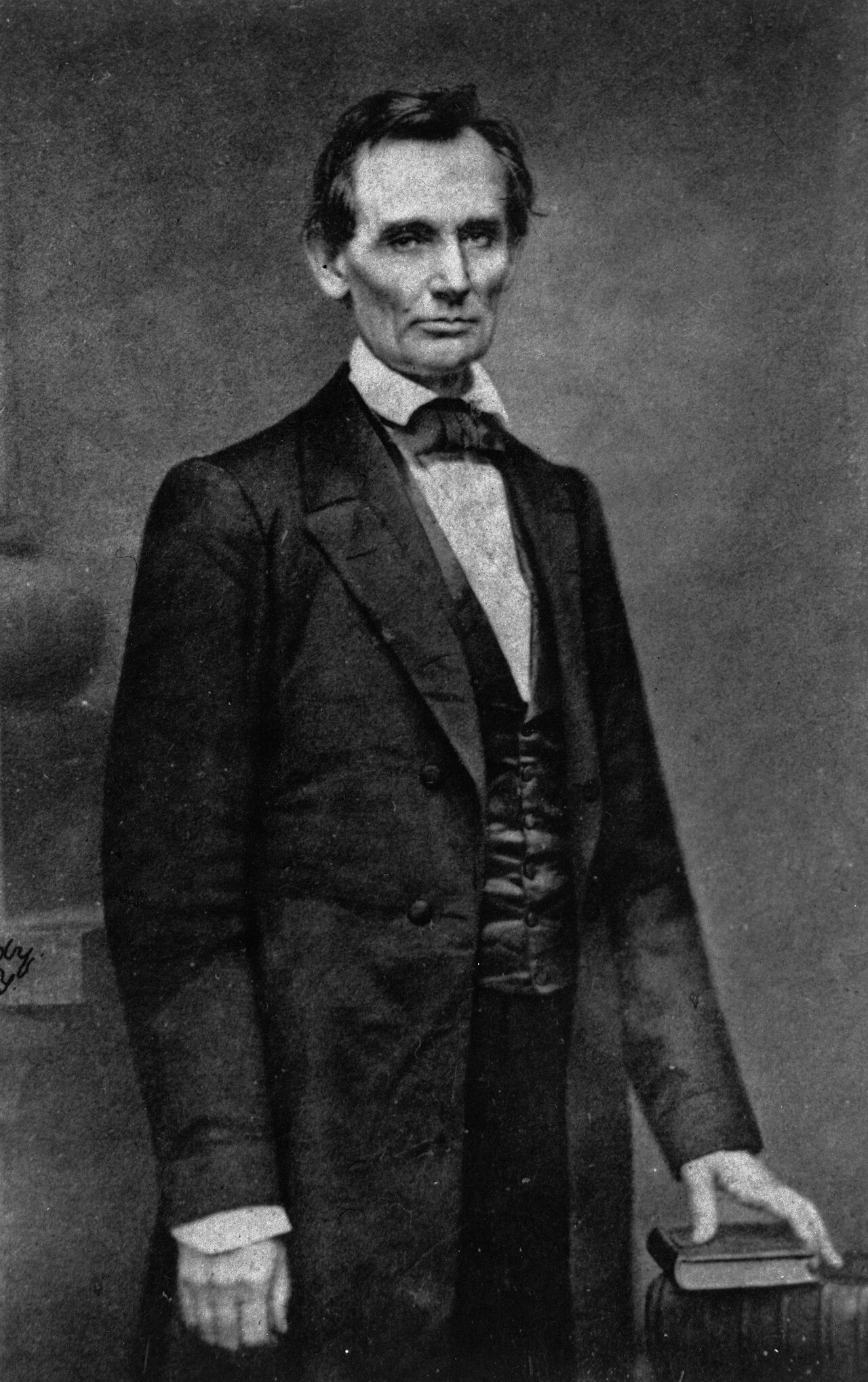
On 6 November 1860 Abraham Lincoln, the candidate of the young Republican Party, was elected the 16th president of the United States with less than 40 per cent of the popular vote but a clear majority in the Electoral College — a result that pushed the slave states toward secession and the nation toward civil war. November 6 is also the day of the first college football game, the UN's condemnation of apartheid and the debut of Meet the Press.
Choose another date: open the On This Day calendar to browse events, births and deaths for any day of the year.
At a Glance
- The field
- Four candidates: Lincoln (Republican), Douglas (Northern Democrat), Breckinridge (Southern Democrat), Bell (Constitutional Union)
- The vote
- Lincoln wins about 40 per cent of the popular vote — and 180 of 303 electoral votes, more than all rivals combined
- The map
- Every free state except split New Jersey; not on the ballot in ten slave states; Douglas wins only 12 electoral votes
- The turnout
- Above 80 per cent of eligible voters — among the highest in American history
- The answer
- South Carolina secedes within six weeks; seven states form the Confederacy before Lincoln's inauguration
- The consequence
- Civil War, emancipation and the Thirteenth Amendment follow from the presidency this election creates
Events on this day
- 1528The Spanish explorer Álvar Núñez Cabeza de Vaca is shipwrecked off the coast of Texas, the first European known to set foot there.
- 1860Abraham Lincoln is elected the 16th president of the United States — the featured story above.
- 1861Jefferson Davis is elected president of the Confederate States of America, running unopposed.
- 1869Rutgers defeats Princeton 6–4 in New Brunswick, New Jersey, in the first intercollegiate American football game.
- 1900President William McKinley is re-elected, with Theodore Roosevelt as his vice president.
- 1917Canadian troops capture the village of Passchendaele, ending the Third Battle of Ypres in the mud of Flanders.
- 1947Meet the Press makes its debut on American television; it becomes the longest-running programme in TV history.
- 1962The United Nations General Assembly condemns South Africa's apartheid policies and calls on members to break economic and military ties.
- 1977The Kelly Barnes Dam fails above Toccoa Falls, Georgia, sending a flood that kills 39 people.
- 1984President Ronald Reagan is re-elected in a landslide, carrying 49 of the 50 states.
- 2012Wisconsin's Tammy Baldwin becomes the first openly gay person elected to the United States Senate.
Born on this day
- 1494Suleiman the Magnificent — Ottoman sultan whose 46-year reign brought the empire to its greatest extent.
- 1661Charles II of Spain — the last Habsburg king of Spain, whose death without an heir triggers a European war.
- 1814Adolphe Sax — Belgian instrument maker who invented the saxophone.
- 1851Charles Dow — American journalist who co-founded Dow Jones and created the Dow Jones Industrial Average.
- 1854John Philip Sousa — American composer and bandleader, the 'March King'.
- 1861James Naismith — Canadian physical educator who invented basketball in Springfield, Massachusetts, in 1891.
Died on this day
- 1672Heinrich Schütz — German composer, the most important of his country before Bach.
- 1816Gouverneur Morris — American statesman and diplomat who penned much of the U.S. Constitution's final wording.
- 1893Pyotr Ilyich Tchaikovsky — Russian composer of Swan Lake and the 1812 Overture, dead nine days after premiering his Sixth Symphony.
- 1965Clarence Williams — American jazz pianist, singer and producer, a pioneer of recorded jazz.
The featured story: Lincoln is elected president, 6 November 1860
No American election has carried more consequence than the one held on 6 November 1860. The nation was coming apart over slavery: the Democratic Party had split in two over whether slavery should be protected in the western territories, the new Republican Party stood against its expansion, and a fourth party, the Constitutional Unionists, hoped to save the Union by saying as little as possible. Abraham Lincoln of Illinois, the Republican, was a one-term former congressman who had become nationally known two years earlier debating Stephen A. Douglas — the man who now ran against him as the Northern Democratic candidate, while Vice President John C. Breckinridge carried the Southern Democratic banner and John Bell of Tennessee ran for the Constitutional Union Party.
Lincoln barely campaigned, by the custom of the day, and in ten slave states he was not even on the ballot. When the votes were counted he had won only about 40 per cent of the popular vote — less than 40 per cent, a share lower than almost any winning candidate in American history — but the electoral map was decisive. He carried every free state except New Jersey, which split its electors, and with them California and Oregon: 180 electoral votes, comfortably more than the 152 needed, against 72 for Breckinridge, 39 for Bell and just 12 for Douglas, whose votes were spread too evenly across the North to win states. Turnout, in an electorate of free men, ran above 80 per cent.
The result was understood at once as a verdict on slavery's future, and the South answered before Lincoln could take office. South Carolina seceded on 20 December 1860; six more Deep South states followed by February, formed the Confederate States of America, and elected Jefferson Davis their president — exactly a year after Lincoln's election, on 6 November 1861, Davis was confirmed in that office by popular vote. When Confederate guns fired on Fort Sumter in April 1861, the argument the ballot box had failed to settle moved to the battlefield.
Lincoln's presidency thus began as a war presidency, and the war remade both the man and the country: the Union preserved, slavery destroyed by the Emancipation Proclamation and the Thirteenth Amendment, and Lincoln himself assassinated days after the Confederacy's collapse. Britannica calls the election of 1860 arguably the most consequential in American history. It is hard to argue: on 6 November 1860 the voters chose, knowingly or not, the president who would decide whether the United States remained one nation, and what kind of nation it would be.
Why this date matters
November 6 keeps staging America's arguments with itself. Lincoln's election in 1860 sets the country on the road to civil war; a year later the Confederacy elects its own president on the same date; in 1984 Reagan's 49-state landslide marks a different republic's confidence; in 2012 the Senate gains its first openly gay member. Around those poles the day gathers quieter firsts — a football game between two New Jersey colleges, a television institution's debut — and a UN chamber voting to isolate apartheid South Africa. It is the calendar's American argument day.
Sources
- Encyclopaedia Britannica — On This Day: November 6
- HISTORY — What Happened on November 6
- Encyclopaedia Britannica — United States presidential election of 1860
- Wikimedia — On This Day feed: November 6
The facts on this page were checked against these sources on 19 November 2026. The History Trail's permanent pages are researched and written for this site; the live profiles elsewhere on The History Trail are assembled automatically from Wikipedia and Wikidata.
About the Author
Researched and written by the The History Trail Editorial Team — the accountable editorial function behind this site's permanent story pages. The team works from the published sources cited on each page; it does not invent historians, reviewers or credentials, and it corrects errors openly.
Fact Check
Every load-bearing fact on this page traces to one of the sources listed above, and significant claims link to their source in the text. Our checking method is described on the methodology page; errors can be reported via the corrections page.
Sources & Citations
Cite this page as: The History Trail Editorial Team, The History Trail — this article's title, publication and update dates are shown beneath its headline. The full source list appears under Sources above; the site's source standards are on the sources page.