
People
Harriet Tubman
Harriet Tubman, born enslaved in Maryland about 1822, escaped to freedom in 1849 - and then returned south about 13 times, guiding roughly 70 people out of slavery. In 1863 she helped lead the Combahee River Raid, which freed more than 700 more. She died in Auburn, New York, on 10 March 1913.
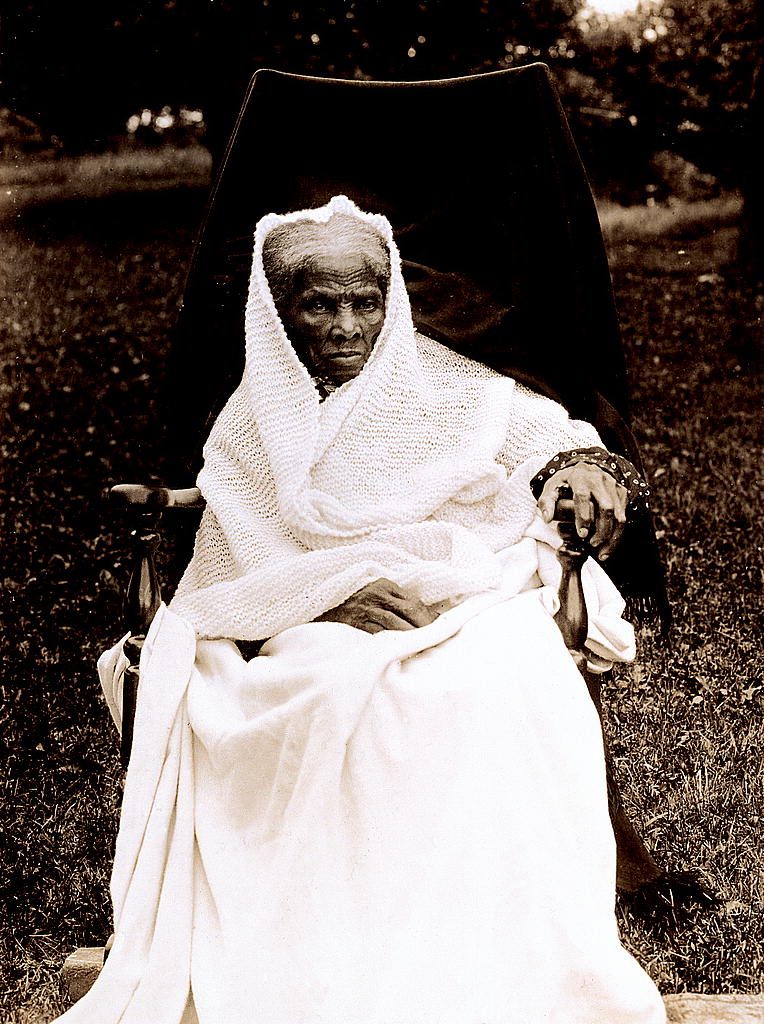
At a Glance
- Born
- Araminta Ross, c. 1822 (exact date unrecorded), Dorchester County, Maryland, enslaved
- Escaped
- 1849, to Philadelphia, Pennsylvania
- Rescue missions
- About 13 trips into Maryland, guiding roughly 70 people to freedom; instructions helped dozens more
- Known as
- Moses - a name given by abolitionist William Lloyd Garrison
- Civil War service
- Scout, spy and nurse for the Union Army; guided the Combahee River Raid, 1-2 June 1863, freeing more than 700 people
- Later work
- Women's suffrage campaigning; founded the Harriet Tubman Home for the Aged in Auburn, New York
- Died
- 10 March 1913, Auburn, New York; buried with military honours at Fort Hill Cemetery
Introduction
Harriet Tubman was born enslaved in Dorchester County, Maryland, and escaped to freedom in 1849, aged about 27. Then she did the thing almost no one else did: she went back. Again and again for a decade she returned in secret and guided her family and friends out of slavery, until the work made her a legend in her own lifetime under the name her people gave her - Moses. In the Civil War she served the Union Army as a scout, spy and nurse and helped plan the 1863 Combahee River Raid that freed more than 700 people in a single operation.
Her exact birth date is genuinely unknown. Enslaved people's births were not registered, and historians have placed hers anywhere from about 1820 to 1825; the National Park Service gives 1822, and biographer Kate Larson, working from a midwife's payment record, argues for March 1822. What is documented is the shape of the life: born Araminta Ross, she died Harriet Tubman on 10 March 1913, in Auburn, New York.
Born enslaved: Araminta Ross
Tubman was born Araminta - Minty - to Harriet (Rit) Green and Ben Ross, both enslaved, on Maryland's Eastern Shore. She was one of nine children, and her own sale loomed after her enslaver's death in 1849. Hired out from childhood, she did heavy field and domestic work. As a young teenager she suffered the injury that marked her life: an overseer hurled a two-pound weight at another enslaved man, missed, and struck her in the head. She received no real medical care, and lived ever after with headaches, seizures and sudden sleeping spells - and, she said, vivid religious visions she understood as messages from God.
In 1844 she married John Tubman, a free Black man, and took the name Harriet. In the autumn of 1849, fearing sale, she escaped - travelling by night, guided by the North Star and helped by the network of safe houses later called the Underground Railroad - until she crossed into Pennsylvania and freedom. She resolved, as she later put it, that she would have liberty or death. John Tubman refused to follow and later married another woman.
Moses: the rescue missions
Tubman returned to Maryland within a year, in December 1850, to rescue her niece Kessiah and her children, and she kept returning for about ten years. Modern scholarship, following Larson's documentary work, counts about 13 missions and roughly 70 people directly conducted to freedom - parents, brothers, sisters, nieces, friends - with perhaps 70 more escaping using instructions she passed on. She travelled in winter, moved at night, used disguises, coded songs and safe houses run by free and enslaved Black people and white abolitionists, and carried a pistol - against slave catchers, and to steady anyone who wanted to turn back.
She was never caught, and she said she never lost a passenger. Abolitionist William Lloyd Garrison gave her the name that stuck - Moses, after the prophet who led his people out of Egypt. The work grew more dangerous after the Fugitive Slave Act of 1850 made even the northern states unsafe, so she extended her routes to St. Catharines in Canada. In 1858 she met John Brown, who called her General Tubman; illness kept her from joining his Harpers Ferry raid in 1859.
The Civil War: scout, spy, nurse - and Combahee
When the Civil War came, Tubman went south to serve the Union. From 1862 she worked at Port Royal, South Carolina, nursing Black soldiers and freedpeople, and then built an intelligence network of enslaved scouts and river pilots for the Union commanders. She received little pay for years of service - a grievance she pursued for decades before Congress granted her a full pension in her old age.
Her military peak came on the night of 1-2 June 1863. Tubman had gathered intelligence on Confederate mines, troop positions and plantations along South Carolina's Combahee River, and she guided three Union steamboats carrying Colonel James Montgomery and his Black troops of the 2nd South Carolina Volunteers past the mines. The raid burned plantations, destroyed supplies and brought away more than 700 enslaved people, many of the men then enlisting in the Union Army. She is widely credited as the first woman to lead an armed assault in U.S. military history - with the honest qualification that Montgomery held formal command, while the intelligence, the guidance and the local knowledge were hers.
Timeline
- c. 1822
Araminta Ross is born enslaved in Dorchester County, Maryland, to Ben and Harriet (Rit) Ross; the exact date is unrecorded.
- c. 1835
An overseer's thrown weight strikes her head, causing lifelong seizures and headaches.
- 1844
She marries John Tubman, a free Black man, and takes the name Harriet.
- 1849
Fearing she will be sold, Tubman escapes to Philadelphia - and vows to return for her family.
- December 1850
Her first rescue mission brings her niece Kessiah and Kessiah's children out of Maryland.
- 1850s
About 13 missions follow, guiding roughly 70 people to freedom; abolitionists call her Moses.
- 1862
She goes to South Carolina to serve the Union as nurse, then scout and spy.
- 1-2 June 1863
Tubman guides the Combahee River Raid; more than 700 enslaved people are freed in one operation.
- 10 March 1913
Tubman dies in Auburn, New York, and is buried with military honours at Fort Hill Cemetery.
- 2016
The U.S. Treasury announces Tubman will appear on the $20 bill; delayed for years, the plan is said in 2026 to be not moving forward.
Significance
Tubman's significance is double. As a conductor she demonstrated that enslaved people were not passive recipients of freedom but its authors - she planned, navigated and enforced the escapes herself, illiterate and living with a serious head injury. As a soldier she broke another barrier: a Black woman, born enslaved, gathering intelligence and guiding an armed expedition for the U.S. Army decades before women could vote.
After the war she turned the same energy on the unfinished work: women's suffrage, speaking at conventions alongside Susan B. Anthony and other suffragists she had known since abolitionist days, and care for the elderly poor, endowing the Harriet Tubman Home for the Aged on land next to her Auburn house. She lived long enough to be honoured as a national heroine - and still had to fight the government for the pension her service had earned.
Myths and disputes
The legend inflates the numbers, and this page uses the smaller, documented ones. Nineteenth-century biographies and later retellings credited Tubman with 19 trips and 300 people rescued. Careful modern scholarship, above all Kate Larson's work in the surviving records, supports about 13 missions and roughly 70 people personally conducted, with guidance given to perhaps 70 more - a record that needs no exaggeration, since each trip risked capture or death. Her birth year is likewise unsettled: 1820, 1822 and 1825 all appear in reputable sources, because no birth record for an enslaved child was kept.
The famous story of Tubman holding a gun on wavering fugitives survives through her early biographies; it reflects her reported practice, but the polished wording is a biographer's, not a transcript. And the $20 bill: the Treasury announced in April 2016 that Tubman's portrait would replace Andrew Jackson's on the front of the note. Delayed, revived in 2021, the plan was said in 2026 to be not moving forward. As this page is published, no Tubman $20 bill has been issued.
Legacy
Tubman's Auburn home and the Maryland landscape she crossed are now preserved by the National Park Service in two national historical parks, and her hymnal and the shawl Queen Victoria gave her are held by the Smithsonian's National Museum of African American History and Culture. In 2024 Maryland posthumously commissioned her a brigadier general in its National Guard - 161 years after Combahee.
Her deeper legacy is the standard she set for what rescue means. She did not escape and stop; she measured freedom by who was still left behind, and she went back until the law itself changed. That is why, of all the Underground Railroad's conductors, it is her name - and her borrowed prophet's name, Moses - that the world remembers.
Sources
- National Park Service - Harriet Tubman
- Maryland Department of Natural Resources - Harriet Tubman Timeline
- National Portrait Gallery, Smithsonian Institution - Harriet Tubman
- Library of Congress - Portrait of Harriet Tubman
- National Park Service - Harriet Tubman (quick facts)
- AfroTech - US Treasury Department Appears To Ditch Efforts To Place Harriet Tubman On $20 Bill
The facts on this page were checked against these sources on 19 November 2026. The History Trail's permanent pages are researched and written for this site; the live profiles elsewhere on The History Trail are assembled automatically from Wikipedia and Wikidata.
About the Author
Researched and written by the The History Trail Editorial Team — the accountable editorial function behind this site's permanent story pages. The team works from the published sources cited on each page; it does not invent historians, reviewers or credentials, and it corrects errors openly.
Fact Check
Every load-bearing fact on this page traces to one of the sources listed above, and significant claims link to their source in the text. Our checking method is described on the methodology page; errors can be reported via the corrections page.
Sources & Citations
Cite this page as: The History Trail Editorial Team, The History Trail — this article's title, publication and update dates are shown beneath its headline. The full source list appears under Sources above; the site's source standards are on the sources page.