
Holidays
Black History Month
Black History Month is the annual observance of Black history and achievement that began as Negro History Week, launched by the historian Carter G. Woodson in February 1926 and expanded to a full month in 1976. It is marked every February in the United States and Canada, and every October in the United Kingdom and Ireland - two dates with two different histories.
At a Glance
- What it is
- An annual observance of Black history and achievement, held each February in the US and Canada and each October in the UK and Ireland
- Founded as
- Negro History Week, launched in February 1926 by historian Carter G. Woodson and his Association for the Study of Negro Life and History
- Why February
- The week held the birthdays of Abraham Lincoln (12 February) and Frederick Douglass (14 February), dates Black communities already celebrated
- Became a month
- 1976, the US bicentennial year, when ASALH expanded it and President Gerald Ford recognised Black History Month
- In US law
- Public Law 99-244 (1986) designated February as National Black (Afro-American) History Month; annual presidential proclamations since 1996
- Annual themes
- Set each year by ASALH, as Woodson began doing in the 1920s; the 2026 theme is A Century of Black History Commemorations
- Elsewhere
- Canada recognised February in 1995 on Jean Augustine's motion; the UK has marked October since 1987, founded by Akyaaba Addai-Sebo
Introduction
The observance began modestly and deliberately: one week, placed in the middle of February, with study materials supplied to schools and churches by a small scholarly association in Washington. Its founder never promised a month, a law or a worldwide calendar. What Carter G. Woodson built in 1926 was a teaching device - a fixed point in the year when Black history, then almost absent from textbooks, would be studied on purpose. Its growth into a month, and its spread to other countries on other dates, is the story of an idea that kept outgrowing its frame.
Origins: Negro History Week, 1926
Woodson founded the Association for the Study of Negro Life and History in 1915 and its Journal of Negro History in 1916. In February 1926, through the Association, he announced Negro History Week. The Library of Congress records his reasoning for the date: he selected the week in February that included the birthdays of Abraham Lincoln, on 12 February, and Frederick Douglass, who celebrated his birthday on 14 February - two figures Black communities already honoured. Douglass, born into slavery, never knew his exact birth date and had chosen 14 February himself, which made the week an act of commemoration as well as scholarship.
The week was built to be used. The Association sold and distributed study kits, portraits and lesson materials; Black schools, churches and civic clubs held programmes; and Woodson set a theme to focus each year's observance, a practice his Association - now the Association for the Study of African American Life and History, ASALH - continues today. The 2026 theme, marking a century of commemorations, is A Century of Black History Commemorations.
From a Week to a Month: 1976 and After
For fifty years the observance remained a week, growing steadily through the civil rights era; Black students at Kent State University proposed and first celebrated a Black History Month in 1970. In 1976, the bicentennial year of the United States, ASALH formally expanded the commemoration to the whole of February, and President Gerald Ford issued a message on the observance of Black History Month urging Americans to honour the too-often neglected accomplishments of Black Americans. Federal law followed: in 1986 Congress passed Public Law 99-244 designating February 1986 as National Black (Afro-American) History Month, and since 1996 presidents have issued annual proclamations for the month.
The February date is American, but the observance is not. Canada marks Black History Month in February too: in December 1995 its House of Commons unanimously adopted a motion by Jean Augustine, the first Black woman elected to that Parliament, recognising February as Black History Month. The United Kingdom and Ireland mark it in October instead. London's first observance opened on 1 October 1987, organised by Akyaaba Addai-Sebo of the Greater London Council. October was chosen for British reasons, not American ones: Lincoln's and Douglass's birthdays carried less meaning in Britain, while October stood near the start of the school year, when children were fresh and months from examinations, and it held a place in the African calendar as a season of harvest and reflection.
Timeline
- 1915
Carter G. Woodson founds the Association for the Study of Negro Life and History in Chicago.
- 1916
Woodson founds The Journal of Negro History to publish research the mainstream journals ignored.
- February 1926
First Negro History Week, set in the week of Lincoln's and Douglass's birthdays.
- 1928
The Association begins announcing annual themes for the observance - a practice ASALH keeps today.
- 1970
Black educators and Black United Students at Kent State University celebrate the first Black History Month.
- 1976
In the US bicentennial year, ASALH expands the observance to a month; President Gerald Ford recognises Black History Month.
- 1986
Congress passes Public Law 99-244, designating February as National Black (Afro-American) History Month.
- 1 October 1987
The United Kingdom's first Black History Month opens in London, organised by Akyaaba Addai-Sebo.
- December 1995
Canada's House of Commons unanimously adopts Jean Augustine's motion recognising February as Black History Month.
- February 2026
A century of commemorations: ASALH's theme marks 100 years since Negro History Week and 50 years of Black History Month.
Significance
The month's significance is what it normalised. Woodson's complaint in 1926 was curricular: Black people were missing from the history Americans were taught. A fixed annual observance forced schools, publishers, museums and broadcasters to produce Black history content on a schedule, year after year, until the material existed in quantity and the habit of teaching it took hold. ASALH's annual themes keep the month from becoming mere repetition, directing each year toward a subject - labour, voting rights, Black health - chosen by the organisation Woodson founded.
Woodson had not invented Black commemoration from nothing, and honest accounts say so. Black communities already kept emancipation anniversaries and Douglass Day observances on 14 February, and in 1915 Woodson himself had attended the great Chicago exhibition marking fifty years since emancipation - an experience the National Park Service credits with inspiring him to organise. His originality was not the idea of celebrating Black history but the machinery: a permanent association, a journal, teaching materials and a fixed week that any school or church in the country could adopt at once.
Questions readers ask
Why February? Because Woodson built the week around two birthdays Black communities already celebrated in that month: Abraham Lincoln's on 12 February and Frederick Douglass's on 14 February. It was not chosen because February is the shortest month, and it was not assigned by any government - Woodson picked it in 1926, and the month-long observance simply kept his date when it expanded in 1976.
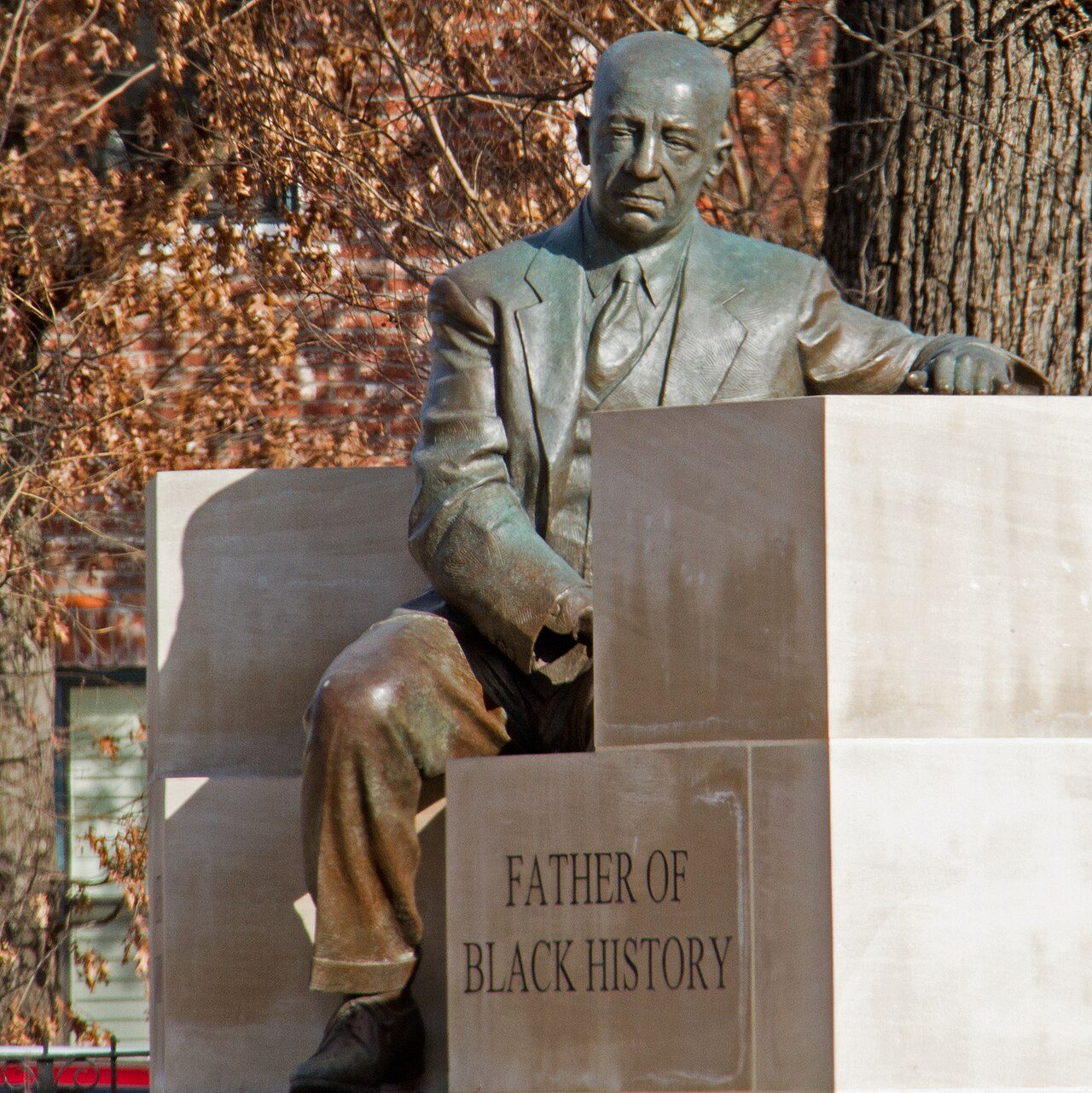
Who started it? Carter G. Woodson, the Harvard-trained historian known as the Father of Black History, through the association he founded in 1915. The expansion to a month in 1976 was ASALH's act, recognised the same year by President Ford; the Kent State students who celebrated a month in 1970 were building on Woodson's week, not replacing it.
Why does the UK mark it in October? Because Britain's observance was created separately, in 1987, by Akyaaba Addai-Sebo and London colleagues, and was never bound to the American date. October suited the British school year and carried meaning in the African calendar; Ireland follows the October pattern, while Canada, whose recognition came through Jean Augustine's 1995 motion, kept February.
Legacy
A century after a single week was announced from a Washington row house, Black History Month is observed in schools and public institutions across the United States and Canada each February and across Britain and Ireland each October, with annual themes, presidential proclamations and parliamentary recognition. Woodson wanted Black history studied all year, and said the week existed to make that happen; the month that grew from his week remains both a celebration and a standing argument that the history it marks belongs in the curriculum every month of the year.
Sources
- Library of Congress - Black History Month: History and Overview
- ASALH - Black History Month Proclamation 2026
- Smithsonian Magazine - Why Carter G. Woodson, the 'Father of Black History,' Founded Black History Month
- HistoryExtra (BBC History Magazine) - Black History Month: what is it and why October in the UK?
- Toronto Metropolitan University - In conversation with the Hon. Dr. Jean Augustine
The facts on this page were checked against these sources on 19 November 2026. The History Trail's permanent pages are researched and written for this site; the live profiles elsewhere on The History Trail are assembled automatically from Wikipedia and Wikidata.
About the Author
Researched and written by the The History Trail Editorial Team — the accountable editorial function behind this site's permanent story pages. The team works from the published sources cited on each page; it does not invent historians, reviewers or credentials, and it corrects errors openly.
Fact Check
Every load-bearing fact on this page traces to one of the sources listed above, and significant claims link to their source in the text. Our checking method is described on the methodology page; errors can be reported via the corrections page.
Sources & Citations
Cite this page as: The History Trail Editorial Team, The History Trail — this article's title, publication and update dates are shown beneath its headline. The full source list appears under Sources above; the site's source standards are on the sources page.