
People
Carter G. Woodson
Carter G. Woodson (1875-1950) was the historian who made Black history a field of study. The son of formerly enslaved parents, he worked in coal mines before earning a Harvard doctorate, founded the Association for the Study of Negro Life and History in 1915, launched its Journal of Negro History in 1916, and created Negro History Week in 1926 - the observance that grew into Black History Month.
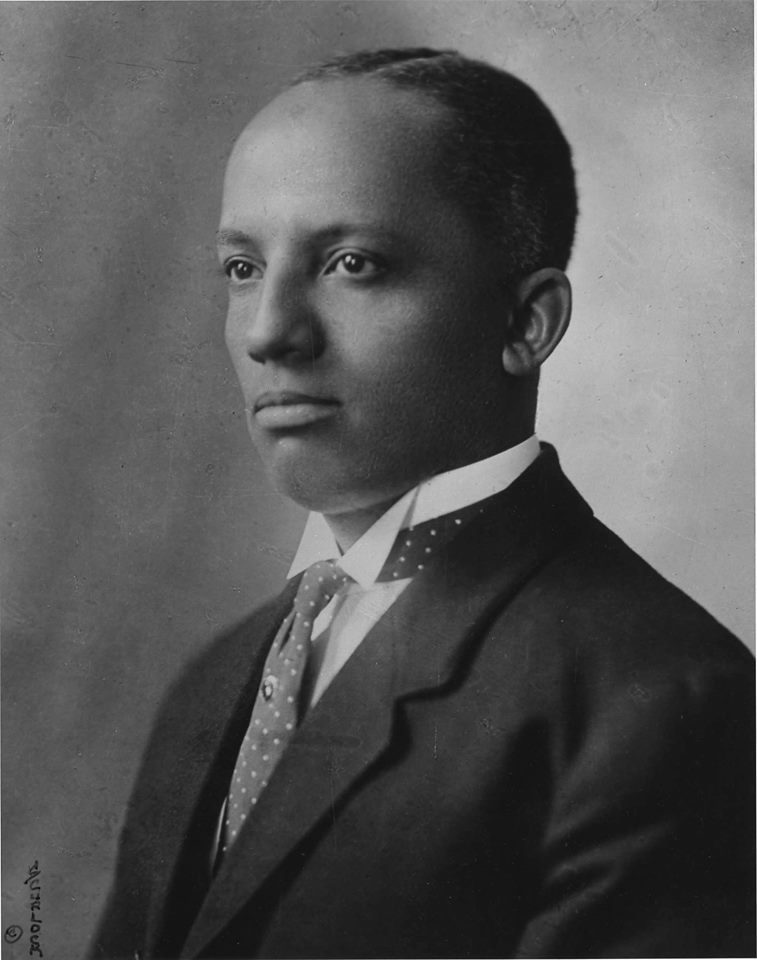
At a Glance
- Born
- 19 December 1875, New Canton, Virginia, to formerly enslaved parents James and Anna Eliza Woodson
- Education
- Harvard PhD in history, 1912 - the second Black American to earn a Harvard doctorate, after W. E. B. Du Bois
- Founded
- The Association for the Study of Negro Life and History (now ASALH) in Chicago on 9 September 1915
- The journal
- The Journal of Negro History, founded 1916 - now the Journal of African American History
- Negro History Week
- Launched February 1926, set in the week of the birthdays of Abraham Lincoln and Frederick Douglass
- Best-known book
- The Mis-Education of the Negro (1933), his critique of how American schooling taught Black students to devalue their own history
- Died
- 3 April 1950, at his home in Washington, D.C., now the Carter G. Woodson Home National Historic Site
Introduction
Woodson is remembered by a title he earned rather than claimed: the Father of Black History. When he began, American textbooks and universities treated Black people as a footnote - present, if at all, as a problem rather than as makers of history. Woodson answered not with protest alone but with institutions: a learned society, a scholarly journal, a publishing house, a bulletin for teachers, and finally a week of national observance designed to carry Black history into every school, church and club in the country.
His own life made the argument personal. Born a decade after emancipation to parents who had been enslaved, he began formal schooling only at twenty, paid for with wages from the coal mines. That a man with so late and hard a start could take a Harvard doctorate and then rebuild a whole field of study is the first fact of his biography - and the one he most wanted Black schoolchildren to know was possible.
Origins: From the Mines to Harvard
Carter Godwin Woodson was born on 19 December 1875 in New Canton, Virginia, the fourth of nine children of James and Anna Eliza Woodson, who had been enslaved. The family later moved to Huntington, West Virginia, where the young Woodson worked in the New River coalfields to help support the household. The National Park Service records that he saved enough from mining to begin his formal education at twenty, entering Frederick Douglass High School in Huntington - one of the few Black high schools of the time - and finished its course in two years, having already taught himself the basics.
He earned a first degree from Berea College in Kentucky in 1903, worked as a school supervisor in the Philippines, studied at the Sorbonne in Paris, and took bachelor's and master's degrees at the University of Chicago in 1908. At Harvard he completed his doctorate in history in 1912 with a dissertation on the disruption of Virginia. Harvard's own account stresses the setting: some of his professors openly minimised the role of Black Americans in the nation's past. Woodson became only the second Black American to earn a Harvard PhD, after W. E. B. Du Bois in 1895, and, the Park Service notes, the only person of enslaved parentage to earn a doctorate in history in the United States at that time.
Building the Field: ASALH, the Journal and a Publishing House
On 9 September 1915, in Chicago, Woodson and four colleagues - George Cleveland Hall, William B. Hartgrove, Alexander L. Jackson and James E. Stamps - founded the Association for the Study of Negro Life and History, today the Association for the Study of African American Life and History (ASALH). Its purpose was plain: to research, preserve and publish the history of Black life that mainstream scholarship ignored. The following year, 1916, Woodson launched The Journal of Negro History, the first scholarly journal in the field; it is still published today as the Journal of African American History.
Woodson taught and led while he built. He was principal of Armstrong Manual Training School in Washington, dean of the School of Liberal Arts at Howard University in 1919-20, and dean at West Virginia Collegiate Institute from 1920 to 1922, when he retired from teaching to run the Association full time. In 1921 he founded Associated Publishers to print Black scholars whose work commercial houses would not take, and in 1922 he bought the Washington row house at 1538 Ninth Street NW that became the Association's headquarters, his office and his home for the rest of his life. From it he trained and mentored a generation of historians, among them John Hope Franklin.
Negro History Week and The Mis-Education of the Negro
In February 1926 Woodson launched Negro History Week, urging every church, school, lodge and club to hold talks and events and asking libraries to stock books setting out what Black Americans had thought, felt and accomplished. He chose the second week of February deliberately: it held the birthdays of Abraham Lincoln, on 12 February, and Frederick Douglass, who celebrated his on 14 February - dates Black communities already marked. The week spread through Black schools and civic life, and Woodson supplied it with themes, study materials and, from 1937, the Negro History Bulletin for teachers.
His most famous book came in 1933. In The Mis-Education of the Negro, Woodson argued that American schooling was itself doing harm: an education that taught Black children that their people had done nothing worth recording trained them, in effect, to accept inferiority. Britannica summarises his charge that the same educational process which inspired the oppressor depressed and crushed the spark of genius in Black students by making them feel their race amounted to little. The book's title entered the language, and its argument - that who controls the curriculum controls what a people believes about itself - is still quoted wherever history syllabuses are debated.
Timeline
- 19 December 1875
Carter Godwin Woodson is born in New Canton, Virginia, to formerly enslaved parents.
- 1890s
Works in the West Virginia coalfields; begins formal schooling at twenty at Douglass High School, Huntington, finishing in two years.
- 1903
Graduates from Berea College, Kentucky; serves as a school supervisor in the Philippines and studies at the Sorbonne.
- 1912
Earns his PhD in history from Harvard - the second Black American to do so, after W. E. B. Du Bois.
- 9 September 1915
Co-founds the Association for the Study of Negro Life and History in Chicago.
- 1916
Founds The Journal of Negro History, the field's first scholarly journal.
- 1919-1922
Serves as dean at Howard University, then at West Virginia Collegiate Institute; retires from teaching in 1922 to lead the Association.
- 1921-1922
Founds Associated Publishers and buys 1538 Ninth Street NW, Washington, D.C., as the Association's headquarters and his home.
- February 1926
Launches Negro History Week in the week of Lincoln's and Douglass's birthdays - the seed of Black History Month.
- 1933
Publishes The Mis-Education of the Negro, his landmark critique of American schooling.
- 1937
Begins the Negro History Bulletin to carry Black history materials to teachers and students.
- 3 April 1950
Dies at his Washington home, aged 74, at work on a projected Encyclopaedia Africana.
Significance
Woodson's significance is institutional. Before him, Black history in America had advocates but no infrastructure: no society to set standards, no journal to publish research, no press to print it and no place in the school calendar to teach it. He built all four, largely on subscriptions and small donations, and staffed them by training younger scholars himself. The field of African American history as universities now practise it descends directly from that scaffolding.
Myths and disputes
Did Woodson choose February because it is the shortest month, as a slight? No - the claim circulates as a grievance, but the record is explicit. Woodson set Negro History Week in the second week of February because Black communities already celebrated Lincoln's birthday on 12 February and Douglass's on 14 February there; the Association's own history and the Library of Congress both give that reason. The month-long observance kept February when it expanded in 1976, half a century after Woodson's choice.
A second loose claim makes Woodson a lone genius. He was the indispensable founder, but ASALH was founded by five men, sustained by branches, teachers and churches, and led for fifteen years by its president Mary McLeod Bethune. Woodson's achievement was building an organisation that outlived him - which is precisely why the observance he started is now in its second century.
Legacy
Woodson died on 3 April 1950 in the Ninth Street house where he had worked for 28 years. The house was designated a National Historic Landmark in 1976 - the same year his week became Black History Month - and is now preserved by the National Park Service as the Carter G. Woodson Home National Historic Site. ASALH still announces the annual Black History Month theme, the Journal he founded still publishes, and every February the observance he designed for one week now runs for a month on several continents. Few scholars have seen their life's work become a fixture of the calendar.
Sources
- ASALH - Carter G. Woodson Timeline
- Smithsonian Magazine - Why Carter G. Woodson, the 'Father of Black History,' Founded Black History Month
- National Park Service - Carter G. Woodson
- Harvard University - Carter G. Woodson, Harvard and the Legacy of Slavery
- Library of Congress - Black History Month: History and Overview
- Encyclopaedia Britannica - Carter G. Woodson
The facts on this page were checked against these sources on 19 November 2026. The History Trail's permanent pages are researched and written for this site; the live profiles elsewhere on The History Trail are assembled automatically from Wikipedia and Wikidata.
About the Author
Researched and written by the The History Trail Editorial Team — the accountable editorial function behind this site's permanent story pages. The team works from the published sources cited on each page; it does not invent historians, reviewers or credentials, and it corrects errors openly.
Fact Check
Every load-bearing fact on this page traces to one of the sources listed above, and significant claims link to their source in the text. Our checking method is described on the methodology page; errors can be reported via the corrections page.
Sources & Citations
Cite this page as: The History Trail Editorial Team, The History Trail — this article's title, publication and update dates are shown beneath its headline. The full source list appears under Sources above; the site's source standards are on the sources page.