
People
Elizabeth II
Elizabeth II (21 April 1926 - 8 September 2022) was never expected to be queen. Born third in line to the throne, she became heir after the 1936 abdication, served as a wartime mechanic, and reigned from 6 February 1952 for 70 years and 214 days - the longest reign in British history.
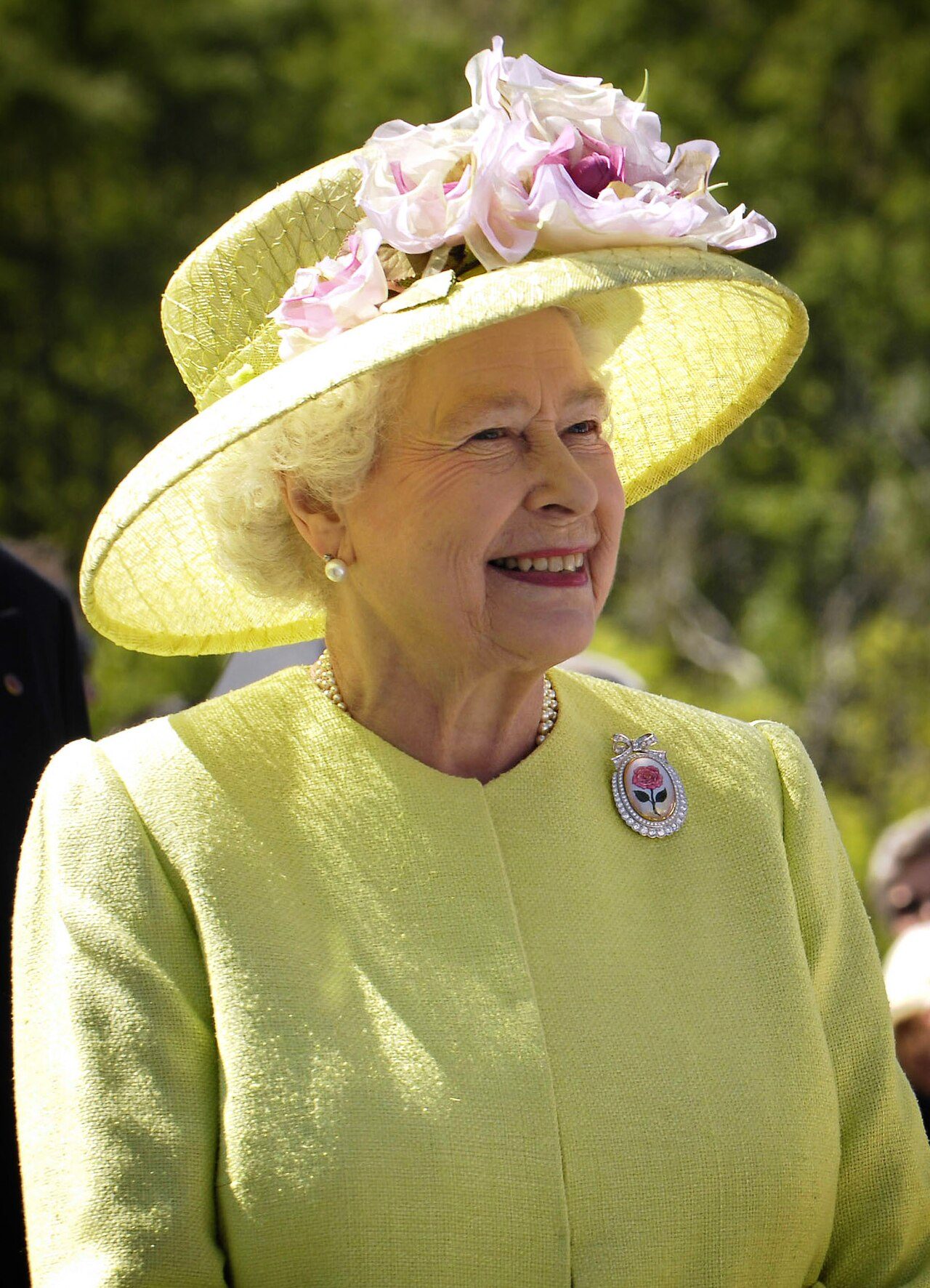
At a Glance
- Born
- 21 April 1926 at 17 Bruton Street, Mayfair, London, the first child of the Duke and Duchess of York
- Became heir
- 11 December 1936, as heir presumptive, when Edward VIII abdicated and her father became George VI
- War service
- Auxiliary Territorial Service, 1945: No. 230873, trained as a driver and mechanic - the first female royal to serve full-time in the armed forces
- Married
- Prince Philip, Duke of Edinburgh, on 20 November 1947; four children - Charles, Anne, Andrew and Edward
- Reign
- 6 February 1952 to 8 September 2022: 70 years and 214 days, the longest of any British monarch
- Coronation
- 2 June 1953 at Westminster Abbey, the first coronation to be televised in full
- Jubilees
- Silver in 1977, Golden in 2002, Diamond in 2012 and Platinum in 2022 - the only British monarch to reach a Platinum Jubilee
- Died
- 8 September 2022, aged 96, at Balmoral Castle, Scotland; succeeded by her son, Charles III
Introduction
When Elizabeth Alexandra Mary Windsor was born at 17 Bruton Street in Mayfair, London, on 21 April 1926, the throne looked settled far above her. Her grandfather, George V, was king; her uncle, the Prince of Wales, stood next in line; and her own father, the Duke of York, was a younger son whose children were expected to live respected but peripheral royal lives. Elizabeth was third in line, and newspapers treated her birth as a charming royal event, not the arrival of a future sovereign.
Seventy years on the throne changed that judgement completely. Elizabeth II became the most familiar public figure of the modern Commonwealth: crowned in the first televised coronation, head of state through decolonisation, fifteen British prime ministers and the digital age, and a byword for continuity until her death at Balmoral in 2022. Her life is also a case study in how accident - one abdication - can redirect a constitution.
A Childhood Not Aimed at the Throne
Elizabeth and her younger sister Margaret were educated at home by a governess, Marion Crawford, with lessons in history from C. H. K. Marten of Eton and visiting teachers for music and languages, as Britannica records. The sisters spent much of the Second World War at Windsor Castle and Balmoral, away from the London Blitz, while their parents stayed in the capital. In October 1940 the fourteen-year-old Elizabeth made her first broadcast, speaking on BBC Children's Hour to children evacuated from their homes.
Everything turned on 11 December 1936, when her uncle, Edward VIII, abdicated to marry Wallis Simpson, an American divorcee. Her father became George VI, a shy man with a stammer who had never expected the crown either, and the ten-year-old Elizabeth became heir presumptive. The word mattered: presumptive meant she could still be displaced if a son were born to the King and Queen. No son came, and the possibility faded, but the legal distinction shaped her position for fifteen years.
War Service and Marriage
Elizabeth pressed to do war work, and in March 1945, at eighteen, she joined the Auxiliary Territorial Service, the women's branch of the British Army, as No. 230873, Second Subaltern Elizabeth Windsor. At the No. 1 Mechanical Transport Training Section in Camberley she trained as a driver and mechanic, learning to service heavy vehicles, strip engines and change tyres, and was photographed in overalls at work. She was the first female member of the Royal Family to join the armed services as a full-time active member, and she finished the war promoted to honorary Junior Commander.
On 20 November 1947 she married Lieutenant Philip Mountbatten, a former prince of Greece and Denmark serving in the Royal Navy, in Westminster Abbey; on the eve of the wedding George VI made him Duke of Edinburgh. Their son Charles was born on 14 November 1948 and their daughter Anne on 15 August 1950; Andrew (1960) and Edward (1964) followed after her accession. The marriage lasted 73 years, until Philip's death in April 2021. Elizabeth called him her strength and stay.
Accession and Coronation
George VI's health failed through 1951, and Elizabeth increasingly stood in for him. In January 1952 she and Philip set out on a Commonwealth tour in his place, reaching Kenya en route to Australia and New Zealand. There, on 6 February 1952, news arrived that the King had died in his sleep at Sandringham. Elizabeth, aged 25, had become queen at the moment of his death - the first British sovereign in over 200 years to accede while abroad, as the Royal Family's own account notes. Philip broke the news to her at Sagana Lodge, and she flew home to be greeted at the airport by Prime Minister Winston Churchill.
Her coronation followed on 2 June 1953 at Westminster Abbey, where she was the thirty-ninth sovereign crowned and the sixth queen crowned in her own right. Against cabinet doubts she insisted the service be televised; 27 million people in Britain watched, many on sets bought for the occasion, in the first coronation shown in full on television. Months later she embarked on a six-month tour of the Commonwealth, the first reigning British monarch to visit Australia and New Zealand.
Timeline
- 21 April 1926
Born at 17 Bruton Street, Mayfair, London, third in line to the throne.
- 11 December 1936
Edward VIII abdicates; her father becomes George VI and Elizabeth becomes heir presumptive.
- 13 October 1940
Makes her first radio broadcast, to evacuated children, on BBC Children's Hour.
- March 1945
Joins the Auxiliary Territorial Service and trains as a driver and mechanic at Camberley.
- 20 November 1947
Marries Philip Mountbatten, Duke of Edinburgh, at Westminster Abbey.
- 6 February 1952
George VI dies at Sandringham; Elizabeth, on tour in Kenya, becomes queen.
- 2 June 1953
Crowned at Westminster Abbey in the first coronation televised in full.
- 1977
Silver Jubilee marks 25 years on the throne, celebrated across Britain and the Commonwealth.
- 2002
Golden Jubilee marks 50 years, in a year that also brings the deaths of her mother and her sister.
- 2012
Diamond Jubilee marks 60 years on the throne, celebrated with a river pageant on the Thames.
- 9 September 2015
Passes Queen Victoria's record of 63 years and 216 days to become Britain's longest-reigning monarch.
- June 2022
Platinum Jubilee marks 70 years on the throne, a first for a British monarch.
- 8 September 2022
Dies aged 96 at Balmoral Castle; her state funeral is held at Westminster Abbey on 19 September.
Significance: An Empire Becomes a Commonwealth
At her accession Elizabeth was queen of seven independent Commonwealth countries - the United Kingdom, Canada, Australia, New Zealand, South Africa, Pakistan and Ceylon - and head of a Commonwealth still shadowed by empire. Across her reign that empire dissolved: Ghana became independent in 1957, dozens of African, Caribbean and Asian states followed in the 1960s, and Hong Kong was handed back in 1997. The Commonwealth she headed grew instead into a voluntary association of equals, and she remained head of state of 15 realms at her death - a transformation historians of the Commonwealth treat as the defining arc of her reign.
At home she worked with fifteen prime ministers, from Winston Churchill to Liz Truss, whom she appointed at Balmoral two days before her death. She presided over Britain's entry into the European Communities in 1973 and its departure from the European Union in 2020, devolution to Scotland and Wales, and the transition from postwar austerity to the smartphone age - all while performing the constitutional duties of a monarch who reigns but does not rule.
Questions readers ask
Was she really not expected to be queen? Yes. At her birth two people stood ahead of her, her uncle and her father, and the Prince of Wales was a bachelor in his early thirties who was expected to marry and have children of his own. Only the abdication crisis of 1936 - a constitutional emergency settled in a matter of days - put her father on the throne and made her heir.
How rich was she? The honest answer is that her private wealth was never officially disclosed, and published figures are estimates. Two things are often confused. The Crown Estate - vast lands and holdings whose revenue goes to the Treasury - is held by the monarch in trust and is not personal property that can be sold. Balmoral and Sandringham, by contrast, were private family inheritances. Britannica notes that her financial and property holdings made her one of the world's richest women, but any exact figure quoted online should be treated as an estimate, not a documented fact.
Legacy
Elizabeth II's legacy is the reign itself: 70 years and 214 days of unbroken constitutional continuity, recognised by Guinness World Records as the longest reign of any queen in history. She made the monarchy a televised, then digital, institution without ever giving an interview, and she kept the Commonwealth together as a voluntary family of nations long after the empire that created it had gone.
She was succeeded by her son, Charles III, whose accession - like hers in 1952 - took effect at the instant of her death. The crowds that queued for miles to pass her coffin in Westminster Hall in September 2022 suggested that the institution she embodied for seven decades had outlasted the doubts of her annus horribilis in 1992 and the storms that followed.
Sources
- The Royal Family - 50 facts about Queen Elizabeth II's Coronation
- Encyclopaedia Britannica - Elizabeth II
- Australian War Memorial - A princess at war: Queen Elizabeth II and the Second World War
- The National Archives - Coronation of Her Majesty Queen Elizabeth II 1953: Press, BBC and TV facilities
- The Gazette - The evolution of the Commonwealth during the reign of Queen Elizabeth II
- BBC History Magazine (History Extra) - The Queen and the Commonwealth: a force for international change?
- Guinness World Records - Queen Elizabeth II dies aged 96 as the longest-reigning queen ever
The facts on this page were checked against these sources on 19 November 2026. The History Trail's permanent pages are researched and written for this site; the live profiles elsewhere on The History Trail are assembled automatically from Wikipedia and Wikidata.
About the Author
Researched and written by the The History Trail Editorial Team — the accountable editorial function behind this site's permanent story pages. The team works from the published sources cited on each page; it does not invent historians, reviewers or credentials, and it corrects errors openly.
Fact Check
Every load-bearing fact on this page traces to one of the sources listed above, and significant claims link to their source in the text. Our checking method is described on the methodology page; errors can be reported via the corrections page.
Sources & Citations
Cite this page as: The History Trail Editorial Team, The History Trail — this article's title, publication and update dates are shown beneath its headline. The full source list appears under Sources above; the site's source standards are on the sources page.