
Things
World War II
World War II (1939-1945) was the largest and bloodiest war in history: a global conflict between the Axis powers - Germany, Italy and Japan - and the Allies that killed tens of millions of people, included the genocide of six million Jews in the Holocaust, and ended with the world divided between two superpowers.
At a Glance
- Dates
- 1 September 1939 to 2 September 1945, from Germany's invasion of Poland to Japan's formal surrender
- The sides
- Axis: Germany, Italy and Japan. Allies: Britain, France, the Soviet Union, the United States and China, among many others
- Deaths
- Estimates range widely, from about 35 million to 60 million in Britannica's account; the exact total can never be known
- Turning points
- Midway (June 1942), El Alamein (October-November 1942) and Stalingrad (ending February 1943)
- The Holocaust
- Six million Jewish people were murdered by Nazi Germany and its allies and collaborators, according to the US Holocaust Memorial Museum
- The end
- Germany surrendered in May 1945; Japan signed its surrender on 2 September 1945 after the atomic bombings of Hiroshima and Nagasaki
Introduction
World War II involved virtually every part of the world. Britannica describes it in many respects as a continuation, after an uneasy 20-year hiatus, of the disputes left unsettled by World War I. Its total nature meant civilians did not only support the war effort; they became direct targets of bombing, occupation, famine and genocide.
The war was fought in Europe, North Africa, the Atlantic, the Soviet Union, China, South-East Asia and across the Pacific. It ended in 1945 with Germany and Japan defeated, Europe divided, atomic weapons used in war for the only time so far, and the United States and the Soviet Union standing as the world's dominant powers.
Origins: A Settlement That Did Not Settle
The Treaty of Versailles, which ended the First World War in 1919, imposed reparations and territorial losses on Germany and left grievances that Adolf Hitler, who came to power in 1933, promised to overturn. Through the 1930s Nazi Germany rearmed, annexed Austria and took Czech territory while Britain and France, hoping to avoid another war, conceded ground. In Asia, Japan had seized Manchuria in 1931 and launched a full-scale invasion of China in 1937, years before fighting began in Europe.
In August 1939 Germany and the Soviet Union signed a non-aggression pact whose secret protocol divided Poland between them. Hitler, believing the pact removed the danger of Soviet resistance, ordered the invasion of Poland for the morning of 1 September 1939.
The War Spreads, 1939-41
Germany invaded Poland on 1 September 1939; Britain and France declared war on 3 September. In 1940 Germany overran Denmark, Norway, the Netherlands, Belgium and France, leaving Britain to fight on alone through the Battle of Britain and the Blitz. Italy joined the war, and fighting spread to North Africa and the Mediterranean.
In June 1941 Hitler broke the pact with Moscow and launched Operation Barbarossa, the invasion of the Soviet Union, opening a vast eastern front. On 7 December 1941 Japan attacked the US naval base at Pearl Harbor and other American, Dutch and British positions across Asia. The United States entered the war, and within days Germany declared war on America. A regional conflict had become a genuinely world war.
Turning Points, 1942-43
The tide turned in three theatres within eight months. In the Pacific, the Battle of Midway in June 1942 destroyed Japan's first-line carrier force; Britannica notes that, together with Guadalcanal, it ended Japan's ability to conduct an offensive war. In Egypt, the Second Battle of El Alamein, beginning on 23 October 1942, broke the Axis advance and started its expulsion from North Africa.
Largest of all was Stalingrad. German forces were encircled in the city in November 1942 and surrendered at the start of February 1943. Britannica calls the destruction of two entire German armies there the beginning of the end of the Third Reich: from Stalingrad onward, the Soviet Union advanced relentlessly westward.
The End, 1944-45
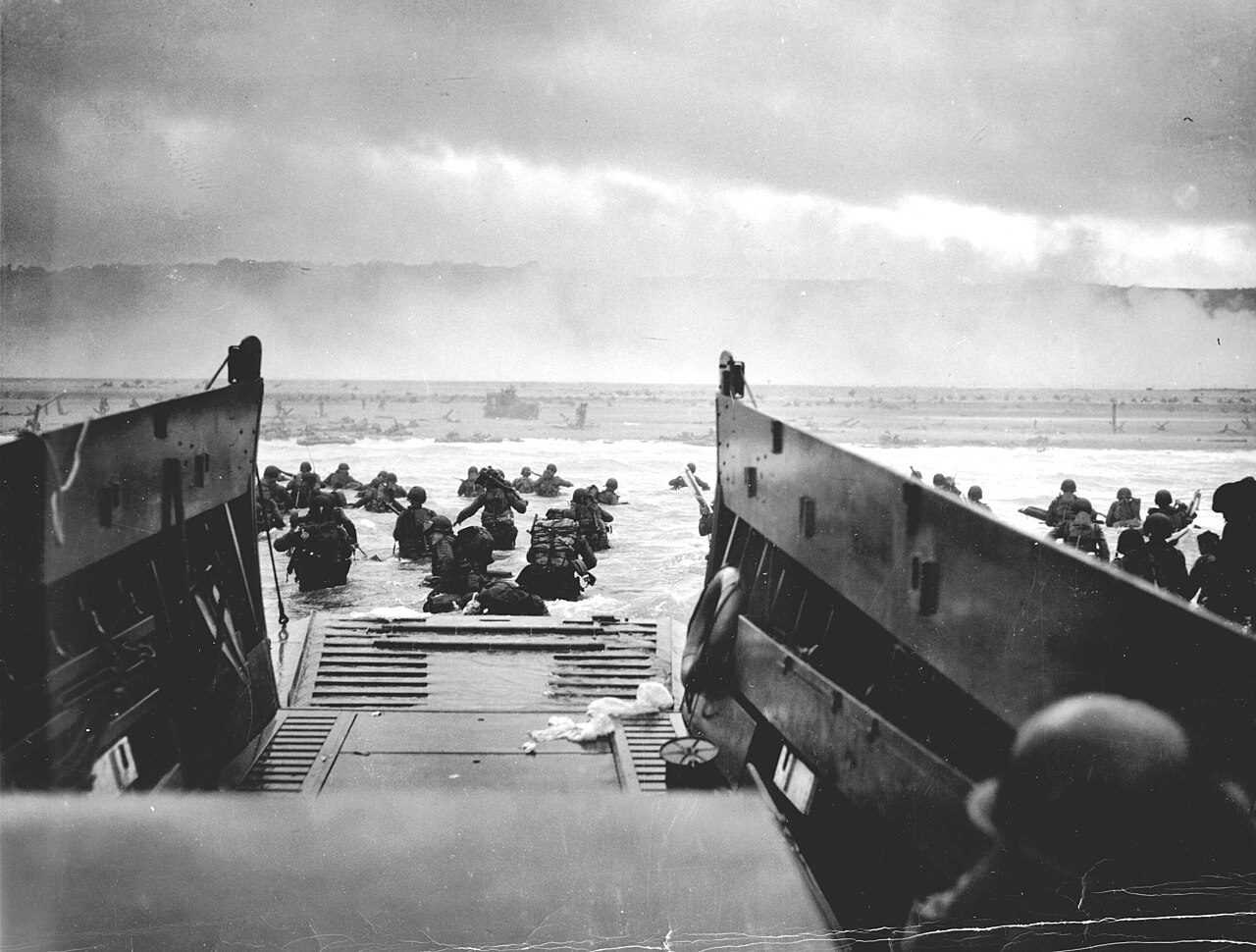
On 6 June 1944, D-Day, Allied forces landed in Normandy and opened the long-demanded second front in western Europe; Paris was liberated in August. Germany's last offensive in the west, in the Ardennes that winter, failed. Soviet forces reached Berlin in April 1945, Hitler killed himself on 30 April, and the war in Europe ended on 8 May.
In the Pacific, American island-hopping and the firebombing of Japanese cities preceded the atomic bombings of Hiroshima on 6 August and Nagasaki on 9 August 1945, and the Soviet Union's entry into the war against Japan. Japan signed the instrument of surrender aboard the USS Missouri on 2 September 1945, and the war was over.
The Holocaust
Alongside the fighting, Nazi Germany carried out the Holocaust: the systematic, state-sponsored genocide of Europe's Jews. The United States Holocaust Memorial Museum records that the Nazis and their allies and collaborators killed six million Jewish people, a figure calculated from surviving Nazi documents and prewar and postwar demographic data.
Millions of others were also murdered by the Nazi regime and its partners, among them Roma, Soviet prisoners of war, Polish and other Slavic civilians, people with disabilities and political opponents. In 1941, Britannica notes, the regime unleashed a war of extermination against Jews, Slavs and others its ideology deemed inferior. The camps liberated in 1945 revealed the scale of the killing to the world.
Timeline
- 1 September 1939
Germany invades Poland; Britain and France declare war two days later.
- April-June 1940
Germany overruns Denmark, Norway, the Low Countries and France.
- 22 June 1941
Operation Barbarossa: Germany invades the Soviet Union.
- 7 December 1941
Japan attacks Pearl Harbor; the United States enters the war.
- 3-6 June 1942
Battle of Midway: the US Navy destroys Japan's first-line carrier force.
- 23 October-11 November 1942
Second Battle of El Alamein: the Axis advance in Egypt is broken.
- 2 February 1943
The German Sixth Army surrenders at Stalingrad.
- 6 June 1944
D-Day: Allied forces land in Normandy, France.
- 8 May 1945
Victory in Europe Day: the war in Europe ends after Hitler's suicide on 30 April.
- 6 and 9 August 1945
Atomic bombs are dropped on Hiroshima and Nagasaki.
- 2 September 1945
Japan signs its formal surrender aboard USS Missouri in Tokyo Bay.
Significance
The war redrew the map and the balance of power. Soviet power extended into eastern Europe, a communist movement eventually took power in China, and, as Britannica puts it, world power shifted decisively away from the states of western Europe toward the United States and the Soviet Union. The five principal Allies - America, the Soviet Union, Britain, France and China - became the five permanent members of the new United Nations Security Council.
Questions readers ask
When did the war really start? The conventional date is 1 September 1939, but Japan had invaded Manchuria in 1931 and China in 1937, and many historians argue the Asian war that merged into the world war began then. The 1939 date marks when the European conflict began and the major European powers entered.
How many people died? No exact figure exists. Britannica gives estimates ranging from 35 million to 60 million, explaining that casualty statistics are inexact; the Soviet Union and China are believed to have suffered the most deaths. What is not in dispute is that it was the bloodiest conflict in history, and that civilians made up a huge share of the dead.
Why did the United States join? America had supplied the Allies and fought an undeclared naval war in the Atlantic through 1941, but it formally entered only after Japan's attack on Pearl Harbor on 7 December 1941 brought a declaration of war against Japan; Germany then declared war on the United States on 11 December.
Legacy
The United Nations was founded in 1945 to prevent another such war, and the Nuremberg trials established that leaders could be held personally responsible for aggression and crimes against humanity. The wartime alliance collapsed into the Cold War rivalry between the United States and the Soviet Union, while the weakening of the European empires accelerated decolonisation across Asia and Africa in the decades that followed. The war's memory - and the Holocaust's - still shapes international law and politics today.
Sources
- Encyclopaedia Britannica — World War II
- United States Holocaust Memorial Museum — Documenting Numbers of Victims of the Holocaust and Nazi Persecution
- Imperial War Museums — A 5-Minute History of the Second Battle of El Alamein
- National WWII Museum — D-Day and the Normandy Campaign
The facts on this page were checked against these sources on 19 November 2026. The History Trail's permanent pages are researched and written for this site; the live profiles elsewhere on The History Trail are assembled automatically from Wikipedia and Wikidata.
About the Author
Researched and written by the The History Trail Editorial Team — the accountable editorial function behind this site's permanent story pages. The team works from the published sources cited on each page; it does not invent historians, reviewers or credentials, and it corrects errors openly.
Fact Check
Every load-bearing fact on this page traces to one of the sources listed above, and significant claims link to their source in the text. Our checking method is described on the methodology page; errors can be reported via the corrections page.
Sources & Citations
Cite this page as: The History Trail Editorial Team, The History Trail — this article's title, publication and update dates are shown beneath its headline. The full source list appears under Sources above; the site's source standards are on the sources page.