
People
Charlie Chaplin
Charlie Chaplin (16 April 1889 - 25 December 1977) was a London-born comic actor and filmmaker who rose from workhouse poverty to become the most famous screen performer in the world as the Little Tramp. He co-founded United Artists in 1919, defied the talkies with City Lights and Modern Times, satirised Hitler in The Great Dictator, and was exiled from America in 1952 before returning in 1972 for an honorary Oscar.
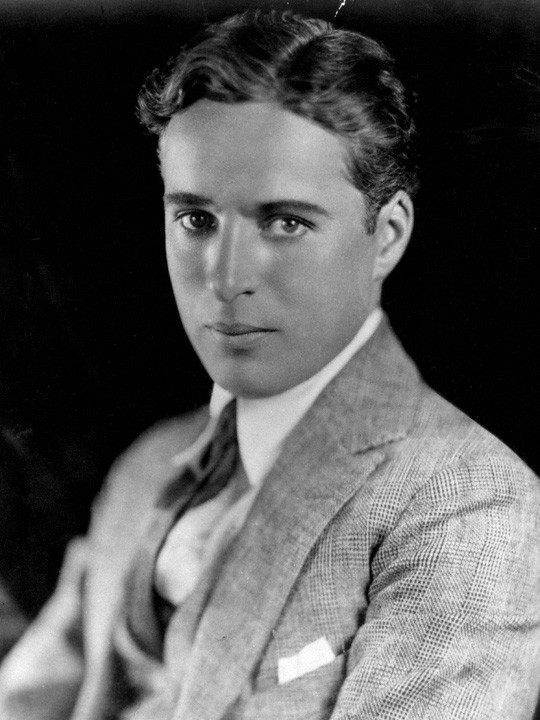
At a Glance
- Born
- 16 April 1889, London, England - the date and place Chaplin himself gave; no official birth record has ever been found
- Died
- 25 December 1977, Corsier-sur-Vevey, Switzerland, aged 88
- Childhood
- Son of music-hall performers; sent to Lambeth Workhouse twice before the age of nine; his mother was later committed to an asylum
- The Tramp
- First seen on screen in Kid Auto Races at Venice (1914), in bowler hat, cane, oversized shoes and toothbrush moustache
- United Artists
- Co-founded in 1919 with Mary Pickford, Douglas Fairbanks and D. W. Griffith, giving Chaplin control over his own films
- The great films
- The Gold Rush (1925), City Lights (1931), Modern Times (1936) and The Great Dictator (1940), his first full talkie
- Exile and return
- Barred from re-entering the United States in 1952 amid accusations of communist sympathies; settled in Switzerland; returned in 1972 to accept an honorary Academy Award
Introduction
Chaplin was born, by his own account, on 16 April 1889 in Walworth, south London, and no official record of that birth has ever been found. What is documented is the poverty that followed. Both his parents were music-hall entertainers; his father drifted away and died young, his mother Hannah struggled to feed her sons, and the boy was sent to Lambeth Workhouse twice before he was nine.
From that beginning Chaplin built the first truly global film stardom. The character who carried him there - a wistful vagrant in a bowler hat and oversized shoes - was understood in every country on earth without a word of dialogue, and Chaplin wrote, directed, produced, edited, starred in and eventually composed the music for most of his films. Britannica calls him the greatest comic artist of the screen; the workhouse boy had become, for a time, the most famous man alive.
Poverty, the Workhouse and the Music Hall
Chaplin made his stage debut at five, filling in when his mother's voice failed mid-song - an anecdote he told himself, and one consistent with the music-hall world both parents inhabited. By eight he was a professional, touring with the Eight Lancashire Lads clog-dancing troupe in 1899 and 1900. His father died in 1901; in 1903, when Chaplin was fourteen, his mother was committed to a mental asylum, and the brothers Charlie and Sydney were left to fend for themselves.
The stage was his schooling. In 1908 he joined Fred Karno's pantomime troupe and rose to star status as the Drunk in A Night in an English Music Hall. Karno's tours took him to America in 1910-1912 and again in 1913, when Mack Sennett of Keystone Studios signed him to a film contract. He arrived in Los Angeles that December, a comedian of twenty-four with no experience of the camera.
Keystone, the Tramp and the Road to United Artists
Chaplin's first film, Making a Living (1914), was unremarkable. His second changed everything. For Kid Auto Races at Venice, released in February 1914, he assembled a costume - too-small coat, too-large trousers, floppy shoes, battered derby hat, cane and toothbrush moustache - and the Little Tramp appeared. Britannica describes his 35 Keystone comedies of that year as the Tramp's gestation period, during which a caricature became a character: shunned by polite society, unlucky in love, but ever a survivor.
At Essanay in 1915, in The Tramp, the character gained the pathos that became Chaplin's signature; at Mutual in 1916-1917 he made twelve shorts, including The Immigrant (1917), now preserved in the Library of Congress National Film Registry. In 1919, determined to control his own work, he co-founded the distribution company United Artists with Mary Pickford, Douglas Fairbanks and D. W. Griffith. His first feature-length film, The Kid (1921), made the Tramp a father figure; The Gold Rush (1925) he regarded as the film by which he most wanted to be remembered.
Timeline
- 16 April 1889
Charles Spencer Chaplin is born in London, by his own account at East Street, Walworth; no official birth record survives.
- 1896-1898
Sent to Lambeth Workhouse twice before the age of nine as his mother struggles to support the family.
- 1908
Joins Fred Karno's pantomime troupe and rises to star status as the Drunk in A Night in an English Music Hall.
- February 1914
The Tramp appears on screen for the first time in Keystone's Kid Auto Races at Venice.
- 1915-1917
At Essanay and then Mutual, Chaplin deepens the Tramp in films including The Tramp (1915) and The Immigrant (1917).
- 1919
Co-founds United Artists with Mary Pickford, Douglas Fairbanks and D. W. Griffith.
- 1925
The Gold Rush, his Klondike comedy, becomes one of the defining films of the silent era.
- 1931
City Lights, a silent film with synchronised score, triumphs four years into the talkie era.
- 1936
Modern Times satirises the machine age; the Tramp is heard singing, in gibberish, for the first and last time.
- 1940
The Great Dictator, his first full sound film, satirises Adolf Hitler while Europe is at war.
- 1952
Sailing to London for the premiere of Limelight, Chaplin learns his United States re-entry permit has been revoked; he settles in Switzerland.
- 1972
Returns to the United States after twenty years to receive an honorary Academy Award.
- 25 December 1977
Dies at his home, the Manoir de Ban at Corsier-sur-Vevey, Switzerland, aged 88.
Sound, Politics and Exile
Chaplin resisted sound longer than any major filmmaker. City Lights (1931) was released four years after The Jazz Singer and has a synchronised score and effects but no spoken dialogue; the Library of Congress essay on the film calls it an act of defiance, and its closing scene, in which the blind flower girl recognises the Tramp by touch, remains a benchmark of screen acting. Modern Times (1936) pushed the Tramp into the Depression-era factory, and only there did audiences hear his voice, singing a nonsense song. His first true talkie, The Great Dictator (1940), cast him as both a Jewish barber and the dictator Adenoid Hynkel, and ended with a direct speech against tyranny.
After the war his politics drew sustained attack in America: he was accused of communist sympathies, investigated by the FBI, and subpoenaed by the House Un-American Activities Committee in 1947, though his hearing was repeatedly postponed and never held. In September 1952, sailing to London for the premiere of Limelight, he learned that his re-entry permit had been revoked. He settled with his wife Oona at Corsier-sur-Vevey in Switzerland, made two further films in Europe, published My Autobiography in 1964, and was knighted in 1975.
Significance
Chaplin's significance is that he proved a single performer could be a complete filmmaker and a worldwide language at once. The Smithsonian's National Portrait Gallery notes that by the 1920s, having formed United Artists, he was directing and writing his own films - an independence few stars have matched since. The Library of Congress has selected a run of his films, from The Immigrant to The Great Dictator, for the National Film Registry. His comedy fused slapstick with sentiment and social criticism, and the Tramp's silhouette became one of the most reproduced images of the twentieth century.
Myths and disputes
The missing birth record is documented fact, not legend, and it should be stated precisely. In 1952, at the FBI's request, Britain's MI5 searched for evidence of Chaplin's birth and background. Its file, released by the National Archives in 2012, records that officers found no trace of his birth in the registers at Somerset House under the names Chaplin, Thornstein or Harley, his mother's stage name, and that French records, checked against a rumour that he was born at Fontainebleau, also drew a blank. MI5 concluded that he was either not born in Britain or was born under another name, while noting that the gap was of no security significance. The 1891 census does record the two-year-old Charles Chaplin living in south London with his mother and brother, so a London childhood is documented even though the birth itself is not.
The rumour that fed the search - that Chaplin's real name was Israel Thornstein and that he was a foreign-born communist agent - was never supported by evidence: MI5 found no evidence for the name, and by 1958 had concluded he was not a security risk, describing him as at most a progressive or radical sympathiser. Other claims about his origins, including Romani ancestry suggested by a letter found among his papers, rest on single documents rather than records and are presented here as disputed claims, not facts. The films themselves, restored by the BFI, the Cineteca di Bologna and the Chaplin Archive, are the firmest biography he left.
Legacy
In April 1972 Chaplin returned to America after twenty years and received an honorary Academy Award, in the Academy's words as Britannica records them, for 'the incalculable effect he has had on making motion pictures the art form of this century'. His Swiss home is now the Chaplin's World museum, his papers form the Charlie Chaplin Archive catalogued by the Cineteca di Bologna, and the Tramp still walks - down the road at the end of Modern Times, and through every history of film since.
Sources
- Encyclopaedia Britannica - Charlie Chaplin
- British Film Institute - Charlie Chaplin: Archive Holdings (BFI National Archive)
- Smithsonian National Portrait Gallery - Charlie Chaplin
- Library of Congress, National Film Registry - City Lights (essay by Jeffrey Vance)
- Charlie Chaplin Archive - The Charlie Chaplin Archive (Cineteca di Bologna / Association Chaplin)
- Turner Classic Movies - Charlie Chaplin
The facts on this page were checked against these sources on 19 November 2026. The History Trail's permanent pages are researched and written for this site; the live profiles elsewhere on The History Trail are assembled automatically from Wikipedia and Wikidata.
About the Author
Researched and written by the The History Trail Editorial Team — the accountable editorial function behind this site's permanent story pages. The team works from the published sources cited on each page; it does not invent historians, reviewers or credentials, and it corrects errors openly.
Fact Check
Every load-bearing fact on this page traces to one of the sources listed above, and significant claims link to their source in the text. Our checking method is described on the methodology page; errors can be reported via the corrections page.
Sources & Citations
Cite this page as: The History Trail Editorial Team, The History Trail — this article's title, publication and update dates are shown beneath its headline. The full source list appears under Sources above; the site's source standards are on the sources page.