
On This Day
June 4 in History
On 4 June 1942 the Battle of Midway began in the Pacific, six months after Pearl Harbor; over the following days the United States Navy destroyed four Japanese aircraft carriers and seized the initiative in the Pacific War. June 4 is also the day the Dunkirk evacuation ended, Congress passed the Nineteenth Amendment, and the first shopping carts appeared in an Oklahoma store.
Choose another date: open the On This Day calendar to browse events, births and deaths for any day of the year.
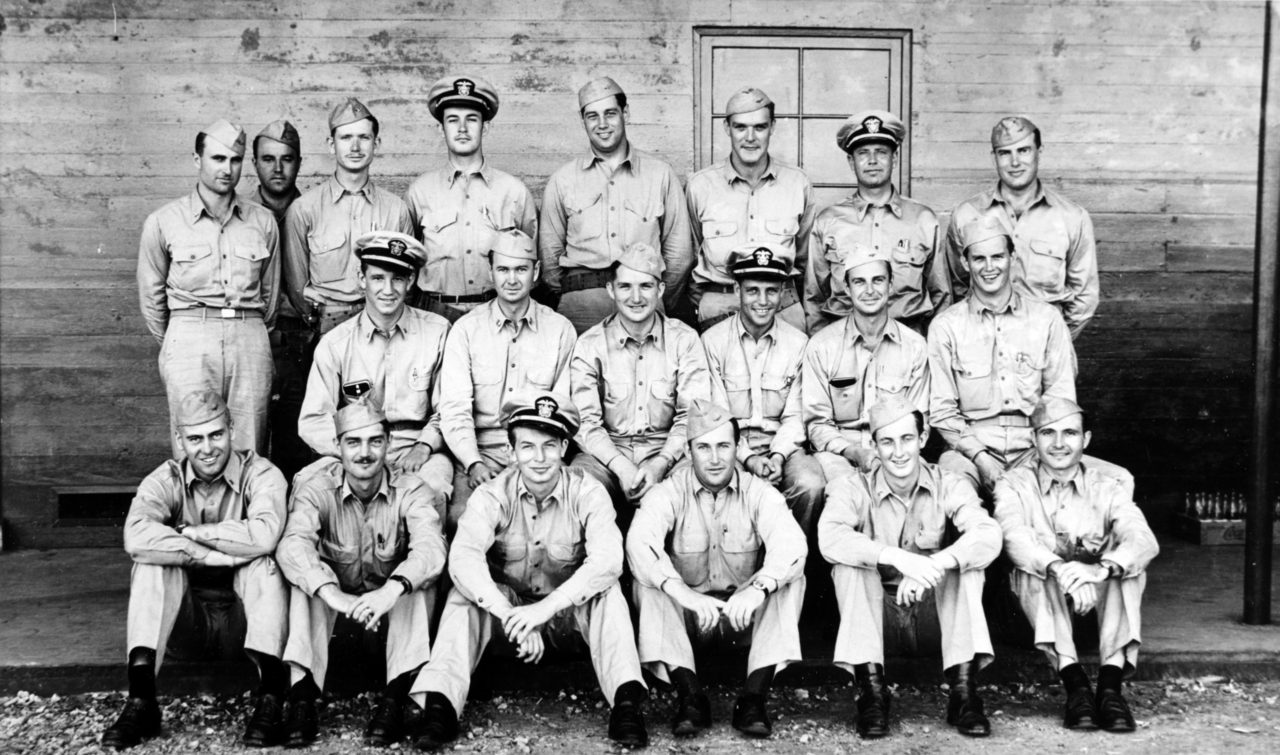
At a Glance
- Dates
- 4–7 June 1942, around Midway Atoll in the North Pacific
- Japanese losses
- Four fleet carriers — Akagi, Kaga, Sōryū and Hiryū — a heavy cruiser, more than 200 aircraft and an estimated 3,000 men
- American losses
- The carrier Yorktown and the destroyer Hammann; about 300 men
- The intelligence edge
- US codebreakers had partly broken the Japanese naval code and confirmed Midway as the target, codenamed 'AF'
- The commanders
- Chester Nimitz in overall command; Raymond Spruance and Frank Jack Fletcher at sea; Isoroku Yamamoto for Japan
- The verdict
- The turning point of the Pacific War: Japan never regained the strategic initiative
Events on this day
- 1783The Montgolfier brothers give the first public demonstration of their hot-air balloon at Annonay, France; the unmanned balloon rises about a kilometre.
- 1913Suffragette Emily Davison steps in front of the king's horse at the Derby at Epsom and is fatally injured, dying four days later.
- 1919The United States Congress passes the Nineteenth Amendment, guaranteeing women the vote; it went to the states and was ratified the following year.
- 1937The first shopping carts are introduced, at a Humpty Dumpty supermarket in Oklahoma City, invented by the store's owner, Sylvan Goldman.
- 1940The Dunkirk evacuation ends, having rescued some 338,000 Allied troops from France; Churchill delivers his 'we shall fight on the beaches' speech the same day.
- 1942The Battle of Midway begins in the Pacific — the featured story above.
- 1944An American task force captures the German submarine U-505 off West Africa, the first US Navy capture of an enemy vessel at sea since the War of 1812.
- 1970Tonga becomes independent from the United Kingdom, ending 70 years as a British protected state.
- 1984Bruce Springsteen releases the album Born in the U.S.A., which becomes one of the best-selling records of the decade.
- 1989An explosion of leaking gas from a pipeline destroys two trains in the Soviet Union near Ufa, killing, by the official estimate, 575 people.
Born on this day
- 1738George III — king of Great Britain and Ireland through the American Revolution and the Napoleonic Wars.
- 1833Garnet Wolseley — British field marshal, the Victorian army's model of the modern general.
- 1936Bruce Dern — American actor of Nebraska, Coming Home and The Hateful Eight.
- 1975Angelina Jolie — American actress and humanitarian, star of Lara Croft and Maleficent.
Died on this day
- 1798Giacomo Casanova — Venetian adventurer and memoirist, whose autobiography became the record of 18th-century libertine Europe.
- 1941Wilhelm II — the last German emperor, dead in exile at Doorn in the Netherlands, aged 82, 23 years after his abdication.
- 1942Reinhard Heydrich — senior Nazi SS official and a chief architect of the Holocaust, dead in Prague of wounds from an assassination attempt a week earlier.
- 2010John Wooden — American basketball coach who led UCLA to ten national championships, dead at 99.
The featured story: the Battle of Midway begins, 4 June 1942
Midway was an ambush, and the Japanese sailed into it blind. Six months after Pearl Harbor, Admiral Isoroku Yamamoto planned to seize Midway Atoll, the American outpost northwest of Hawaii, and to destroy the US Pacific Fleet's carriers when they came to its defence. What he did not know was that American codebreakers at Station HYPO in Hawaii, led by Commander Joseph Rochefort, had broken enough of the Japanese naval code to read the plan — and had confirmed the target, codenamed 'AF', by arranging for Midway to report, in the clear, that its water plant had failed. Japan obligingly signalled that AF was short of water.
Admiral Chester Nimitz therefore placed his three carriers — Enterprise, Hornet and a Yorktown patched together in roughly three days after her mauling at the Coral Sea — northeast of Midway, out of sight, and waited. On the morning of 4 June, Japanese aircraft struck Midway's airfield while their four fleet carriers, Akagi, Kaga, Sōryū and Hiryū, prepared a second strike. American torpedo bombers from the carriers attacked in waves and were slaughtered — Torpedo Squadron 8 lost every one of its fifteen aircraft — but their sacrifice dragged the Japanese fighter screen down to sea level and left the carriers' decks crowded with refuelling and rearming planes.
At about 10:20 that morning, dive-bombers from Enterprise and Yorktown arrived overhead almost unopposed. Within minutes Akagi, Kaga and Sōryū were burning wrecks. The surviving carrier, Hiryū, launched a counterstrike that crippled Yorktown, but American dive-bombers found and fatally hit Hiryū later the same day. Yorktown, under tow, was finished off by a Japanese submarine on 7 June. Japan had lost four fleet carriers, a heavy cruiser, more than 200 aircraft and, by common estimate, some 3,000 men; American losses were about 300.
Midway did not end the Pacific War — nearly three years of island fighting remained — but it ended Japan's ability to win it. The Imperial Navy never replaced the carriers or, still less, the veteran pilots lost on 4 June, and from that summer the initiative in the Pacific passed permanently to the United States. Historians routinely rank it among the most decisive naval battles ever fought: a victory built not on numbers, in which the Americans were outmatched, but on intelligence, timing and extraordinary courage at wavetop height.
Why this date matters
June 4 is dominated by contests decided by preparation meeting chance: suffrage carried through Congress, an army lifted off the Dunkirk beaches, and a fleet action won before it began, in a codebreaking office in Hawaii. The date's other entries are quieter firsts — a balloon rising over Annonay, a wire cart rolling through an Oklahoma supermarket — but they share the same character: somebody's patient groundwork becoming suddenly, publicly irreversible. Midway is the supreme example, a battle whose outcome was shaped as much by Rochefort's codebreakers and Pearl Harbor's shipwrights as by the pilots who flew into the flak.
Sources
- Encyclopaedia Britannica — On This Day: June 4
- HISTORY — What Happened on June 4
- Wikipedia — June 4
- Encyclopaedia Britannica — Battle of Midway
The facts on this page were checked against these sources on 19 November 2026. The History Trail's permanent pages are researched and written for this site; the live profiles elsewhere on The History Trail are assembled automatically from Wikipedia and Wikidata.
About the Author
Researched and written by the The History Trail Editorial Team — the accountable editorial function behind this site's permanent story pages. The team works from the published sources cited on each page; it does not invent historians, reviewers or credentials, and it corrects errors openly.
Fact Check
Every load-bearing fact on this page traces to one of the sources listed above, and significant claims link to their source in the text. Our checking method is described on the methodology page; errors can be reported via the corrections page.
Sources & Citations
Cite this page as: The History Trail Editorial Team, The History Trail — this article's title, publication and update dates are shown beneath its headline. The full source list appears under Sources above; the site's source standards are on the sources page.