
Years
1921 in History
1921 is remembered above all for the settlement — and the wound — of 6 December, when British and Irish negotiators signed the Anglo-Irish Treaty in London, creating the Irish Free State and partitioning Ireland. It was also the year the Chinese Communist Party held its first congress in Shanghai, white mobs destroyed the Black neighbourhood of Greenwood in Tulsa, and America dedicated its Tomb of the Unknown Soldier, three years to the day after the armistice.
At a Glance
- Defining event
- The Anglo-Irish Treaty, signed in London on 6 December, creates the Irish Free State and partitions Ireland
- Science honour
- Albert Einstein's Nobel Prize in Physics — the 1921 prize, reserved that year and received by him in 1922, for the photoelectric effect
- Atrocity
- The Tulsa race massacre, from 31 May: Greenwood destroyed, as many as 300 people killed
- Founding
- First Congress of the Chinese Communist Party opens in Shanghai, 23 July
- Remembrance
- Tomb of the Unknown Soldier dedicated at Arlington, 11 November, exactly three years after the armistice
- Turning point
- Franklin D. Roosevelt is stricken with polio at Campobello Island, 10 August
The defining story: a treaty that divided an island
Three years after the First World War ended, 1921 was a year of settlements — of victors and survivors trying to convert the war's upheavals into new political facts. In Ireland, the war of independence between Irish republicans and British forces had ground toward exhaustion, and in the autumn Irish and British negotiators faced each other in London. What they produced, in the early hours of 6 December, was the Anglo-Irish Treaty: an Irish Free State with dominion status inside the British Empire, and a border that partitioned the island, leaving the north-east under British rule.
The treaty solved one war and seeded another. It split Sinn Féin, the movement that had negotiated it, between those who accepted the settlement as the best obtainable and those who saw dominion status and partition as betrayals of the republic declared in 1919. Within months Ireland was in civil war. The line drawn in 1921, meanwhile, hardened into one of the most durable and contested borders in Europe, and the Free State became the foundation on which the later Irish republic was built.
The year's other founding happened quietly, in Shanghai, on 23 July, when the First Congress of the Chinese Communist Party opened — a small meeting of a small party that, twenty-six years later, would rule China. In the United States the year carried both a wound and a reckoning with the last war: on 31 May the Tulsa race massacre began in Oklahoma, as white mobs destroyed Greenwood, the prosperous Black neighbourhood known for its businesses, killing as many as 300 people; and on 24 October, at Châlons-sur-Marne in France, an American officer selected the body that would become America's Unknown Soldier, chosen from the war's unidentified dead.
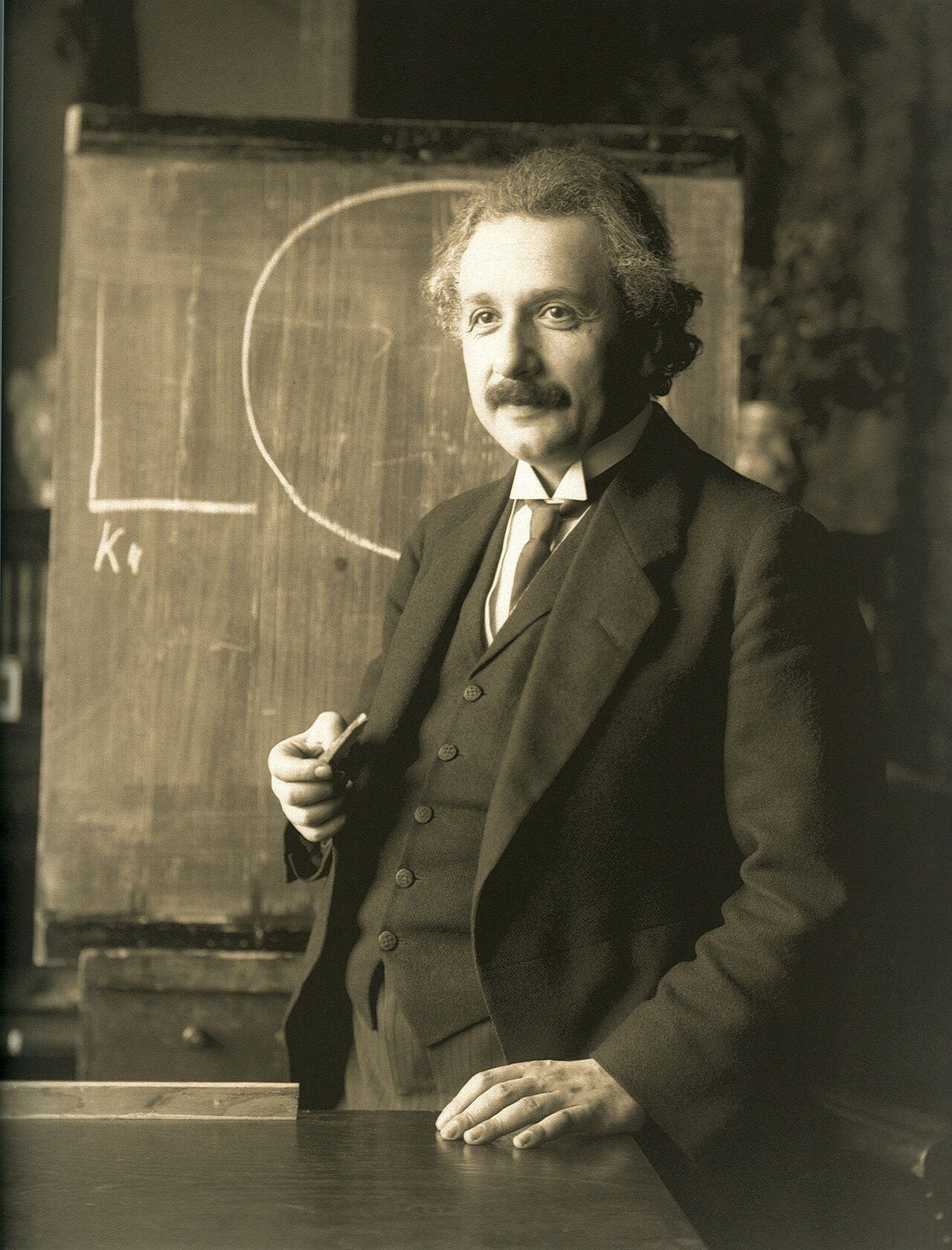
On 11 November, exactly three years after the armistice, that soldier was laid in the Tomb of the Unknown Soldier at Arlington National Cemetery, the new republic of remembrance taking its place beside the older settlements. And in science, the year's most famous name was being photographed in Vienna: Albert Einstein, whose 1921 Nobel Prize in Physics was reserved by the committee that year and handed to him in 1922 — an honour that, when it came, cited his work on the photoelectric effect rather than the relativity that had made him the most famous scientist alive.
Timeline of 1921
- 2 January
A church service from Pittsburgh's Calvary Episcopal Church is broadcast by station KDKA — the first religious service carried on radio.
- 4 February
Betty Friedan is born — the American writer whose book The Feminine Mystique (1963) helped launch modern feminism.
- 2 May
Satyajit Ray is born — the Bengali film director whose Apu Trilogy brought Indian cinema to world attention.
- 21 May
Andrei Sakharov is born — the Soviet physicist who helped build the hydrogen bomb and later won the Nobel Peace Prize as a dissident.
- 31 May
The Tulsa race massacre begins in Oklahoma; white mobs destroy the prosperous Black neighbourhood of Greenwood, killing as many as 300 people.
- 18 July
John Glenn is born — the American astronaut who became the first American to orbit the Earth, and later a United States senator.
- 23 July
The First Congress of the Chinese Communist Party opens in Shanghai, the founding meeting of the party that would rule China from 1949.
- 10 August
Franklin D. Roosevelt is stricken with polio at Campobello Island, the illness that leaves him unable to walk unaided for the rest of his life.
- 11 August
Alex Haley is born — the American author of Roots, the family saga that traced his ancestry from West Africa through slavery to freedom.
- 21 September
A storage silo explodes at Oppau in Germany; an estimated 500 to 600 people are killed in one of the worst industrial disasters of the age.
- 24 October
At Châlons-sur-Marne in France, an American officer selects the body that will become America's Unknown Soldier.
- 11 November
The Tomb of the Unknown Soldier is dedicated at Arlington National Cemetery, exactly three years after the armistice.
- 6 December
British and Irish negotiators sign the Anglo-Irish Treaty in London, creating the Irish Free State and partitioning Ireland.
Why 1921 still matters
The Anglo-Irish Treaty matters because its compromises outlived everyone who signed it. Partition, intended as a settlement, became a standing fact of Irish and British life for a century, and the Free State it created was the vessel through which Ireland moved, step by step, toward full independence. The argument it started inside Sinn Féin — pragmatists against purists — became the template for the politics of the new state, and the civil war it triggered within months marked Irish memory as deeply as the war against Britain had.
The year's quieter foundings proved just as long-lived. The party founded in Shanghai in July 1921 went on to rule the world's most populous country, and the unknown soldier dedicated at Arlington in November became the model of national remembrance — an anonymous grave standing for every unidentified dead. Even its disasters left permanent marks: Tulsa, long half-buried in American memory, became a byword for the violence that underlay the era's prosperity, and the Oppau explosion, which killed an estimated 500 to 600 people, stood among the worst industrial disasters of the age.
And the man in this year's photograph embodies its double character. Einstein in 1921 was science's new public face, touring and lecturing to crowds no earlier physicist had drawn — yet his Nobel Prize, reserved that year and received in 1922, honoured not relativity but the photoelectric effect. The year that redrew Ireland and founded a party in Shanghai also certified, belatedly and for the 'wrong' discovery, the century's most famous scientist.
1921 on The History Trail
Ireland's treaty dominates this year on The History Trail, alongside the foundings and reckonings of a world settling its war.
- December 6 in History — The day the Anglo-Irish Treaty was signed in London in 1921 — and Finland declared independence in 1917.
- July 23 in History — The Chinese Communist Party holds its first congress in Shanghai in 1921.
- May 31 in History — The Tulsa race massacre begins in 1921, on the date of the Johnstown Flood of 1889.
- November 11 in History — The Tomb of the Unknown Soldier is dedicated at Arlington in 1921, three years after the armistice.
- Albert Einstein — The patent clerk who rebuilt physics — photographed in Vienna in his Nobel year, 1921.
- Treaty of Versailles — The 1919 settlement whose unfinished business the treaties of 1921 inherited.
Sources
- Encyclopaedia Britannica — On This Day: December 6
- Encyclopaedia Britannica — On This Day: July 23
- Encyclopaedia Britannica — On This Day: May 31
- Encyclopaedia Britannica — On This Day: November 11
- HISTORY — What Happened on August 10
- Encyclopaedia Britannica — On This Day: October 24
The facts on this page were checked against these sources on 19 November 2026. The History Trail's permanent pages are researched and written for this site; the live profiles elsewhere on The History Trail are assembled automatically from Wikipedia and Wikidata.
About the Author
Researched and written by the The History Trail Editorial Team — the accountable editorial function behind this site's permanent story pages. The team works from the published sources cited on each page; it does not invent historians, reviewers or credentials, and it corrects errors openly.
Fact Check
Every load-bearing fact on this page traces to one of the sources listed above, and significant claims link to their source in the text. Our checking method is described on the methodology page; errors can be reported via the corrections page.
Sources & Citations
Cite this page as: The History Trail Editorial Team, The History Trail — this article's title, publication and update dates are shown beneath its headline. The full source list appears under Sources above; the site's source standards are on the sources page.