
Years
1910 in History
1910 is remembered as the year the old order began to fall: Edward VII died in May, Portugal's monarchy was overthrown in October, and in November Francisco Madero's call for revolt launched the Mexican Revolution. In America's Northwest, the Big Blowup of August burned about three million acres in two days and locked in a century of fire suppression.
At a Glance
- Defining event
- Francisco Madero calls for revolt against Porfirio Díaz on 20 November 1910, launching the Mexican Revolution
- Era ends
- Edward VII dies on 6 May; his son succeeds as George V
- Monarchy falls
- Revolution in Lisbon overthrows the Portuguese monarchy on 4 October; a republic is proclaimed the next day
- Fire of the century
- The Big Blowup, 20–21 August: fires burn about 3 million acres in Montana, Idaho and Washington and kill 86 people
- New state
- The Union of South Africa is established on 31 May, uniting the Cape, Natal, Transvaal and Orange River colonies
- Died this year
- Florence Nightingale (13 August, aged 90) and Leo Tolstoy (20 November, aged 82)
The defining story: crowns fall, a revolution is called
The year opened its account of endings in May. On 6 May Edward VII died, aged 68, and his son succeeded as George V — the second change of monarch in a decade for Britain, and the end of the Edwardian age whose name the dead king had supplied. On 31 May the map was redrawn in the south: the Union of South Africa was established, uniting the British colonies of the Cape, Natal, Transvaal and Orange River into a single state — the settlement of the Boer War's questions, on terms whose exclusions would govern South African life for the rest of the century.
Autumn removed a crown outright. On 4 October revolution in Lisbon overthrew the Portuguese monarchy; a republic was proclaimed the following day. Seven weeks later, on 20 November, Francisco Madero called for revolt against Porfirio Díaz, launching the Mexican Revolution — a rising against a dictator's long rule that became a decade of upheaval and remade Mexico. The same day, in Russia, Leo Tolstoy died at a railway station at 82, the novelist of War and Peace ending his life as a fugitive from his own household: the old world's greatest writer and its newest revolution share a date.
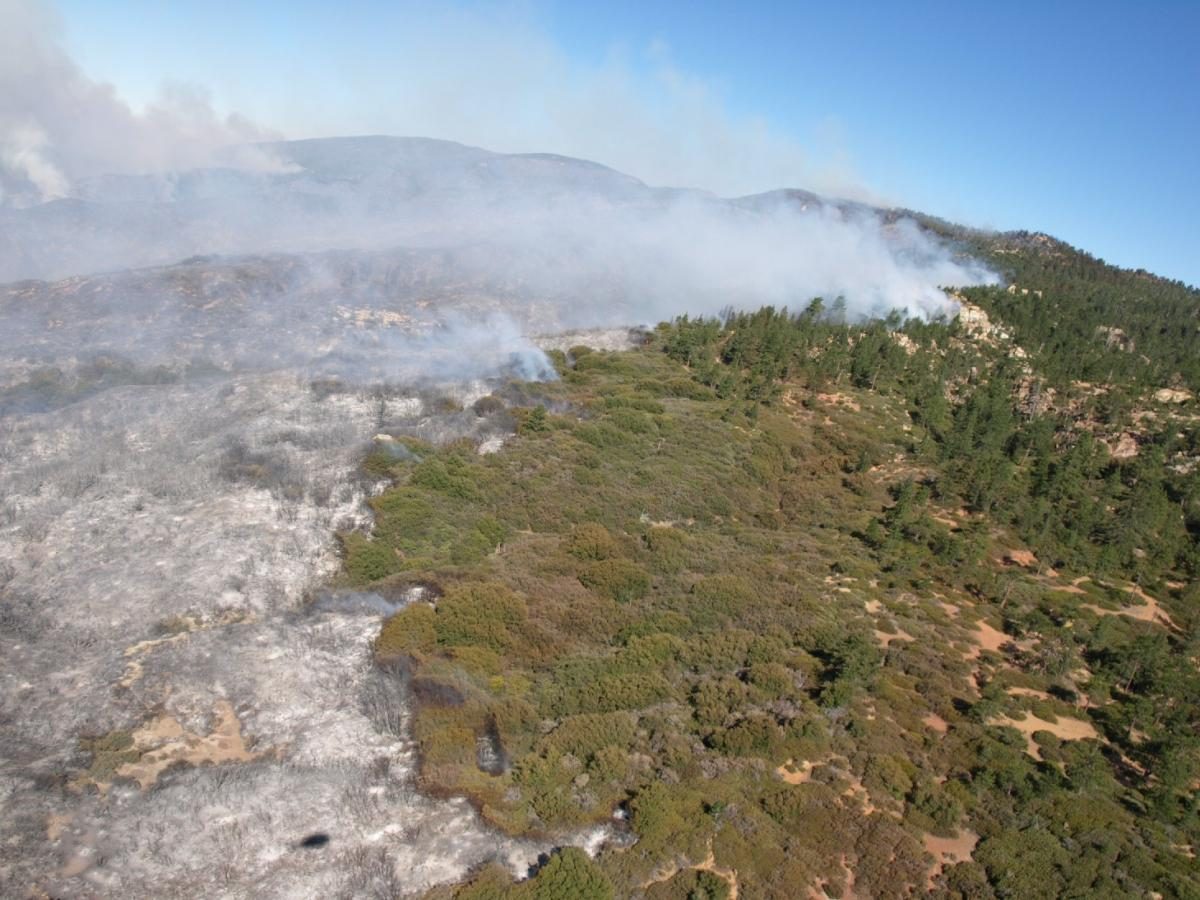
Nature, meanwhile, staged the year's most consequential American disaster. On 20–21 August 1910 the Big Blowup burned about 3 million acres in Montana, Idaho and Washington in two days and killed 86 people. The fires' effect outlasted the smoke: as The History Trail's wildfire record tells it, the men who fought the 1910 fires ran the United States Forest Service for the next two decades and instituted total suppression as doctrine — the agency opposed even the light burning ranchers practised, and built the lookout towers and cooperative firefighting system of a century that tried to abolish fire from forests adapted to it.
The year's novelties were gentler and stranger. On 19 May Earth passed through the tail of Halley's Comet, an event preceded by worldwide alarm and brisk sales of 'comet pills'. On 28 March Henri Fabre had made the first flight of a seaplane, taking off from the water at Martigues in France; on 11 October Theodore Roosevelt became the first United States president, sitting or former, to fly in an aeroplane; and on 14 November Eugene Ely made the first aeroplane take-off from a ship, flying off a platform on USS Birmingham. Flight, seven years old, was learning to leave from water and from warships.
Timeline of 1910
- 21 January
Angel Island, the 'Ellis Island of the West', opens in San Francisco Bay as the main entry station for Asian immigrants to America.
- 1 March
An avalanche sweeps two trains into a canyon at Wellington, Washington, killing 96 people — the deadliest avalanche in American history.
- 28 March
Henri Fabre makes the first flight of a seaplane, taking off from the water at Martigues in France.
- 6 May
Edward VII dies at 68; his son succeeds as George V.
- 19 May
Earth passes through the tail of Halley's Comet, amid worldwide alarm and brisk sales of 'comet pills'.
- 31 May
The Union of South Africa is established, uniting the Cape, Natal, Transvaal and Orange River colonies.
- 19 June
The first Father's Day is celebrated, in Spokane, Washington, at the urging of Sonora Smart Dodd.
- 25 June
Stravinsky's ballet The Firebird is premiered in Paris by Diaghilev's Ballets Russes, making the young composer's name.
- 20 August
The Big Blowup begins: fires burn about 3 million acres in Montana, Idaho and Washington in two days, killing 86 people.
- 26 August
Mother Teresa, founder of the Missionaries of Charity and Nobel Peace Prize laureate, is born.
- 4 October
Revolution in Lisbon overthrows the Portuguese monarchy; a republic is proclaimed the following day.
- 20 November
Francisco Madero calls for revolt against Porfirio Díaz, launching the Mexican Revolution; Tolstoy dies the same day.
Why 1910 still matters
The Mexican Revolution was the twentieth century's first great social revolution, and it began with a call dated 20 November 1910. The upheaval it launched outlasted its makers and rewrote Mexico's land, labour and church settlements; its opening also marks the moment the century's revolutionary age began in earnest. Portugal's republic and South Africa's union belong to the same redistribution of sovereignty: crowns and colonies giving way, peacefully or otherwise, to republics and unions whose arguments are still running.
The Big Blowup's legacy is the quieter kind that governs landscapes. Total suppression, locked in as doctrine by the men of 1910, loaded many American forests with the fuel that a century of excluded fire had once kept low — the wildfire record's central argument is that modern fire science now works between the two facts the Blowup created: restoring good fire, and fighting the bad. A two-day fire in 1910 thus set the terms of every fire season since.
Even the year's deaths were hinges. Florence Nightingale, dead at 90 on 13 August, had founded modern nursing two generations earlier; William James died the same month as Nightingale; Tolstoy's death at a station in November closed Russian literature's great age. The generation that had defined the nineteenth century's conscience left the stage in a single year, just as the revolutions that would define the twentieth were called to order.
1910 on The History Trail
Revolutions and the Big Blowup lead this year on The History Trail, with a comet, a seaplane and a president in an aeroplane.
- November 20 in History — Madero calls for revolt, launching the Mexican Revolution, and Tolstoy dies.
- October 4 in History — Revolution in Lisbon overthrows the Portuguese monarchy.
- May 6 in History — Edward VII dies, and George V succeeds.
- May 19 in History — Earth passes through the tail of Halley's Comet.
- March 28 in History — Henri Fabre makes the first seaplane flight, at Martigues.
- October 11 in History — Theodore Roosevelt becomes the first president to fly in an aeroplane.
- Wildfire — Fire ecology, Indigenous burning and the 1910 Big Blowup that made suppression doctrine.
- Paris — The city where Stravinsky's Firebird premiered in June 1910.
Sources
- Encyclopaedia Britannica — On This Day: November 20
- Encyclopaedia Britannica — On This Day: October 4
- Encyclopaedia Britannica — On This Day: May 6
- Encyclopaedia Britannica — On This Day: May 19
- Encyclopaedia Britannica — On This Day: March 28
- Encyclopaedia Britannica — On This Day: October 11
- Encyclopaedia Britannica — On This Day: June 25
- HISTORY — This Day in History: May 31
The facts on this page were checked against these sources on 19 November 2026. The History Trail's permanent pages are researched and written for this site; the live profiles elsewhere on The History Trail are assembled automatically from Wikipedia and Wikidata.
About the Author
Researched and written by the The History Trail Editorial Team — the accountable editorial function behind this site's permanent story pages. The team works from the published sources cited on each page; it does not invent historians, reviewers or credentials, and it corrects errors openly.
Fact Check
Every load-bearing fact on this page traces to one of the sources listed above, and significant claims link to their source in the text. Our checking method is described on the methodology page; errors can be reported via the corrections page.
Sources & Citations
Cite this page as: The History Trail Editorial Team, The History Trail — this article's title, publication and update dates are shown beneath its headline. The full source list appears under Sources above; the site's source standards are on the sources page.