
Years
1888 in History
1888 is remembered as the Year of the Three Emperors: Wilhelm I died in March, Frederick III reigned only 99 days before throat cancer killed him in June, and Wilhelm II succeeded — the succession that set Germany's course to 1914. The same year Brazil abolished slavery, the last Western Hemisphere country to do so, George Eastman patented his roll-film camera and trademarked Kodak, and Vincent van Gogh's Arles year ended in the ear crisis of 23 December.
At a Glance
- Defining event
- The Year of the Three Emperors — Wilhelm I dies 9 March, Frederick III dies 15 June after 99 days
- Slavery ends in Brazil
- Lei Áurea abolishes slavery, 13 May — the last country in the Western Hemisphere to end it
- Photography for all
- George Eastman patents his roll-film camera and registers the trademark Kodak, 4 September
- Two blizzards
- Schoolchildren's Blizzard kills 235, 12 January; Great Blizzard kills more than 400, 11 March
- Arles crisis
- Van Gogh cuts off part of his own ear after an argument with Gauguin, 23 December
- A magazine begins
- National Geographic Society incorporated, 27 January; its magazine's first issue follows, 22 September
The defining story: three emperors, and an artist in Arles
The year opened in snow. On 12 January the Schoolchildren's Blizzard swept the American Great Plains, killing 235 people, many of them children caught on their way home from school. On 11 March the Great Blizzard of 1888 struck the U.S. East Coast, killing more than 400 people and dropping up to 55 inches of snow in places. Between the storms, on 27 January, the National Geographic Society was incorporated in Washington, D.C., 'for the increase and diffusion of geographic knowledge'; its magazine's first issue followed on 22 September.
Germany's year was a succession in fast motion. Wilhelm I, king of Prussia and the first German emperor, died in Berlin on 9 March. His son Frederick III succeeded already ill, and died of throat cancer on 15 June after a reign of only 99 days — leaving the empire to Wilhelm II. The Year of the Three Emperors, as the on-site records name it, replaced the empire's founding generation in a single spring, and with Frederick went the prospect of a more liberal German course.
Emancipation and photography marked the late year. On 13 May Brazil abolished slavery with the Lei Áurea, the Golden Law signed by Princess Isabel — the last country in the Western Hemisphere to end it. On 4 September George Eastman patented his roll-film camera and registered the trademark Kodak, putting photography within reach of anyone who could press a button. On 9 October the Washington Monument opened to the public, then the tallest structure in the world. In London, meanwhile, the Whitechapel murders ran their course: Mary Ann Nichols, the first of Jack the Ripper's five canonical victims, was found on 31 August, and Mary Jane Kelly, the last, was murdered on 9 November.
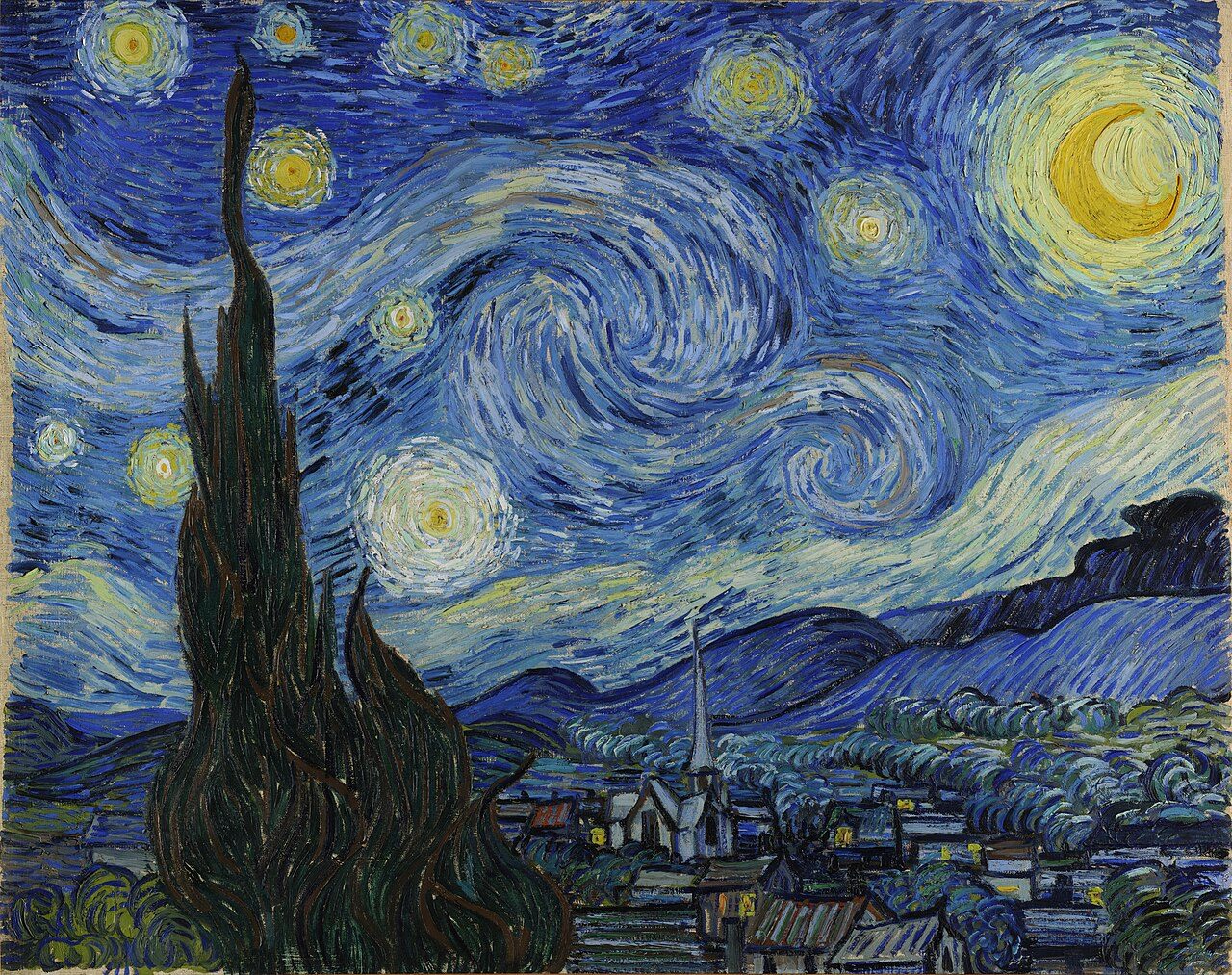
The year's artistic story belongs to Arles, in the south of France, where Vincent van Gogh had spent 1888 in the Yellow House, working and, from the autumn, sharing the house with Paul Gauguin in a partnership both men hoped would found an artists' colony. On 23 December, after a furious argument with Gauguin, Van Gogh cut off part of his own left ear — the crisis that ended their partnership in the Yellow House. His most famous painting belongs to the following year, not this one: The Starry Night was painted in June 1889, at Saint-Rémy, and its caption on this page dates it exactly so.
Timeline of 1888
- 12 January
The Schoolchildren's Blizzard sweeps the Great Plains, killing 235 people, many of them children.
- 27 January
The National Geographic Society is incorporated in Washington, D.C.
- 9 March
Wilhelm I, the first German emperor, dies in Berlin in the Year of the Three Emperors.
- 11 March
The Great Blizzard of 1888 strikes the U.S. East Coast, killing more than 400 people.
- 13 May
Brazil abolishes slavery with the Lei Áurea, the last Western Hemisphere country to do so.
- 15 June
Frederick III, German emperor for only 99 days, dies of throat cancer.
- 13 August
John Logie Baird, the Scottish engineer who gave the first public demonstration of television, is born.
- 31 August
Mary Ann Nichols is found murdered in Whitechapel, the first of Jack the Ripper's canonical five victims.
- 4 September
George Eastman patents his roll-film camera and registers the trademark Kodak.
- 22 September
The first issue of National Geographic Magazine is published.
- 9 October
The Washington Monument opens to the public, then the tallest structure in the world.
- 9 November
Mary Jane Kelly is murdered in London, the last of Jack the Ripper's canonical five victims.
- 23 December
In Arles, Vincent van Gogh cuts off part of his own left ear after an argument with Paul Gauguin.
Why 1888 still matters
The triple succession of 1888 mattered because of who was skipped over by death: Frederick III's 99 days are one of history's great might-have-beens, and the empire passed instead to Wilhelm II, under whom Germany took the course that ended in 1918. Brazil's Golden Law closed the long history of legal slavery in the Americas, though freedom arrived, there as elsewhere, without land or compensation for the freed.
Kodak democratised the image. Eastman's roll film and trademark made the camera a consumer object, and the flood of amateur photographs that followed changed how families, wars and centuries would be remembered. The National Geographic Society, founded the same year, built the magazine that taught much of the world its geography — its first issue appeared that September, dry and scholarly, before the photographs came.
Van Gogh's Arles year — the Yellow House experiment with Gauguin — ended in breakdown, yet the work of 1888 became the foundation of his fame, and The Starry Night of June 1889, painted from an asylum window at Saint-Rémy, became the most recognised night sky in art. He sold almost nothing in his lifetime and died thirteen months after painting it, at 37. 1888 is the hinge: an empire changes hands three times, slavery ends in the Americas, and modern art and photography both take their modern forms.
1888 on The History Trail
Three emperors, a golden law and a crisis in Arles lead this year on The History Trail.
- December 23 in History — Van Gogh's ear crisis ends the Yellow House partnership in Arles.
- March 11 in History — The Great Blizzard of 1888 strikes the East Coast.
- May 13 in History — Brazil abolishes slavery with the Lei Áurea.
- September 4 in History — Eastman patents the roll-film camera and trademarks Kodak.
- November 9 in History — Mary Jane Kelly, the Ripper's last canonical victim, is murdered.
- September 22 in History — The first issue of National Geographic Magazine is published.
- January 27 in History — The National Geographic Society is incorporated.
Sources
- Encyclopaedia Britannica — On This Day: December 23
- Encyclopaedia Britannica — On This Day: March 11
- Encyclopaedia Britannica — On This Day: May 13
- Encyclopaedia Britannica — On This Day: September 4
- Encyclopaedia Britannica — On This Day: January 27
- Encyclopaedia Britannica — On This Day: October 9
The facts on this page were checked against these sources on 19 November 2026. The History Trail's permanent pages are researched and written for this site; the live profiles elsewhere on The History Trail are assembled automatically from Wikipedia and Wikidata.
About the Author
Researched and written by the The History Trail Editorial Team — the accountable editorial function behind this site's permanent story pages. The team works from the published sources cited on each page; it does not invent historians, reviewers or credentials, and it corrects errors openly.
Fact Check
Every load-bearing fact on this page traces to one of the sources listed above, and significant claims link to their source in the text. Our checking method is described on the methodology page; errors can be reported via the corrections page.
Sources & Citations
Cite this page as: The History Trail Editorial Team, The History Trail — this article's title, publication and update dates are shown beneath its headline. The full source list appears under Sources above; the site's source standards are on the sources page.