
On This Day
May 13 in History
On 13 May 1940, three days after becoming prime minister as Germany overran France and the Low Countries, Winston Churchill addressed the House of Commons for the first time as premier: 'I have nothing to offer but blood, toil, tears and sweat.' May 13 is also the day Brazil abolished slavery, a pope was shot in St Peter's Square, and the first Formula One championship race was run.
Choose another date: open the On This Day calendar to browse events, births and deaths for any day of the year.
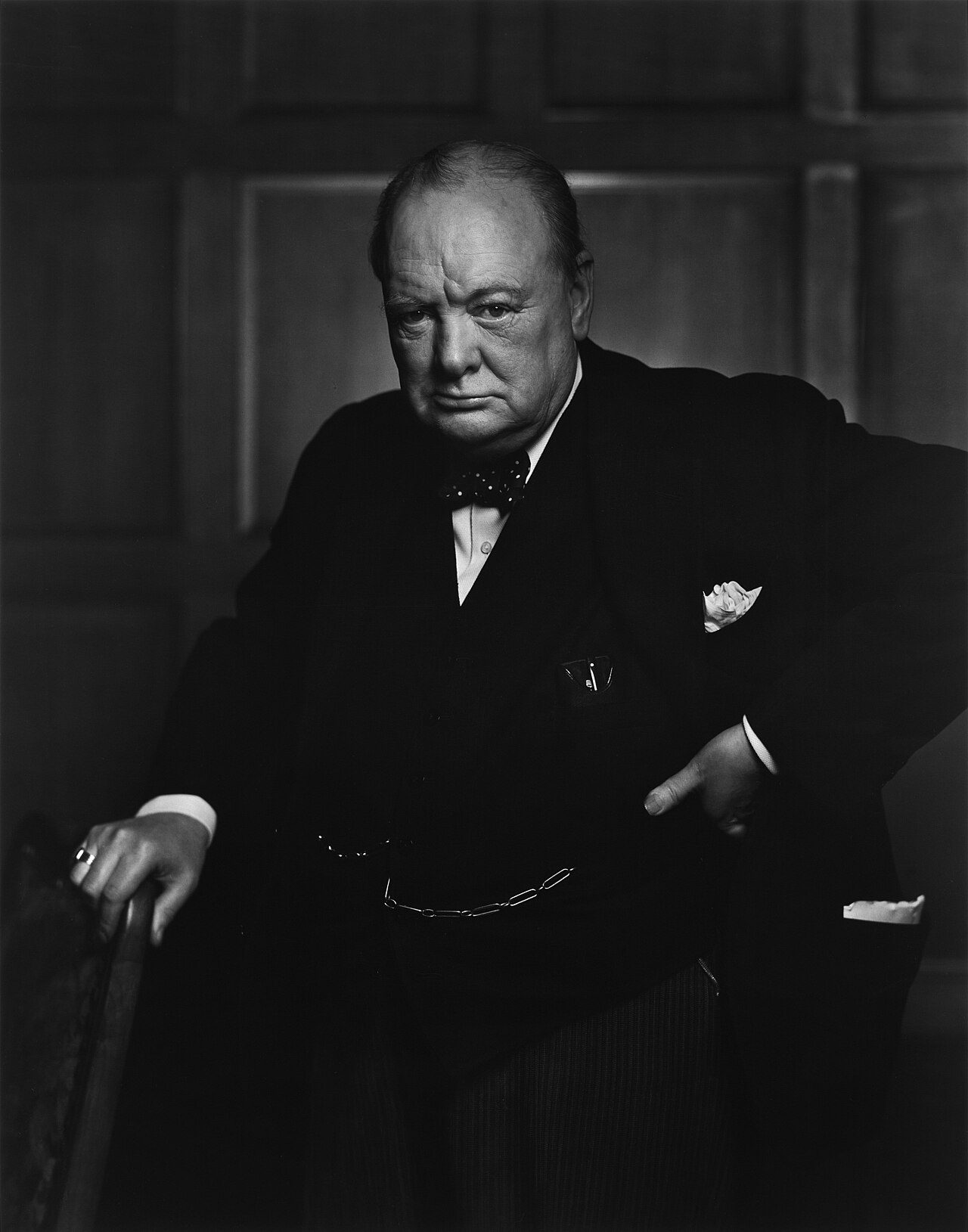
At a Glance
- The speaker
- Winston Churchill, prime minister for three days, leading a new all-party coalition government
- The moment
- 13 May 1940 — Germany is invading France and the Low Countries; Britain's army faces encirclement
- The offer
- 'I have nothing to offer but blood, toil, tears and sweat' — the phrase is almost always misquoted
- The policy
- 'To wage war, by sea, land and air, with all our might' — and the aim: 'Victory at all costs'
- The response
- The Commons votes confidence in the new government unanimously
- The sequel
- Dunkirk follows within a fortnight; Britain fights on alone in western Europe for a year
Events on this day
- 1497Pope Alexander VI excommunicates the Florentine friar Girolamo Savonarola, the preacher who had ruled Florence and defied Rome.
- 1637Cardinal Richelieu, by tradition, orders the points ground off his table knives — the origin of the rounded table knife.
- 1846The United States formally declares war on Mexico, two days after President Polk's war message to Congress.
- 1861Britain proclaims its neutrality in the American Civil War, a blow to Confederate hopes of British recognition.
- 1888Brazil abolishes slavery with the Lei Áurea, the 'Golden Law', signed by Princess Isabel — the last country in the Western Hemisphere to end it.
- 1917Three shepherd children at Fátima, Portugal, report the first of a series of apparitions of the Virgin Mary.
- 1940Winston Churchill, three days into his premiership, tells the Commons he has nothing to offer but 'blood, toil, tears and sweat' — the featured story above.
- 1943German and Italian forces in North Africa surrender, ending the Axis campaign there with a quarter of a million prisoners.
- 1950The first Formula One World Championship race is held at Silverstone, won by Giuseppe Farina for Alfa Romeo.
- 1981Pope John Paul II is shot and seriously wounded in St Peter's Square by Turkish gunman Mehmet Ali Ağca; he survives.
- 1985Philadelphia police drop a bomb on the headquarters of the MOVE group, starting a fire that kills eleven people and destroys a neighbourhood block.
Born on this day
- 1792Pius IX — the longest-reigning elected pope, whose pontificate defined the modern papacy's defences against liberalism.
- 1842Arthur Sullivan — English composer, the musical half of Gilbert and Sullivan's Savoy operas.
- 1882Georges Braque — French painter who, with Picasso, invented Cubism.
- 1907Daphne du Maurier — English novelist of Rebecca and Jamaica Inn, and author of the story behind The Birds.
- 1914Joe Louis — American heavyweight boxing champion, holder of the title for nearly twelve years.
- 1950Stevie Wonder — American singer and multi-instrumentalist, a Motown prodigy who became one of pop's defining creators.
- 1964Stephen Colbert — American comedian and host of The Late Show.
Died on this day
- 1619Johan van Oldenbarnevelt — the leading statesman of the Dutch Republic, beheaded in The Hague after a treason trial at 71.
- 1916Sholem Aleichem — Yiddish writer whose Tevye stories became the basis of Fiddler on the Roof.
- 1930Fridtjof Nansen — Norwegian polar explorer and Nobel Peace laureate who organised relief for refugees after the First World War.
- 1961Gary Cooper — American film star of High Noon and Sergeant York, dead at 60.
- 2019Doris Day — American singer and actress, among the biggest box-office stars of the 1950s and 1960s.
The featured story: Churchill offers 'blood, toil, tears and sweat', 13 May 1940
On 13 May 1940, three days after becoming prime minister, Winston Churchill stood before the House of Commons for the first time as Britain's wartime leader and made the most famous offer in parliamentary history: 'I have nothing to offer but blood, toil, tears and sweat.' German forces were at that moment pouring through the Low Countries and into France. Churchill asked the Commons for a vote of confidence in his new coalition government, warned that Britain faced 'an ordeal of the most grievous kind', and stated his policy in one sentence: 'to wage war, by sea, land and air, with all our might.'
The appointment itself had been an accident of collapse. Neville Chamberlain's government fell after the failed Norway campaign, and the premiership passed not to the foreign secretary, Lord Halifax, who was the establishment's choice, but to Churchill — the man who had warned about Hitler through a decade in the political wilderness and been dismissed as a reckless adventurer for it. On 10 May, the day Germany attacked in the west, Churchill took office at the head of an all-party coalition. His first task was to tell the country, through Parliament, exactly how bad things were.
The speech was deliberately built as a contract. Churchill promised no easy victory and no timeline: 'We have before us many, many long months of struggle and of suffering.' Asked what his aim was, he answered: 'Victory — victory at all costs, victory in spite of all terror, victory, however long and hard the road may be; for without victory, there is no survival.' The Commons gave him its confidence unanimously. Within a fortnight the British Expeditionary Force was being evacuated from Dunkirk, and within two months Britain stood alone against Germany in western Europe.
The words outlasted the emergency because they did the rarest thing in political rhetoric: they levelled with the audience. Churchill offered effort and suffering rather than hope, and the honesty itself became a form of confidence — a leader who would not lie about the price was one who could be trusted with the war. The phrase 'blood, toil, tears and sweat' is usually misquoted as 'blood, sweat and tears', an ordering Churchill never used. Delivered as France fell, the speech of 13 May 1940 remains the founding document of Britain's war — and the standard against which crisis leadership is still measured.
Why this date matters
May 13 is a day of plain speaking under pressure. Churchill's first speech as prime minister is its monument — a leader refusing every comfort except the truth — but the pattern runs through the day: Brazil's Golden Law finally saying in 1888 what its economy had long denied, the children of Fátima reporting what they believed they had seen in 1917, and a pope in 1981 surviving the bullets that plain speech about Poland had drawn. Even its sorrows are candid ones. May 13 does not flatter; it testifies.
Sources
- Encyclopaedia Britannica — On This Day: May 13
- HISTORY — What Happened on May 13
- Encyclopaedia Britannica — Winston Churchill
- UK Parliament — Churchill's 'blood, toil, tears and sweat' speech
The facts on this page were checked against these sources on 19 November 2026. The History Trail's permanent pages are researched and written for this site; the live profiles elsewhere on The History Trail are assembled automatically from Wikipedia and Wikidata.
About the Author
Researched and written by the The History Trail Editorial Team — the accountable editorial function behind this site's permanent story pages. The team works from the published sources cited on each page; it does not invent historians, reviewers or credentials, and it corrects errors openly.
Fact Check
Every load-bearing fact on this page traces to one of the sources listed above, and significant claims link to their source in the text. Our checking method is described on the methodology page; errors can be reported via the corrections page.
Sources & Citations
Cite this page as: The History Trail Editorial Team, The History Trail — this article's title, publication and update dates are shown beneath its headline. The full source list appears under Sources above; the site's source standards are on the sources page.