
Years
1777 in History
1777 is the year the American Revolution turned. It began with Washington's victory at Princeton and gave the United States its flag in June, but its defining moment came on 17 October, when General John Burgoyne surrendered his whole British army at Saratoga. That surrender convinced France to recognise American independence in December — even as Washington's army marched into the suffering of Valley Forge.
At a Glance
- Defining event
- Burgoyne surrenders his army at Saratoga, 17 October 1777
- The flag
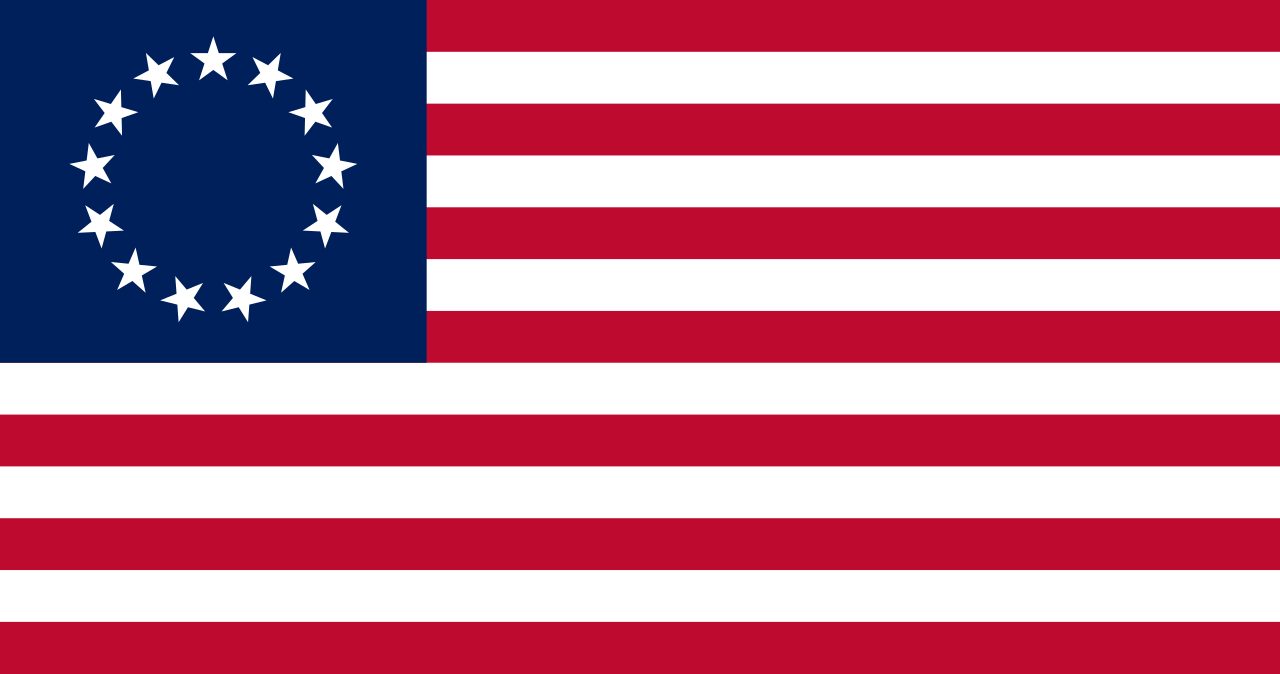
- Congress adopts the Stars and Stripes on 14 June — thirteen stripes and thirteen stars, 'a new constellation'
- The consequence
- France formally recognises the independence of the United States, 17 December
- Opened the year
- Washington defeats the British at Princeton, 3 January, completing the Trenton–Princeton campaign
- A first constitution
- Congress adopts the Articles of Confederation, 15 November
- Closed the year
- Washington leads the Continental Army into winter quarters at Valley Forge, 19 December
The defining story: the surrender at Saratoga
The year opened with American momentum. On 3 January Washington's army defeated the British at Princeton, New Jersey, completing the Trenton–Princeton campaign, though Brigadier General Hugh Mercer was mortally wounded there and died on 12 January. In June the young republic acquired its symbols and its volunteers: the 19-year-old Marquis de Lafayette landed in South Carolina on 13 June offering his sword and his fortune, and on 14 June the Second Continental Congress resolved that the flag of the United States be thirteen stripes, alternate red and white, with thirteen stars in a blue field 'representing a new constellation'.
Britain's plan for 1777 was to cut the rebellion in two. General John Burgoyne marched south from Canada toward Albany, while General William Howe moved against Philadelphia, defeating Washington at Brandywine on 11 September and opening the road to the American capital; Congress was reduced to sitting for a single day at Lancaster on 27 September as the British occupied Philadelphia. Burgoyne, meanwhile, was running into the campaign that would destroy him. At Freeman's Farm on 19 September, the first Battle of Saratoga, the British won the ground but suffered losses they could not replace.
A second battle followed in October, and on 17 October Burgoyne surrendered his British army to Horatio Gates at Saratoga, New York. An entire British field army had laid down its arms to the rebels — the proof, watched closely in Paris, that the Americans could win a campaign and not merely survive one. It was the turning point that brought France into the war.
The consequences arrived before the year ended. On 15 November Congress adopted the Articles of Confederation, the United States' first constitution, and on 17 December France formally recognised the independence of the United States, opening the alliance that would bring French money, troops and ships into the war. Yet the year closed in hardship, not triumph: on 19 December Washington led the Continental Army into winter quarters at Valley Forge, Pennsylvania, where some 2,000 soldiers would die of disease and exposure. Saratoga had changed the war's politics; Valley Forge tested whether its army could endure.
Timeline of 1777
- 3 January
George Washington's army defeats the British at the Battle of Princeton, completing the Trenton–Princeton campaign.
- 15 January
Vermont declares itself an independent republic, breaking from both Britain and New York.
- 13 June
The 19-year-old Marquis de Lafayette lands in South Carolina, offering his sword and fortune to the American Revolution.
- 14 June
Congress adopts the Stars and Stripes as the flag of the United States.
- 8 July
Vermont adopts a constitution that abolishes adult slavery, the first such provision in what becomes the United States.
- 3 September
The Stars and Stripes is said to be flown in battle for the first time, at Cooch's Bridge in Delaware.
- 11 September
British forces under General William Howe defeat Washington's army at Brandywine, opening the road to Philadelphia.
- 19 September
The first Battle of Saratoga is fought at Freeman's Farm; the British win the ground but suffer losses they cannot replace.
- 27 September
The Continental Congress sits at Lancaster, Pennsylvania — the United States capital for a single day — as the British occupy Philadelphia.
- 17 October
General John Burgoyne surrenders his British army to Horatio Gates at Saratoga, New York.
- 15 November
The Continental Congress adopts the Articles of Confederation, the United States' first constitution.
- 17 December
France formally recognises the independence of the United States.
- 19 December
Washington leads the Continental Army into winter quarters at Valley Forge, where some 2,000 soldiers will die of disease and exposure.
Why 1777 still matters
Saratoga is why 1777 still matters: it internationalised the American war. Before October, France could sympathise and supply quietly; after a British army surrendered, recognition and alliance became a rational bet, formalised in December's recognition and the treaties that followed. The road from Saratoga runs directly to the French fleet and French regiments that would trap Cornwallis at Yorktown four years later.
The year also gave the republic its durable furniture. The flag resolution of 14 June created an emblem whose rule — thirteen stripes always, one star per state, settled in 1818 — has carried the design through 27 changes to the present flag. The Articles of Confederation, adopted in November, were the United States' first constitution: flawed, but the frame under which independence was actually won. And Vermont's constitution of 8 July, abolishing adult slavery, was the first such provision in what became the United States — a reminder that the revolution's arguments were already escaping their authors' control.
Even its births pointed forward. Henry Clay, born 12 April, became the 'Great Compromiser' who repeatedly brokered deals to hold the Union together over slavery; Carl Friedrich Gauss, born 30 April, reshaped number theory, astronomy and physics. The republic that survived 1777 would be argued over, and measured, by men born in it.
1777 on The History Trail
Saratoga, the first flag and Valley Forge — the turning-point year day by day.
- October 17 in History — Burgoyne surrenders at Saratoga — the featured story of the turning point.
- June 14 in History — Congress adopts the Stars and Stripes.
- January 3 in History — Washington defeats the British at Princeton.
- November 15 in History — Congress adopts the Articles of Confederation.
- December 19 in History — Washington leads the army into Valley Forge.
- April 30 in History — Carl Friedrich Gauss, the 'Prince of Mathematicians', is born.
Sources
- Encyclopaedia Britannica — On This Day: October 17
- HISTORY — What Happened on October 17
- National Park Service — Saratoga: Tour Stop 10, Return to Saratoga
- HISTORY — Congress adopts the Stars and Stripes
- GovInfo — Flag Day
- Encyclopaedia Britannica — On This Day: December 19
The facts on this page were checked against these sources on 19 November 2026. The History Trail's permanent pages are researched and written for this site; the live profiles elsewhere on The History Trail are assembled automatically from Wikipedia and Wikidata.
About the Author
Researched and written by the The History Trail Editorial Team — the accountable editorial function behind this site's permanent story pages. The team works from the published sources cited on each page; it does not invent historians, reviewers or credentials, and it corrects errors openly.
Fact Check
Every load-bearing fact on this page traces to one of the sources listed above, and significant claims link to their source in the text. Our checking method is described on the methodology page; errors can be reported via the corrections page.
Sources & Citations
Cite this page as: The History Trail Editorial Team, The History Trail — this article's title, publication and update dates are shown beneath its headline. The full source list appears under Sources above; the site's source standards are on the sources page.