
Years
1781 in History
1781 decided the American Revolutionary War and doubled the known solar system. On 13 March William Herschel, sweeping the sky from his Bath garden, spotted the object that proved to be Uranus, the first planet discovered with a telescope. In the autumn, Washington's and Rochambeau's armies trapped Lord Cornwallis at Yorktown, and his surrender on 19 October effectively ended the war — weeks before the Zong massacre exposed the slave trade's horror.
At a Glance
- Defining event
- Cornwallis surrenders at Yorktown, 19 October 1781 — effectively ending the Revolutionary War
- The siege
- American and French forces invest Yorktown from 28 September; the surrender follows on 19 October
- The discovery
- William Herschel discovers Uranus on 13 March, the first planet found with a telescope
- The frame of government
- The Articles of Confederation are finally ratified on 1 March
- A city founded
- Spanish settlers found El Pueblo de Los Angeles on 4 September
- The atrocity
- The Zong massacre begins on 29 November — more than 130 enslaved Africans murdered for insurance
The defining story: the surrender at Yorktown
By 1781 the Revolutionary War had become a war of coasts, fleets and endurance, and its cruellest episodes came early. On 5 January British forces under Benedict Arnold — the rebel general turned turncoat — burned Richmond, Virginia, the rebel capital he had once served, and on 6 September Arnold's forces burned New London, Connecticut, and stormed Fort Griswold. Between those raids, patriot commanders Henry Lee and Francis Marion raided British-held Georgetown, South Carolina, on 24 January in a combined operation — the southern war of raids and reprisals in miniature. On 1 March, the Articles of Confederation were finally ratified, nearly four years after Congress sent them to the states, giving the United States its first frame of government even as its survival remained undecided.
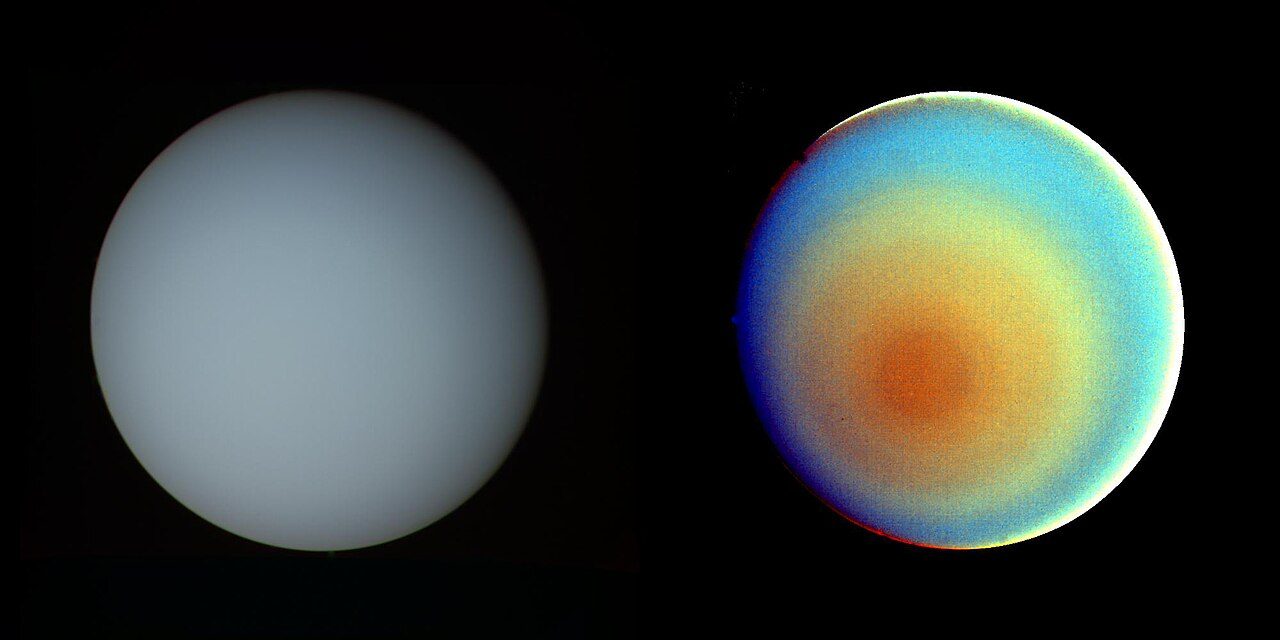
The year's other revolution happened in a garden in Bath. On 13 March William Herschel spotted an uncharted object in Gemini that showed a small disc and moved against the stars. Reported cautiously as a possible comet, it proved to be a planet in a near-circular orbit far beyond Saturn: Uranus, the first planet discovered with a telescope, doubling the known size of the solar system. Herschel, a musician who built his own telescopes, had extended the heavens by observation rather than by ancient authority.
In Virginia, Lord Cornwallis had dug in at Yorktown expecting the Royal Navy to supply and, if needed, rescue him. Instead a French fleet closed the Chesapeake, and Washington — who had been threatening New York — marched south with Rochambeau's French army. On 28 September the allied armies completed the investment of Cornwallis's position, and the siege that followed was methodical and merciless: allied guns opened in October, French and American troops stormed the outer redoubts, and a desperate British attempt to escape across the river failed.
On 19 October Cornwallis surrendered his army at Yorktown to the allied American and French forces. Cornwallis himself, pleading illness, stayed away and sent his deputy to offer the sword. More than 7,000 soldiers surrendered — about a third of British forces in North America — and the surrender effectively ended the American Revolutionary War, though the peace would take two more years to sign. On 4 September, far to the west, Spanish settlers had founded El Pueblo de Los Angeles in California, the seed of the second-largest city in the United States. Six weeks after Yorktown, the year's darkest entry began: on 29 November the crew of the British slave ship Zong started throwing enslaved Africans overboard to claim their value as insured cargo, murdering more than 130 people.
Timeline of 1781
- 5 January
British forces under Benedict Arnold burn Richmond, Virginia, the rebel capital he had once served.
- 24 January
Patriot commanders Henry Lee and Francis Marion raid British-held Georgetown, South Carolina.
- 1 March
The Articles of Confederation are finally ratified, giving the United States its first frame of government.
- 13 March
William Herschel discovers Uranus, the first planet found with a telescope.
- 9 June
George Stephenson, builder of the first public inter-city railway line, is born in England.
- 4 September
Spanish settlers found El Pueblo de Los Angeles in California.
- 6 September
British forces under Benedict Arnold burn New London, Connecticut, and storm Fort Griswold.
- 28 September
Washington's and Rochambeau's armies complete the investment of Yorktown; the siege begins.
- 19 October
Lord Cornwallis surrenders his army at Yorktown to the allied American and French forces.
- 29 November
The crew of the slave ship Zong begins throwing enslaved Africans overboard; more than 130 people are murdered in the Zong massacre.
Why 1781 still matters
Yorktown matters because it converted alliance into outcome. The surrender was Franco-American in its making — French ships sealing the sea, French troops beside American ones in the siege lines — vindicating the gamble France had taken after Saratoga in 1777. Britain still held New York and fought on elsewhere, but after 19 October 1781 the political will to reconquer the thirteen states was gone; the Treaty of Paris of 1783 merely wrote down what Yorktown had decided.
Herschel's planet mattered in the opposite direction: outward. Uranus doubled the known size of the solar system and proved that the heavens were not finished — that new worlds waited for better instruments and patient observers. The discovery also set the pattern for 1846, when Neptune would be found first by mathematics; and the planet Herschel spotted in 1781 is still visited in the imagination through the Voyager 2 photographs of 1986, the first close-up views of his world.
The Zong massacre, finally, forced the slave trade into the language of law and insurance, where abolitionists could attack it. A claim for murdered human beings, treated as cargo, became one of the scandals that built the movement to end the trade. George Stephenson, born on 9 June, would build the first public inter-city railway line, carrying the year's theme of new connections onto rails; his birth, and the founding of Los Angeles on 4 September, complete a year that joined a war's end, a planet's discovery and a crime that would not be forgotten.
1781 on The History Trail
Yorktown, Uranus and the Zong — a decisive year told day by day.
- October 19 in History — Cornwallis surrenders at Yorktown — the featured story of the war's end.
- September 28 in History — The Siege of Yorktown begins.
- March 13 in History — Herschel discovers Uranus.
- Uranus — The planet Herschel spotted from his Bath garden in 1781.
- September 4 in History — Spanish settlers found Los Angeles.
- November 29 in History — The Zong massacre begins.
Sources
- Encyclopaedia Britannica — On This Day: October 19
- Library of Congress — Today in History: October 19
- National Park Service — Chronology of the Siege of Yorktown
- NASA Science — Uranus: Exploration
- Encyclopaedia Britannica — On This Day: March 13
- Encyclopaedia Britannica — On This Day: November 29
The facts on this page were checked against these sources on 19 November 2026. The History Trail's permanent pages are researched and written for this site; the live profiles elsewhere on The History Trail are assembled automatically from Wikipedia and Wikidata.
About the Author
Researched and written by the The History Trail Editorial Team — the accountable editorial function behind this site's permanent story pages. The team works from the published sources cited on each page; it does not invent historians, reviewers or credentials, and it corrects errors openly.
Fact Check
Every load-bearing fact on this page traces to one of the sources listed above, and significant claims link to their source in the text. Our checking method is described on the methodology page; errors can be reported via the corrections page.
Sources & Citations
Cite this page as: The History Trail Editorial Team, The History Trail — this article's title, publication and update dates are shown beneath its headline. The full source list appears under Sources above; the site's source standards are on the sources page.