
Things
Chernobyl disaster
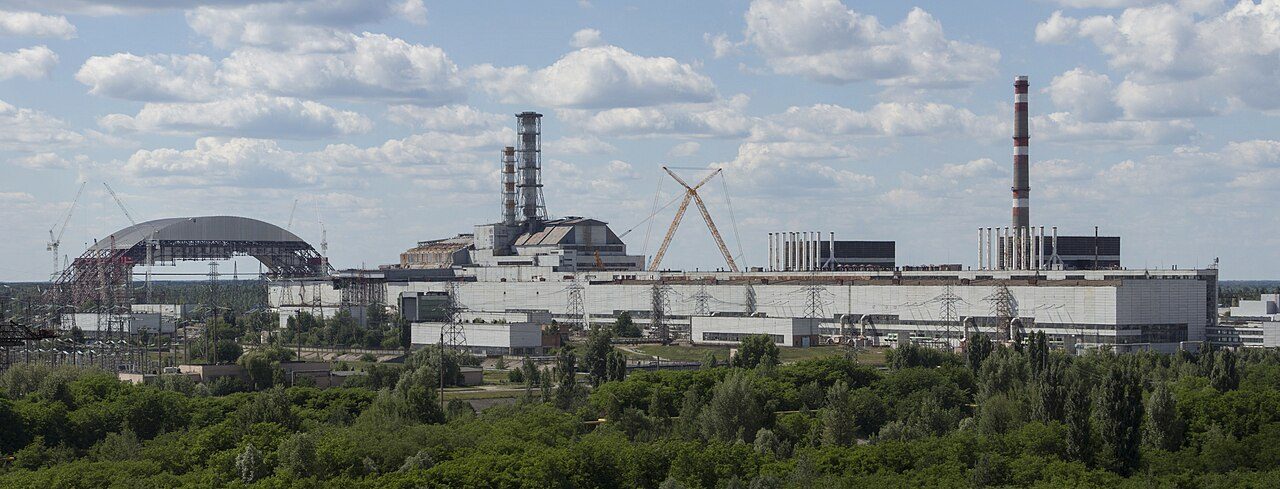
The Chernobyl disaster began on 26 April 1986, when Reactor 4 of the Chernobyl nuclear power plant in Soviet Ukraine exploded during a safety test, destroying the reactor and releasing radioactive material across Europe. Pripyat was evacuated a day and a half later, hundreds of thousands of liquidators contained the damage, and the ruined reactor now sits beneath a steel arch built to hold it for a century.
At a Glance
- When
- The accident began in the early hours of 26 April 1986, during a safety test on Reactor 4
- Where
- The Chornobyl nuclear power plant near Pripyat, in Ukraine, then part of the Soviet Union
- The reactor
- An RBMK-1000, a graphite-moderated design whose flaws at low power the IAEA identifies as central to the accident
- Immediate deaths
- UNSCEAR: two workers died in the immediate aftermath; 28 of 134 plant staff and emergency personnel with acute radiation syndrome died in 1986
- Evacuation
- Pripyat was evacuated about 36 hours later; UNSCEAR records about 115,000 people evacuated in 1986 and about 220,000 relocated afterwards
- Health finding
- UNSCEAR reports a large increase in thyroid cancer among those exposed as children, with more than 6,000 cases by 2005 in Belarus, Russia and Ukraine
- Containment today
- The 1986 sarcophagus is enclosed by the New Safe Confinement, slid into place in November 2016 and designed to last 100 years
Introduction
Chernobyl was not a meltdown in the ordinary sense but a reactor destroyed by explosions during a test its design could not survive. The RBMK-1000 was a Soviet design that used graphite to moderate the chain reaction and water as coolant, and it had serious flaws: at low power it could become unstable, and its control rods, as first designed, could briefly increase reactivity when inserted. The IAEA concludes that the accident grew from severe deficiencies in the design of the reactor and its shutdown system, combined with the way the test was run.
The test, on the night of 25-26 April 1986, was meant to check whether a spinning-down turbine could power the cooling pumps through a short gap in electricity supply. Delayed for hours by a request from the grid, it was run by a night shift, at low and unstable power, with safety systems switched off.
26 April 1986: The Explosions and the Fire
In the early hours of 26 April 1986, Unit 4 went out of control during the test. The IAEA records that the reactor ran away at low power, leading to explosions and a fire that demolished the reactor building and released large amounts of radioactive material. The graphite in the exposed core caught fire and burned for days, carrying radioactive material across Europe.
Plant firefighters and the Pripyat fire brigade fought the fires on the roof and around the ruined reactor through the night, in intense radiation and without knowing its full scale. By morning the fires outside the core had been put out, but the core fire continued, and helicopters later dropped sand, lead, clay and boron onto the reactor to smother it.
Evacuation and Disclosure
Pripyat, the plant's town of about 49,000 people some three kilometres away, was not evacuated until the afternoon of 27 April, roughly 36 hours after the explosions; residents were told the move was temporary. A 10-kilometre exclusion zone was set up first, then expanded to 30 kilometres. UNSCEAR records about 115,000 people evacuated from the area in 1986, and about 220,000 more relocated in later years.
The Soviet Union at first said almost nothing publicly. On 28 April, monitoring stations in Sweden detected abnormally high radioactivity carried by the wind and pressed for an explanation, and only then did Moscow admit an accident had happened, as Britannica recounts. A fuller account came in Mikhail Gorbachev's televised address on 14 May 1986. The delay damaged the authorities' credibility at home and overseas.
The Liquidators and the Sarcophagus
The cleanup - its workers known as liquidators - involved several hundred thousand people: soldiers, miners, construction workers, plant staff and others who cleared debris, decontaminated settlements and built the Shelter Object, the steel-and-concrete structure hurriedly raised over the ruined reactor in 1986 and usually called the sarcophagus. It was an emergency measure, never meant to last, built in months under difficult conditions.
Because the sarcophagus was deteriorating, an international project built a replacement: the New Safe Confinement, a steel arch 257 metres across, built beside the reactor and slid 327 metres into place over the sarcophagus in November 2016. The Chornobyl plant's own account records the arch reaching its final position on 29 November 2016, funded by more than 45 donor countries through a fund administered by the European Bank for Reconstruction and Development, and designed for 100 years, so the old shelter and the ruins beneath it can one day be dismantled safely.
Health Effects: What UNSCEAR and the WHO State
The documented early toll is precise, and this page keeps to it. UNSCEAR's 2008 assessment states that two workers died in the immediate aftermath, and that high doses to 134 plant staff and emergency personnel caused acute radiation syndrome, fatal for 28 of them. The Chernobyl Forum, reported by the WHO, put deaths directly attributed to radiation by mid-2005 at fewer than 50, almost all among highly exposed rescue workers.
The clearest later effect concerns the thyroid. Radioactive iodine, much of it reaching children through contaminated milk before countermeasures, caused a large increase in thyroid cancer among people who were children or adolescents in Belarus, Russia and Ukraine in 1986: UNSCEAR reported more than 6,000 cases by 2005 in that group, and its later assessment, summarised by the Canadian Nuclear Safety Commission, records registered cases for 1991-2015 approaching 20,000, of which about 5,000 were attributed to radioactive iodine. UNSCEAR also states that, apart from the thyroid increase, there is no evidence of a major public health impact attributable to radiation in the general population. Projections of eventual additional cancer deaths among the most exposed groups exist - the Chernobyl Forum's estimate, reported by the WHO, was up to about 4,000 - but they are model-based projections, not counted deaths, and wider estimates are disputed.
Timeline
- 25-26 April 1986
A safety test on Unit 4 is run at low power in the early hours of 26 April; the RBMK reactor goes out of control, explodes and catches fire.
- 27 April 1986
Pripyat is evacuated, about 36 hours after the accident; a 10-kilometre exclusion zone is established, later expanded to 30 kilometres.
- 28 April 1986
Swedish monitoring stations detect wind-borne radioactivity and press for an explanation; the Soviet Union admits an accident has occurred.
- 14 May 1986
Mikhail Gorbachev addresses the Soviet public on television about the accident.
- 1986
The Shelter Object - the sarcophagus - is completed over the destroyed Unit 4; hundreds of thousands of liquidators take part in the cleanup.
- 15 December 2000
The last operating reactor at the Chornobyl site is shut down, and decommissioning begins, according to the IAEA.
- 29 November 2016
The New Safe Confinement arch is installed in its final position over the sarcophagus, designed for a 100-year life.
- February-March 2022
Russian forces occupy the Chornobyl site in the opening weeks of the invasion of Ukraine, disrupting work there, the IAEA records; the agency later establishes a continuing presence at the site.
Significance
Chernobyl changed nuclear governance worldwide. Within months the IAEA had adopted the Convention on Early Notification of a Nuclear Accident, requiring states to report accidents with possible effects beyond their borders - a direct answer to the days of silence in April 1986. Safety reviews followed internationally, the remaining RBMK reactors were modified, and the accident became the benchmark against which nuclear risk is publicly judged. Inside the Soviet Union, the disaster fed the loss of trust that accompanied the state's final years.
Myths and disputes
The bridge of death is a legend, and is labelled as such here: the story holds that Pripyat residents who watched the fire from the town's railway bridge were fatally irradiated. It is widely retold, but no reliable documentary evidence supports the claim that the onlookers died as the story describes, and historians treat it as folklore.
The three divers story needs the opposite correction. In May 1986 three plant men - Alexei Ananenko, Valeri Bespalov and shift supervisor Boris Baranov - waded into the flooded basement beneath the reactor to open valves and drain water, a task later retold as a certain suicide mission whose heroes died within weeks. The documented record is different: all three survived. Baranov lived until 2005, when he died of heart disease, and Ananenko and Bespalov were reported alive decades later. Their work was genuinely dangerous; it does not need the invented ending.
Long-range death tolls are the largest dispute. Figures far above the documented early deaths circulate widely, but they rest on extrapolations from low-dose models rather than counted cases, and UNSCEAR has cautioned against treating such projections as observed fact. This page therefore gives the attributed figures above - documented deaths, UNSCEAR's thyroid-cancer counts, and the Chernobyl Forum's clearly labelled projection - and no single headline total.
Legacy: The Zone Today
The 30-kilometre Exclusion Zone remains in place, largely uninhabited, its settlements left to decay while wildlife has returned in numbers researchers continue to study. The plant is being decommissioned, a process the IAEA notes is planned to run for decades. Russian forces briefly occupied the site in 2022, and the IAEA has kept a team at the plant since; in February 2025 the agency reported that a drone strike had damaged the New Safe Confinement and severely impaired its main safety functions, with urgent repairs planned. In April 2027 the accident reaches its 41st anniversary, with the work of containing its consequences still unfinished.
Sources
- International Atomic Energy Agency — Chernobyl Accident: Frequently Asked Questions
- UNSCEAR — UNSCEAR assessments of the Chernobyl accident
- World Health Organization — Chernobyl: the true scale of the accident
- Encyclopaedia Britannica — Chernobyl disaster
- Chornobyl NPP (official) — Four years under NSC protection
- Canadian Nuclear Safety Commission — Health effects of the Chornobyl accident
The facts on this page were checked against these sources on 19 November 2026. The History Trail's permanent pages are researched and written for this site; the live profiles elsewhere on The History Trail are assembled automatically from Wikipedia and Wikidata.
About the Author
Researched and written by the The History Trail Editorial Team — the accountable editorial function behind this site's permanent story pages. The team works from the published sources cited on each page; it does not invent historians, reviewers or credentials, and it corrects errors openly.
Fact Check
Every load-bearing fact on this page traces to one of the sources listed above, and significant claims link to their source in the text. Our checking method is described on the methodology page; errors can be reported via the corrections page.
Sources & Citations
Cite this page as: The History Trail Editorial Team, The History Trail — this article's title, publication and update dates are shown beneath its headline. The full source list appears under Sources above; the site's source standards are on the sources page.