
On This Day
November 10 in History
On 10 November 1871, by his own journal's account, the journalist Henry Morton Stanley marched into Ujiji on Lake Tanganyika and found the explorer the world had given up for lost, greeting him with the immortal 'Dr. Livingstone, I presume?' November 10 is also the birthday of Martin Luther and Friedrich Schiller, the founding day of the U.S. Marine Corps, and the day Sesame Street premiered and the Edmund Fitzgerald went down.
Choose another date: open the On This Day calendar to browse events, births and deaths for any day of the year.
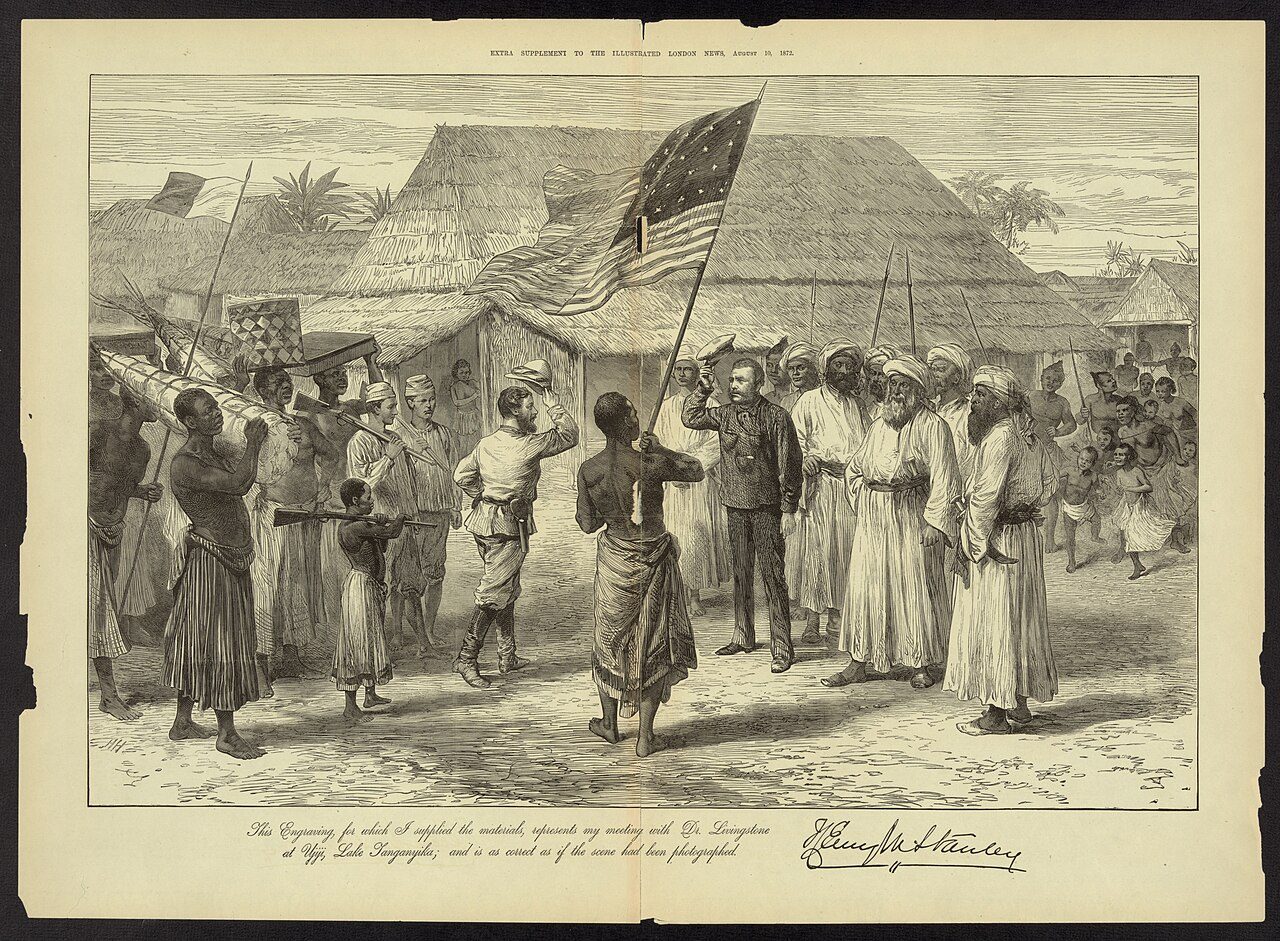
At a Glance
- The missing man
- David Livingstone, in Africa since 1866 seeking the Nile's source, unheard from for years and rumoured dead
- The assignment
- James Gordon Bennett Jr. of the New York Herald sends reporter Henry Morton Stanley to find him, dead or alive
- The march
- Eight months and some 700 miles from the coast through disease and desertion, reaching Ujiji in November 1871
- The meeting
- 10 November 1871 by Stanley's journal — a date Britannica notes may actually have been in October
- The words
- 'Dr. Livingstone, I presume?' — 'Yes,' said Livingstone, lifting his cap
- The aftermath
- Four months exploring together; Livingstone dies in Africa in 1873; Stanley carries a coffin at his Westminster Abbey funeral
Events on this day
- 1202Crusaders of the Fourth Crusade begin the siege of Zara, a Christian city, defying the Pope's express prohibition.
- 1444The Ottoman army of Sultan Murad II destroys the crusading army at the Battle of Varna; King Władysław III of Poland and Hungary is killed.
- 1775The Continental Congress creates two battalions of Marines at Philadelphia — the founding of the United States Marine Corps.
- 1871Henry Morton Stanley finds David Livingstone at Ujiji on Lake Tanganyika — the featured story above.
- 1928Hirohito is formally enthroned as emperor of Japan, two years after succeeding his father.
- 1958The jeweller Harry Winston donates the Hope Diamond to the Smithsonian Institution — sending it to Washington by ordinary registered mail.
- 1969Sesame Street is broadcast for the first time on American television, remaking children's education as entertainment.
- 1975The ore carrier Edmund Fitzgerald sinks in a storm on Lake Superior with all 29 of her crew, without sending a distress call.
- 1975The UN General Assembly adopts Resolution 3379, declaring Zionism a form of racism; it is repealed in 1991.
- 1983Microsoft announces Windows, its graphical operating environment for personal computers; version 1.0 ships two years later.
- 2019Bolivia's president Evo Morales resigns under military pressure after weeks of protests over a disputed election.
Born on this day
- 1483Martin Luther — German monk whose challenge to indulgences began the Protestant Reformation.
- 1697William Hogarth — English artist of A Rake's Progress, founder of a native school of moral satire in paint.
- 1759Friedrich Schiller — German poet and dramatist of The Robbers and the 'Ode to Joy'.
- 1925Richard Burton — Welsh actor of commanding voice, twice married to Elizabeth Taylor.
- 1960Neil Gaiman — English author of American Gods, Coraline and The Sandman.
Died on this day
- 1549Paul III — pope who called the Council of Trent and approved the Jesuit order.
- 1891Arthur Rimbaud — French poet who wrote his visionary work as a teenager and abandoned poetry by 21, dead at 37.
- 1938Mustafa Kemal Atatürk — founder and first president of the Republic of Turkey, dead at Dolmabahçe Palace in Istanbul.
- 1982Leonid Brezhnev — leader of the Soviet Union for 18 years, whose death opens the succession that ends with Gorbachev.
The featured story: 'Dr. Livingstone, I presume?', 10 November 1871
David Livingstone was the most famous explorer in the world, and by 1871 the world had not heard from him in years. The Scottish missionary had gone back to Africa in 1866 to find the source of the Nile; rumours reached the coast of sickness, of destitution, of death. James Gordon Bennett Jr., proprietor of the New York Herald, saw the story of the age and gave his reporter Henry Morton Stanley an assignment of memorable bluntness: find Livingstone — in Stanley's own later telling, 'draw a thousand pounds now, and when you have gone through that, draw another thousand… but FIND LIVINGSTONE.' Stanley, a Welsh-born former Confederate and Union soldier turned journalist, reached Zanzibar in January 1871 and assembled one of the largest caravans the island had ever seen.
The march inland took eight months and was a small war against geography and disease: some 700 miles through country torn by the slave trade and tribal fighting, with porters deserting and dying, and Stanley himself down with fever again and again. Livingstone, meanwhile, had reached Ujiji, a trading settlement on the eastern shore of Lake Tanganyika, in wretched condition — his supplies stolen, his health broken, waiting in hope that help would come from the coast. According to Stanley's journal, his caravan marched into Ujiji on 10 November 1871 flying the American flag, to find a gaunt white man with a grey beard standing among the crowd that gathered to watch.
Stanley wrote that he would have run to him, but was restrained by 'cowardice and false pride': instead he walked deliberately up, took off his helmet and said, 'Dr. Livingstone, I presume?' 'Yes,' said Livingstone, smiling and lifting his cap. The greeting — absurdly formal for the middle of Africa, which is exactly why the world loved it — became the most famous introduction in the history of journalism. Stanley's supplies restored Livingstone, and the two men spent four months together, exploring the northern end of Lake Tanganyika and satisfying themselves that it did not feed the Nile, before Stanley marched back to the coast in March 1872 carrying Livingstone's letters and journals.
Livingstone refused to leave Africa; he died in what is now Zambia in May 1873, still searching for the Nile's source, and Stanley was a pallbearer when the explorer's body, carried to the coast by his servants Susi and Chuma, was buried in Westminster Abbey. The Herald's scoop made Stanley's career and opened his own path into Africa — with consequences, in the Congo, far darker than the meeting itself. One caution belongs to the record: the date rests on Stanley's journal, pages of which are missing, and Britannica's modern telling notes the meeting was probably in October. The world, however, keeps the anniversary where Stanley put it: 10 November.
Why this date matters
November 10 is a day of expeditions and the institutions they build. A journalist finds an explorer and invents modern celebrity reporting; a pope-defying crusade besieges a Christian port; a revolutionary monk and a revolutionary dramatist share a birthday with the founding of the Marine Corps between them; a children's programme begins teaching letters to millions; and the lakes take a great ship without a word of farewell. The Livingstone meeting gives the day its flavour: two exhausted men, a laconic sentence, and an empire of print waiting to turn both into legend.
Sources
- Encyclopaedia Britannica — On This Day: November 10
- HISTORY — What Happened on November 10
- Encyclopaedia Britannica — Today in History: The Search for Dr. Livingstone
- Wikimedia — On This Day feed: November 10
The facts on this page were checked against these sources on 19 November 2026. The History Trail's permanent pages are researched and written for this site; the live profiles elsewhere on The History Trail are assembled automatically from Wikipedia and Wikidata.
About the Author
Researched and written by the The History Trail Editorial Team — the accountable editorial function behind this site's permanent story pages. The team works from the published sources cited on each page; it does not invent historians, reviewers or credentials, and it corrects errors openly.
Fact Check
Every load-bearing fact on this page traces to one of the sources listed above, and significant claims link to their source in the text. Our checking method is described on the methodology page; errors can be reported via the corrections page.
Sources & Citations
Cite this page as: The History Trail Editorial Team, The History Trail — this article's title, publication and update dates are shown beneath its headline. The full source list appears under Sources above; the site's source standards are on the sources page.