
On This Day
July 25 in History
On 25 July 1978 Louise Joy Brown was born at Oldham General Hospital — the first human being conceived by in vitro fertilisation, the fruit of a decade of work by Robert Edwards, Patrick Steptoe and Jean Purdy. July 25 is also the day Dylan went electric at Newport, Blériot flew the Channel, and a Concorde crashed outside Paris.
Choose another date: open the On This Day calendar to browse events, births and deaths for any day of the year.
At a Glance
- The birth
- 25 July 1978, Oldham General Hospital — Louise Joy Brown, 5 lb 12 oz, delivered by planned caesarean section
- The parents
- Lesley and John Brown, who had tried for nine years to conceive; Lesley's fallopian tubes were blocked
- The procedure
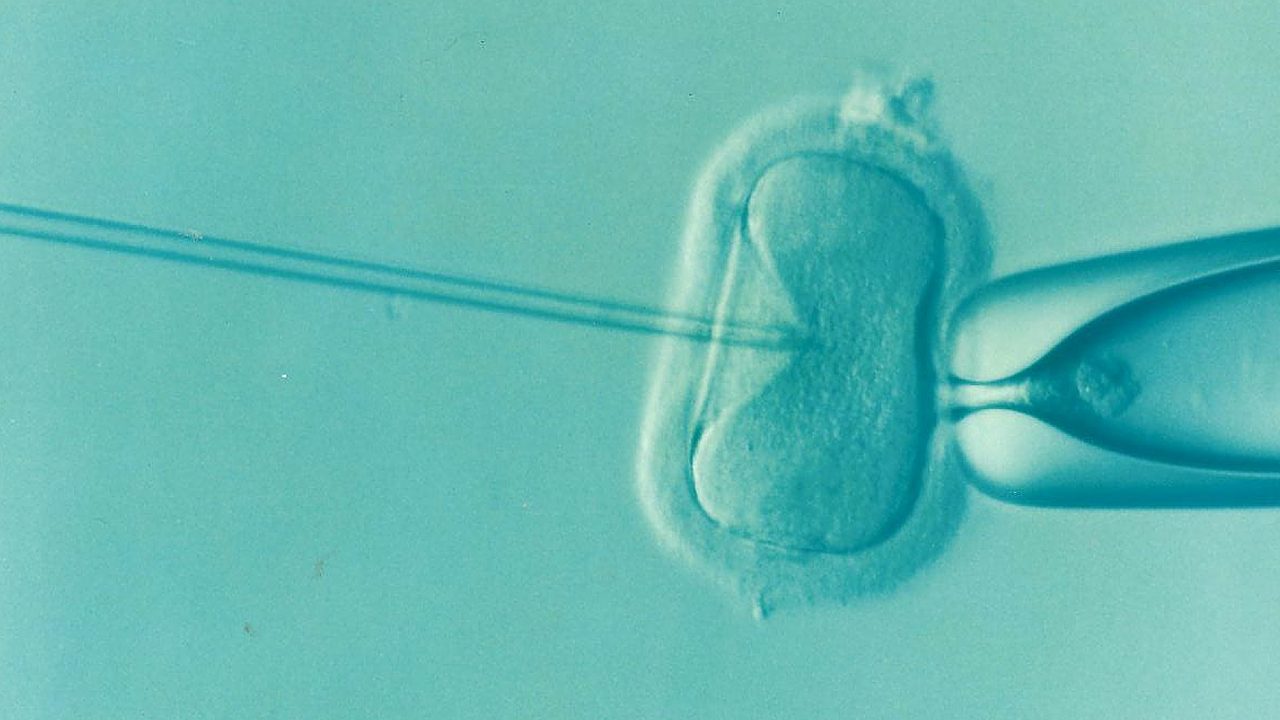
- An egg collected in November 1977, fertilised in a petri dish in the laboratory, and the embryo returned to the womb
- The team
- Physiologist Robert Edwards, gynaecologist Patrick Steptoe and embryologist Jean Purdy
- The recognition
- Edwards won the 2010 Nobel Prize in Physiology or Medicine for developing IVF
- The legacy
- Millions of babies born worldwide by IVF since; the Browns' second daughter Natalie was the 40th, and the first IVF baby to give birth herself
Events on this day
- 1909French aviator Louis Blériot flies across the English Channel in 37 minutes, the first crossing of the Channel by aeroplane.
- 1956The Italian liner Andrea Doria collides with the Swedish ship Stockholm off Nantucket; the liner sinks the next morning with the loss of 46 lives.
- 1965Bob Dylan performs with an electric band at the Newport Folk Festival, scandalising folk purists and redrawing the map of popular music.
- 1968Pope Paul VI issues the encyclical Humanae Vitae, reaffirming the Catholic Church's ban on artificial contraception.
- 1978Louise Brown, the first baby conceived by in vitro fertilisation, is born in Oldham, England — the featured story above.
- 1984Soviet cosmonaut Svetlana Savitskaya becomes the first woman to walk in space, during the Salyut 7 mission.
- 2000Air France Concorde flight 4590 crashes into a hotel shortly after takeoff from Paris, killing all 109 aboard and four on the ground; Concorde never fully recovered and was retired in 2003.
- 2007Pratibha Patil is sworn in as president of India, the first woman to hold the office.
Born on this day
- 1844Thomas Eakins — American realist painter of The Gross Clinic, born in Philadelphia.
- 1870Maxfield Parrish — American artist and illustrator whose luminous colours defined a golden age of illustration.
- 1906Johnny Hodges — American alto saxophonist, the silken lead voice of Duke Ellington's orchestra.
- 1946Rita Marley — Jamaican singer, member of the I Threes and widow of Bob Marley.
- 1967Matt LeBlanc — American actor who found fame as Joey Tribbiani in Friends.
Died on this day
- 1794André Chénier — French poet guillotined in the last days of the Terror, two days before Robespierre's own fall.
- 1834Samuel Taylor Coleridge — English Romantic poet of The Rime of the Ancient Mariner and Kubla Khan, dead at 61.
- 1934Engelbert Dollfuss — chancellor of Austria, assassinated by Nazi gunmen in a failed coup in Vienna.
- 1934François Coty — French perfumer who built the Coty empire and reshaped the modern cosmetics industry.
- 1934Nestor Makhno — Ukrainian anarchist leader of the Makhnovist movement in the Russian Civil War, dead in exile in Paris.
The featured story: Louise Brown, the first IVF baby, 25 July 1978
Shortly before midnight on 25 July 1978, at Oldham General Hospital in Lancashire, a healthy girl weighing five pounds twelve ounces was delivered by planned caesarean section. Her name was Louise Joy Brown, and she was, as HISTORY puts it, the world's first baby to be conceived via in vitro fertilisation. Her birth made headlines on every continent — and it was the end of a road that had begun a decade earlier, in a collaboration between a Cambridge physiologist, Robert Edwards, and an Oldham gynaecologist, Patrick Steptoe, working with embryologist Jean Purdy.
Louise's parents, Lesley and John Brown, had been trying for a child for nine years. Lesley's fallopian tubes were blocked, and conventional medicine had nothing to offer her. In November 1977 she underwent the then-experimental procedure: an egg was collected from her ovary at exactly the right moment of a natural cycle, fertilised with her husband's sperm in the laboratory — in a petri dish, despite the 'test tube baby' label the press attached — and the dividing embryo was returned to her womb. Earlier attempts by the team had produced a pregnancy that lodged in a fallopian tube; hundreds of women had taken part in the research without success. Lesley Brown's pregnancy was the first to go to term.
The announcement split opinion. Supporters saw the end of a particular, quiet grief for millions of couples; critics warned of 'Frankenstein' science, and the team's funding had repeatedly been refused or withdrawn on ethical grounds. The child herself answered the simplest fear: Louise Brown was an ordinary, healthy baby, and she grew up to have children of her own, conceived naturally. Her younger sister Natalie, also an IVF baby, became in 1999 the first person born by IVF to give birth herself.
The numbers since have settled the argument. The University of Cambridge, marking 25 years of IVF in 2003, counted nearly 70,000 IVF children in the UK alone, 6,000 of them at Bourn Hall, the clinic Edwards, Steptoe and Purdy founded; worldwide estimates now run to many millions of births. Edwards received the Nobel Prize in Physiology or Medicine in 2010 — Steptoe and Purdy, both dead by then, could not share it. A technique denounced in 1978 as unnatural is now so routine that 25 July is marked informally as World IVF Day.
Why this date matters
July 25 is a day when people cross thresholds that were supposed to be impassable. Blériot hops the Channel in a machine of wood and linen; Dylan plugs in an electric guitar and folk music's border dissolves; a cosmonaut steps outside her spacecraft; and in an Oldham hospital a baby is born who was conceived in glassware, proving that the beginning of a human life could be assisted in a laboratory. The day also carries the counterweights — a liner sinking, a supersonic airliner falling, a chancellor murdered in his office — but its signature is the threshold crossed and not re-crossed: after 25 July 1978, fertility medicine, and millions of families, were never the same.
Sources
- Encyclopaedia Britannica — On This Day: July 25
- HISTORY — World's first 'test tube' baby born (July 25, 1978)
- Encyclopaedia Britannica — Louise Brown, first person conceived using in vitro fertilization
- University of Cambridge — 25 years of IVF
- Wikimedia Commons — Ivf.png (DrKontogianniIVF)

The facts on this page were checked against these sources on 19 November 2026. The History Trail's permanent pages are researched and written for this site; the live profiles elsewhere on The History Trail are assembled automatically from Wikipedia and Wikidata.
About the Author
Researched and written by the The History Trail Editorial Team — the accountable editorial function behind this site's permanent story pages. The team works from the published sources cited on each page; it does not invent historians, reviewers or credentials, and it corrects errors openly.
Fact Check
Every load-bearing fact on this page traces to one of the sources listed above, and significant claims link to their source in the text. Our checking method is described on the methodology page; errors can be reported via the corrections page.
Sources & Citations
Cite this page as: The History Trail Editorial Team, The History Trail — this article's title, publication and update dates are shown beneath its headline. The full source list appears under Sources above; the site's source standards are on the sources page.