
On This Day
July 24 in History
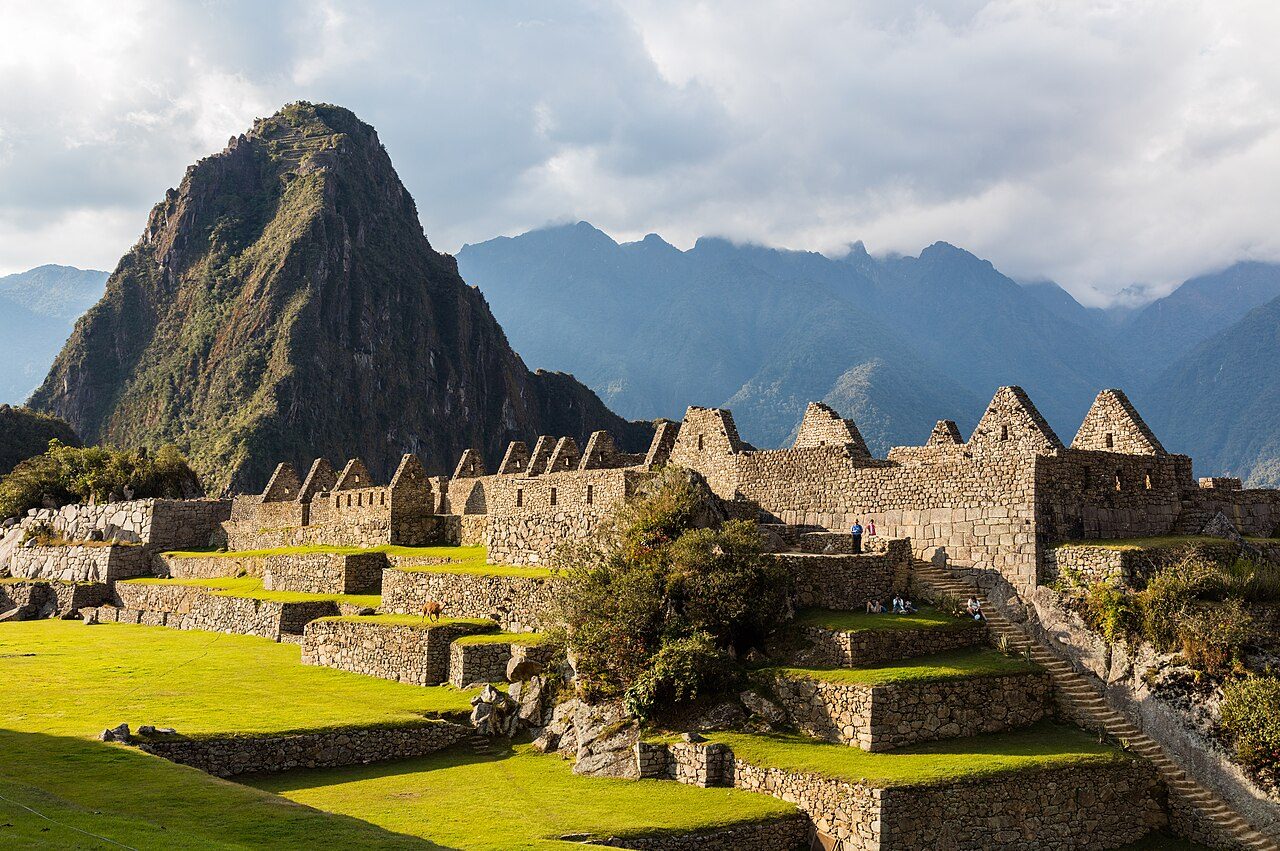
On 24 July 1911 a Peruvian farmer, Melchor Arteaga, and a young boy from a family farming the terraces led Yale historian Hiram Bingham up a jungle ridge to Machu Picchu — the Inca citadel the outside world barely knew existed. July 24 is also the day Apollo 11 splashed down, the Supreme Court ordered Nixon to surrender the Watergate tapes, and the Eastland capsized in Chicago.
Choose another date: open the On This Day calendar to browse events, births and deaths for any day of the year.
At a Glance
- The place
- A granite citadel at about 2,430 metres on a ridge above the Urubamba River, north-west of Cusco, Peru
- The builders
- Most archaeologists read it as a royal estate of the Inca emperor Pachacuti, built in the mid-15th century
- The guides
- Farmer Melchor Arteaga led the climb on 24 July 1911; a boy from a resident family showed Bingham the main ruins
- The fame
- Bingham's photographs filled an entire issue of National Geographic in April 1913
- The correction
- The site was never lost locally — families farmed its terraces, and Agustín Lizárraga had visited in 1902
- The status
- UNESCO World Heritage Site since 1983; named among the New Seven Wonders of the World in 2007
Events on this day
- 1567Mary, Queen of Scots is forced to abdicate at Loch Leven; her infant son becomes James VI of Scotland.
- 1701Antoine de la Mothe Cadillac founds Fort Pontchartrain du Détroit, the settlement that becomes Detroit.
- 1847Brigham Young leads 148 Mormon pioneers into the Salt Lake Valley after a 17-month journey — the founding moment of Salt Lake City, still kept as Pioneer Day in Utah.
- 1851Britain abolishes the Window Tax, in force since 1696, after generations of householders bricked up their windows to escape it.
- 1911Hiram Bingham is led to the Inca citadel of Machu Picchu in Peru — the featured story above.
- 1915The excursion steamer Eastland capsizes at its dock in the Chicago River, killing 844 people — the deadliest single-ship disaster in Great Lakes history.
- 1923The Treaty of Lausanne is signed, settling the borders of the new Turkish republic and ending the last conflict of the First World War era.
- 1959Vice President Richard Nixon and Soviet leader Nikita Khrushchev spar over washing machines and capitalism in Moscow's 'Kitchen Debate'.
- 1969Apollo 11 splashes down in the Pacific, bringing Armstrong, Aldrin and Collins safely home from the first Moon landing.
- 1974The U.S. Supreme Court rules unanimously that President Nixon must surrender the Watergate tapes; he resigns sixteen days later.
- 1998Saving Private Ryan opens in American cinemas, Steven Spielberg's D-Day film that redefined the war movie.
- 2023Elon Musk rebrands the social network Twitter as X, retiring the bird logo after seventeen years.
Born on this day
- 1783Simón Bolívar — Venezuelan soldier-statesman who liberated much of South America from Spanish rule.
- 1802Alexandre Dumas — French novelist of The Three Musketeers and The Count of Monte Cristo.
- 1897Amelia Earhart — American aviator, the first woman to fly solo across the Atlantic, lost over the Pacific in 1937.
- 1927Alex Katz — American painter whose cool, flat portraits became a signature of postwar art.
- 1963Julie Krone — American jockey, the first woman to win a U.S. Triple Crown race, at the 1993 Belmont Stakes.
- 1969Jennifer Lopez — American singer and actress from the Bronx who became a global entertainment figure.
Died on this day
- 1862Martin Van Buren — eighth president of the United States, dead at 79 in Kinderhook, New York.
- 1974James Chadwick — English physicist who discovered the neutron, dead at 82.
- 1980Peter Sellers — English comic actor of the Pink Panther films and Dr. Strangelove, dead at 54.
- 1997William J. Brennan — United States Supreme Court justice for 34 years and a leading liberal voice of the Warren Court era, dead at 91.
The featured story: Bingham reaches Machu Picchu, 24 July 1911
On 24 July 1911, in cold drizzle, a Yale lecturer in Latin American history crossed the Urubamba River on a bridge of logs and climbed a steep, jungle-covered ridge in the Peruvian Andes. Hiram Bingham had come to Peru with the Yale Peruvian Expedition looking for Vilcabamba, the last refuge of the Incas. The evening before, a farmer and innkeeper named Melchor Arteaga had mentioned ruins on the ridge above. For a sol — several times a day's wage — Arteaga agreed to guide him up.
Arteaga led Bingham and a Peruvian sergeant, Carrasco, up the mountain, then stayed behind to talk with the families farming the old terraces. A small boy from one of those families — named in Bingham's accounts as Pablito — took the visitors on along the ridge. What opened before them was a city of white granite: temples, palaces, houses and hundreds of agricultural terraces, built without mortar and hidden for centuries under vegetation. As Britannica's biography of Bingham records, on 24 July a Quechua-speaking resident led him to Machu Picchu, where he found remarkably well-preserved stonework, including a structure resembling the Temple of the Sun at Cusco.
Machu Picchu was never 'lost' to the people who lived beside it — local families were farming its terraces, and a Peruvian explorer, Agustín Lizárraga, had reached it in 1902. What Bingham did was different and, in its way, decisive: he photographed it, measured it, returned in 1912 to clear and excavate it, and in April 1913 persuaded National Geographic to devote an entire issue to his pictures. The 'Lost City of the Incas' became world-famous in a season. Archaeologists now read the site differently from Bingham, who thought it was Vilcabamba: the evidence points to a royal estate of the emperor Pachacuti, built around the mid-15th century and abandoned within a hundred years.
Its fame has never faded. Peru made it a historical sanctuary in 1981, UNESCO a World Heritage Site in 1983, and voters named it among the New Seven Wonders of the World in 2007. The artefacts Bingham shipped to Yale became a long diplomatic quarrel, settled only when Yale returned them to Peru a century after his climb. The ridge Arteaga and a small boy showed him on 24 July 1911 now receives well over a million visitors a year — each of them retracing, in reverse, the morning the outside world arrived.
Why this date matters
July 24 is a day of arrivals and reckonings. Pioneers arrive in a desert valley and found a city; an explorer is led to a city that was never lost; astronauts arrive home from the Moon. Elsewhere the day settles accounts: a queen abdicates, a hated tax is abolished after 155 years, a treaty closes the First World War's last account, and a Supreme Court tells a president that he is not above the law — a ruling that ends his presidency within weeks. Even its lighter entries carry the same charge: a vice president debating communism in a model kitchen, a social network discarding its name overnight. Things end, and things are found, on July 24.
Sources
- Encyclopaedia Britannica — On This Day: July 24
- HISTORY — What Happened on July 24
- Encyclopaedia Britannica — Hiram Bingham, American archaeologist and United States senator
- Wikimedia Commons — Machu Picchu, Perú, 2015-07-30, DD 47.JPG (Diego Delso)

The facts on this page were checked against these sources on 19 November 2026. The History Trail's permanent pages are researched and written for this site; the live profiles elsewhere on The History Trail are assembled automatically from Wikipedia and Wikidata.
About the Author
Researched and written by the The History Trail Editorial Team — the accountable editorial function behind this site's permanent story pages. The team works from the published sources cited on each page; it does not invent historians, reviewers or credentials, and it corrects errors openly.
Fact Check
Every load-bearing fact on this page traces to one of the sources listed above, and significant claims link to their source in the text. Our checking method is described on the methodology page; errors can be reported via the corrections page.
Sources & Citations
Cite this page as: The History Trail Editorial Team, The History Trail — this article's title, publication and update dates are shown beneath its headline. The full source list appears under Sources above; the site's source standards are on the sources page.