
On This Day
July 1 in History
On 1 July 1916 the Battle of the Somme began in northern France, and its first day — 57,470 British casualties, 19,240 of them killed — remains the deadliest single day in British military history. July 1 is also the day Canada became a dominion in 1867, Darwin and Wallace's evolution papers were read in 1858, and Hong Kong returned to China in 1997.
Choose another date: open the On This Day calendar to browse events, births and deaths for any day of the year.
At a Glance
- The offensive opens
- 7:30 a.m., 1 July 1916, after a week-long artillery bombardment of the German lines along the River Somme
- First-day cost
- Some 57,470 British casualties, of whom 19,240 were killed — the deadliest day in British military history
- How long it lasted
- 1 July to 18 November 1916, more than four months of fighting
- Total cost
- More than one million casualties on both sides across the whole battle
- Ground gained
- The Allies advanced about seven miles at the deepest point
- New weapon
- Tanks were used in warfare for the first time during the battle, in September 1916
Events on this day
- 1569The Union of Lublin joins the Kingdom of Poland and the Grand Duchy of Lithuania in a single commonwealth, one of early modern Europe's largest states.
- 1690William III defeats the deposed James II at the Battle of the Boyne in Ireland, securing the Protestant succession in Britain.
- 1847The United States issues its first postage stamps: a five-cent stamp bearing Benjamin Franklin and a ten-cent stamp bearing George Washington.
- 1858Papers by Charles Darwin and Alfred Russel Wallace setting out the theory of evolution by natural selection are read jointly to the Linnean Society in London.
- 1863The Battle of Gettysburg opens in Pennsylvania, the turning-point battle of the American Civil War.
- 1867The British North America Act takes effect, uniting Nova Scotia, New Brunswick, Ontario and Quebec as the Dominion of Canada, with John A. Macdonald as its first prime minister.
- 1898American forces storm San Juan Hill outside Santiago de Cuba in the Spanish-American War, a victory that made Theodore Roosevelt famous.
- 1916The Battle of the Somme begins in northern France; its first day is the deadliest in British military history — the featured story above.
- 1942The First Battle of El Alamein opens in Egypt, the desert fight that halted the Axis advance towards the Suez Canal.
- 1963The United States Postal Service introduces ZIP codes, five-digit numbers meant to speed the sorting and delivery of mail.
- 1968The Nuclear Non-Proliferation Treaty is opened for signature, committing signatories to halt the spread of nuclear weapons.
- 1979Sony puts the Walkman on sale in Japan, putting personal stereo music in a coat pocket for the first time.
- 1997Hong Kong is returned to China after 156 years of British rule, in a midnight ceremony attended by leaders of both countries.
- 2002The International Criminal Court is established as the Rome Statute enters into force, creating a permanent court for war crimes and genocide.
Born on this day
- 1646Gottfried Wilhelm Leibniz — German philosopher and mathematician who developed calculus independently of Newton.
- 1804George Sand — French novelist, born Amandine Aurore Lucile Dupin, one of the most popular writers in nineteenth-century Europe.
- 1818Ignaz Semmelweis — Hungarian physician who showed that hand-washing by doctors saved mothers' lives, and was ignored for it.
- 1903Amy Johnson — English aviator who in 1930 became the first woman to fly solo from England to Australia.
- 1916Olivia de Havilland — Oscar-winning actress of Gone with the Wind and The Adventures of Robin Hood, star of Hollywood's golden age.
- 1961Diana, Princess of Wales — British royal whose charity work and death in 1997 made her one of the most written-about figures of her century.
- 1961Carl Lewis — American sprinter and long jumper who won nine Olympic gold medals across four Games.
Died on this day
- 1896Harriet Beecher Stowe — American author of Uncle Tom's Cabin, the novel that galvanised opposition to slavery.
- 1925Erik Satie — French composer of the Gymnopédies, eccentric pioneer of modern music.
- 1997Robert Mitchum — American film actor, the heavy-lidded star of Out of the Past and The Night of the Hunter.
- 2000Walter Matthau — American comic actor, Oscar winner for The Fortune Cookie and half of The Odd Couple.
- 2004Marlon Brando — American actor of On the Waterfront and The Godfather, widely ranked among the greatest screen performers.
The featured story: the first day of the Battle of the Somme, 1 July 1916
At 7:30 on the morning of 1 July 1916, after a week-long artillery bombardment, British and French infantry climbed out of their trenches along the River Somme in northern France and walked towards the German lines. The Battle of the Somme, the largest British offensive of the First World War so far, had begun. Commanders expected the bombardment to have cut the German wire and destroyed the defenders in their dugouts. In many places it had done neither, and German machine-gunners emerged from deep shelters to meet the advance.
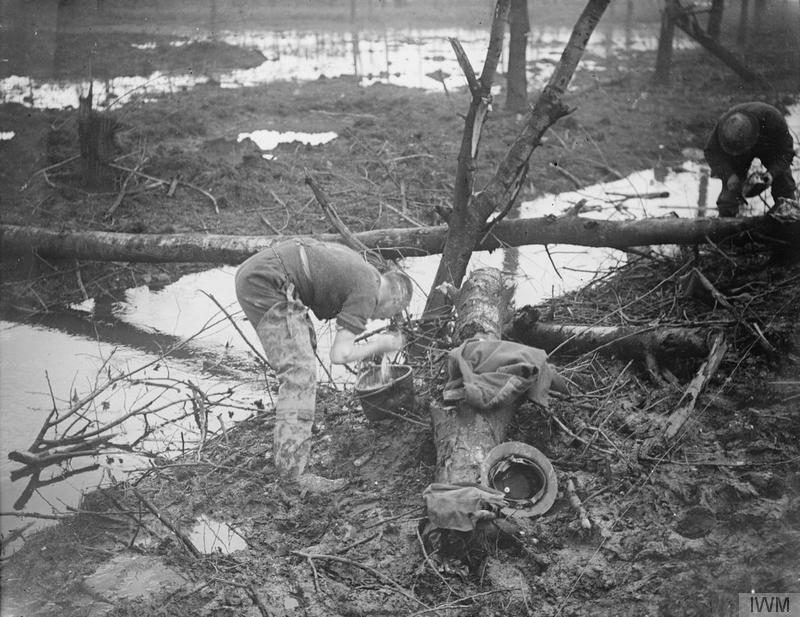
The result was the worst day in the history of the British Army. By nightfall the British had suffered some 57,470 casualties, of whom 19,240 were killed, figures the Imperial War Museums describe as making 1 July 1916 the deadliest day in British military history. Some battalions were effectively wiped out within yards of their own trenches; the Newfoundland Regiment, attacking at Beaumont-Hamel, lost most of its men in under an hour. Only in the south, where French forces also attacked, did the day bring significant gains.
Rather than abandon the offensive, the British high command continued it for more than four months. The battle ground on until 18 November 1916, through the first use of tanks in warfare in September and into autumn mud. The Allies advanced about seven miles at the deepest point. Total casualties on both sides exceeded one million men, and the German army, though it held its ground in most places, was worn down by losses it could ill afford.
The Somme became the defining symbol of the First World War's cost: a generation's experience of industrialised warfare compressed into a single morning and a single statistic. The first day is still commemorated at the Thiepval Memorial and at Beaumont-Hamel, where the Newfoundland Regiment's ground is preserved as it was. For Britain and its empire the battle marked the moment the volunteer army of 1914 was spent, and the war became one of conscripts, attrition and endurance.
Why this date matters
July 1 keeps redrawing maps and memberships. A commonwealth was joined in 1569, Canada was confederated in 1867, Hong Kong changed hands in 1997 and a world court opened in 2002; the day also launched the evolution debate in 1858 and the ZIP code in 1963. But its heaviest entry is 1916, when the first day on the Somme became a byword for the cost of the First World War. The date holds both kinds of beginning: states and systems starting up, and a morning on which, for thousands of families, everything ended at once.
Sources
- Encyclopaedia Britannica — On This Day: July 1
- HISTORY — This Day in History: July 1
- Imperial War Museums — First Day of the Somme
- Library of Congress — Today in History: July 1
The facts on this page were checked against these sources on 19 November 2026. The History Trail's permanent pages are researched and written for this site; the live profiles elsewhere on The History Trail are assembled automatically from Wikipedia and Wikidata.
About the Author
Researched and written by the The History Trail Editorial Team — the accountable editorial function behind this site's permanent story pages. The team works from the published sources cited on each page; it does not invent historians, reviewers or credentials, and it corrects errors openly.
Fact Check
Every load-bearing fact on this page traces to one of the sources listed above, and significant claims link to their source in the text. Our checking method is described on the methodology page; errors can be reported via the corrections page.
Sources & Citations
Cite this page as: The History Trail Editorial Team, The History Trail — this article's title, publication and update dates are shown beneath its headline. The full source list appears under Sources above; the site's source standards are on the sources page.