
On This Day
January 1 in History
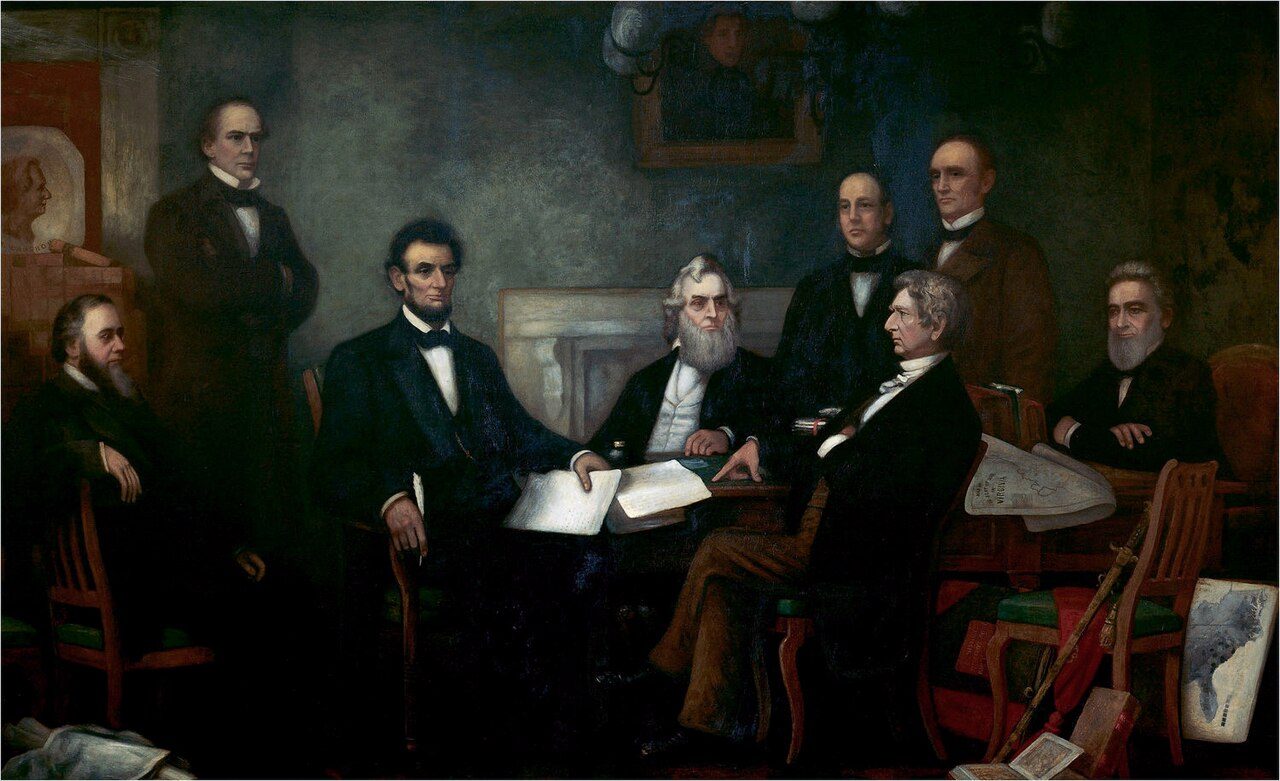
On 1 January 1863 Abraham Lincoln's Emancipation Proclamation took effect, declaring that enslaved people in the states in rebellion 'are, and henceforward shall be free' — the act that turned the American Civil War into a war against slavery. January 1 is also the day the Julian calendar began, Ellis Island opened and the euro entered people's pockets.
Choose another date: open the On This Day calendar to browse events, births and deaths for any day of the year.
At a Glance
- Preliminary proclamation
- 22 September 1862 — Lincoln warns that enslaved people in states still in rebellion on 1 January 1863 will be declared free
- Final proclamation
- Signed 1 January 1863, declaring that enslaved people in the rebellious areas 'are, and henceforward shall be free'
- Who it covered
- More than three million enslaved people in the Confederate states in rebellion
- Who it did not cover
- The loyal border states and Confederate areas already under Union occupation, which were expressly excepted
- How freedom was enforced
- As Union armies advanced and enslaved people reached Union lines; the last announcement came in Texas on 19 June 1865 (Juneteenth)
- Completed by
- The Thirteenth Amendment, ratified in December 1865, which abolished slavery throughout the United States
Events on this day
- 45 BCThe Julian calendar, Julius Caesar's reform of the Roman calendar, takes effect, with New Year's Day celebrated on January 1 for the first time.
- 1801The Act of Union takes effect, uniting Great Britain and Ireland as the United Kingdom of Great Britain and Ireland and abolishing the Irish Parliament.
- 1804Haiti declares independence from France, becoming the first republic founded by formerly enslaved people, after the revolution led by Toussaint Louverture and Jean-Jacques Dessalines.
- 1818Mary Shelley's Frankenstein; or, The Modern Prometheus is published in London — the novel often called the first work of science fiction.
- 1863The Emancipation Proclamation takes effect, declaring enslaved people in the rebellious Confederate states free — the featured story above.
- 1892The Ellis Island immigration station opens in New York Harbor; its first immigrant is Annie Moore, a teenager from Ireland. More than 12 million people would follow her through it.
- 1902The first Rose Bowl game is played at Pasadena, California: Michigan defeats Stanford 49–0 in what was then called the Tournament East–West football game.
- 1959Fulgencio Batista flees Cuba as Fidel Castro's 26th of July Movement forces take power, ending his dictatorship and beginning Castro's rule.
- 1999The euro is introduced as an accounting currency in 11 European countries; all electronic transactions switch to it, though national notes and coins still circulate.
- 2002Euro notes and coins enter circulation, replacing national currencies such as the franc, the mark and the lira in everyday use across the eurozone.
Born on this day
- 1449Lorenzo de' Medici — Florentine statesman and patron of the arts, ruler of Florence at the height of its Renaissance brilliance.
- 1484Huldrych Zwingli — Swiss theologian and leader of the Reformation in Zurich.
- 1735Paul Revere — Boston silversmith and American patriot, famed for his midnight ride of April 1775.
- 1752Betsy Ross — Philadelphia seamstress whom tradition credits with sewing the first American flag.
- 1863Pierre de Coubertin — French educator who founded the International Olympic Committee and revived the Olympic Games.
- 1879E. M. Forster — English novelist of A Room with a View, Howards End and A Passage to India.
- 1895J. Edgar Hoover — first director of the FBI, who led the bureau for nearly half a century.
- 1919J. D. Salinger — American author of The Catcher in the Rye, the defining novel of adolescent rebellion.
Died on this day
- 1515Louis XII — king of France from 1498, dead at 52 less than three months after his marriage to Mary Tudor.
- 1894Heinrich Hertz — German physicist who proved the existence of electromagnetic waves; the unit of frequency, the hertz, bears his name.
- 1953Hank Williams — American country singer-songwriter, dead at 29 on the way to a New Year's Day concert in Ohio.
- 1972Maurice Chevalier — French singer and actor, the straw-hatted star of Gigi, dead in Paris at 83.
- 1992Grace Hopper — American computer scientist and U.S. Navy rear admiral, a pioneer of compilers and of the COBOL language, dead at 85.
- 1994Cesar Romero — American actor best known as the Joker in the 1960s Batman television series, dead at 86.
The featured story: the Emancipation Proclamation takes effect, 1 January 1863
On New Year's Day 1863, in the middle of the American Civil War, President Abraham Lincoln signed the document that changed the meaning of the war. As the National Archives summarises it, the Emancipation Proclamation announced 'that all persons held as slaves' within the rebellious areas 'are, and henceforward shall be free.' At a stroke it changed the legal status of more than three million enslaved people in the Confederate states — on paper, at least — and turned a war fought to restore the Union into a war fought also to end slavery.
The final proclamation had been promised one hundred days earlier. On 22 September 1862, days after the Union army's narrow success at Antietam gave him the standing to act, Lincoln issued a preliminary proclamation: if the rebellious states did not return to the Union by 1 January 1863, their enslaved people would be declared free. No state returned. Through the autumn Lincoln held to the deadline despite pressure from both directions, and on the afternoon of New Year's Day, after the traditional White House reception, he signed the final order — remarking, as he did so, on the steadiness of his hand and the weight of the act.
What the proclamation did not do matters as much as what it did. Issued as a war measure under Lincoln's authority as commander-in-chief, it applied only to states and parts of states then in rebellion. It did not free enslaved people in the loyal border states — Delaware, Maryland, Kentucky and Missouri — nor in Confederate areas already under Union occupation, such as New Orleans and the counties that became West Virginia, which were expressly excepted. And in the rebel states themselves it could not be enforced on the day it was signed: freedom there became real only as Union armies advanced and enslaved people reached Union lines, a process that took the rest of the war. The last great announcement came in Texas on 19 June 1865, now marked as Juneteenth.
Its effects were nonetheless immediate and enormous. The proclamation made the destruction of slavery an explicit Union war aim, which made it politically impossible for Britain or France to intervene for the Confederacy. It also opened the Union army and navy to Black enlistment, and by the war's end some 180,000 Black soldiers had served — in the National Archives' phrase, the liberated became liberators. But a presidential war order could be challenged or reversed once the war ended, so Lincoln pressed for a constitutional guarantee. The Thirteenth Amendment, passed by Congress in January 1865 and ratified that December, abolished slavery throughout the United States and completed what 1 January 1863 had begun.
Why this date matters
January 1 is the one date the calendar itself created. When Caesar's reform took effect in 45 BC it fixed the year's opening where it still stands, and ever since, governments have used that hinge to start new orders: a united kingdom in 1801, a free republic in Haiti in 1804, a new European currency in 1999 and again, in people's pockets, in 2002. It is also the date on which the United States made its largest promise — that millions held in slavery were, and henceforward should be, free — and the date on which its doors formally opened at Ellis Island. Beginnings are this day's trade, and it has been practising for two thousand years.
Sources
- Encyclopaedia Britannica — On This Day: January 1
- HISTORY — What Happened on January 1
- National Archives — Emancipation Proclamation (1863)
- Encyclopaedia Britannica — Emancipation Proclamation
- UK Legislation — Union with Ireland Act 1800
The facts on this page were checked against these sources on 19 November 2026. The History Trail's permanent pages are researched and written for this site; the live profiles elsewhere on The History Trail are assembled automatically from Wikipedia and Wikidata.
About the Author
Researched and written by the The History Trail Editorial Team — the accountable editorial function behind this site's permanent story pages. The team works from the published sources cited on each page; it does not invent historians, reviewers or credentials, and it corrects errors openly.
Fact Check
Every load-bearing fact on this page traces to one of the sources listed above, and significant claims link to their source in the text. Our checking method is described on the methodology page; errors can be reported via the corrections page.
Sources & Citations
Cite this page as: The History Trail Editorial Team, The History Trail — this article's title, publication and update dates are shown beneath its headline. The full source list appears under Sources above; the site's source standards are on the sources page.